Ever felt like your joints hurt more when you’re trying to sleep? It’s not just your mind playing tricks on you. Millions of people in the U.S. deal with this every night.
Joint pain isn’t random. Many things can make it worse at night. This includes inflammation and how our bodies naturally work. When it’s dark and quiet, our pain can feel much stronger.
Medical Disclaimer
The information on PathwayToRelief.com is for educational and informational purposes only. It is not intended to diagnose, treat, cure, or prevent any disease. Always consult a qualified healthcare professional before making changes to your health routine, especially if you have chronic pain, arthritis, or other medical conditions.
Knowing why your joints hurt more at night can help. It lets you find better ways to manage the pain. This way, you can sleep better and feel more comfortable.
Key Takeaways
- Nighttime joint pain is a real and scientifically explainable phenomenon
- Inflammatory processes peak during evening hours
- Circadian rhythms influence pain perception
- Reduced movement contributes to joint stiffness
- Strategic interventions can help manage nighttime joint discomfort
Why Joint Pain Gets Worse at Night
Understanding why joint pain worsens at night can help manage it better. Many biological processes play a role in this, affecting millions of Americans. They deal with chronic inflammation and discomfort.
Fluid Buildup and Inflammation
During the day, moving around helps spread joint fluid and reduce stiffness. At night, fluid builds up more. This can cause more pressure and inflammation around joint spaces.
- Less movement means less fluid circulation
- Gravity affects fluid when lying down
- Less muscle activity makes joints stiffer
Cytokines and Immune System Activity
Nighttime changes how the immune system works. Inflammatory cytokines are more active at night. This can make pain signals stronger and discomfort worse.
| Cytokine Type | Nighttime Impact |
|---|---|
| Interleukin-6 | Increases inflammation |
| Tumor Necrosis Factor-α | Enhances pain sensitivity |
Body Temperature and Circadian Rhythm Effects
Your body’s natural rhythm affects pain. As body temperature drops at night, blood vessels get smaller. This can make joints stiffer and more uncomfortable.
- Lower body temperature means less blood flow
- Slower metabolism hinders healing
- Hormonal changes affect pain feeling
Common Types of Nighttime Joint Pain
Nighttime joint pain can show up in many ways, making it hard to sleep and live daily life. Knowing the different types of pain helps you talk about your symptoms to doctors.
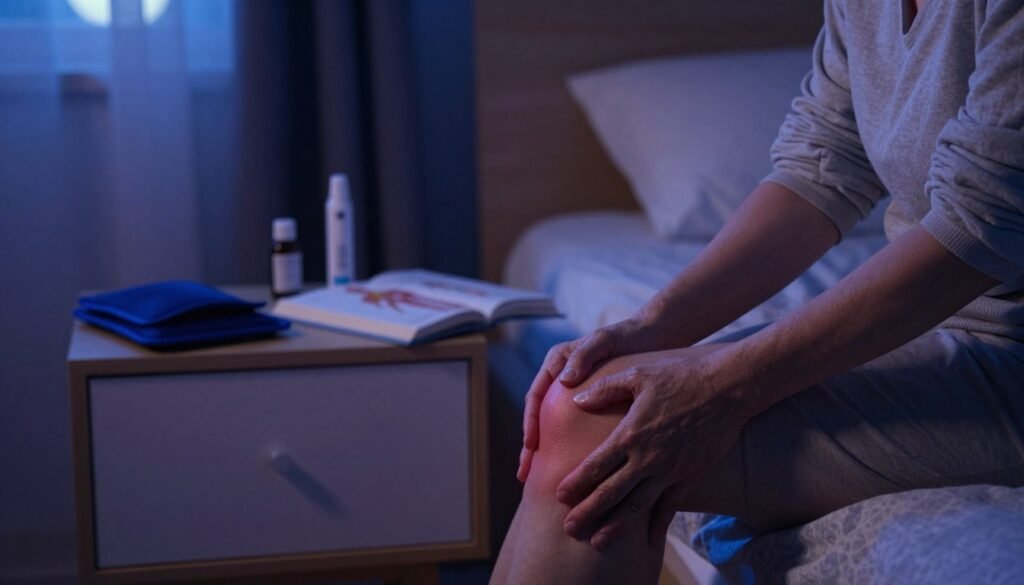
Nerve pain, or neuropathy, feels like burning, tingling, or pins and needles. This pain gets worse when it’s colder at night, making it hard to sleep.
- Nerve Pain Characteristics:
- Burning sensations
- Tingling feelings
- Pins and needles sensation
Muscle pain is different, with steady aches or sharp pains. Fibromyalgia can cause muscle pain that feels like deep, persistent discomfort.
| Pain Type | Common Locations | Sensation Description |
|---|---|---|
| Bone Pain | Joints, Spine | Penetrating, Deep, Worsens with Movement |
| Joint Pain | Hips, Knees, Shoulders | Achy, Sore, Stiff, Burning |
Bone pain feels deep and intense, getting worse when you move the bone. It can be from osteoporosis or old injuries.
Joint pain often hits legs, hips, and shoulders. People feel throbbing, burning, or persistent stiffness. Side sleepers might feel hip pain, and those with arthritis might have bad knee pain.
Some people get nighttime headaches, like migraines or hypnic “alarm clock” headaches. These headaches wake them up at the same time every night.
How to Manage Joint Pain at Night for Better Sleep
Some people also use natural joint support products at night to help reduce stiffness and support overnight recovery. These are designed to work while the body is resting and repairing itself.
One example is a natural liquid joint support formula called JointVive, which is designed to support joint comfort, flexibility, and mobility using plant-based ingredients. Many people use supplements like this as part of their nighttime routine to help their joints feel more comfortable by morning.
Learn more about JointVive here.
Joint pain can really mess up your sleep. But, there are ways to get better rest. Knowing how to set up your sleep space and handle pain can help a lot.
Optimize Your Sleep Position and Environment
Getting your sleep area just right is key for joint pain relief. Here are some tips:
- Keep your bedroom cool, between 65-68°F, for better sleep
- Go for a medium-firm mattress that’s not older than 8 years
- Use pillows that support your body, based on how you sleep
For each sleep style, the right pillow can help:
- Side sleepers: Use a pillow between your knees to keep hips aligned
- Back sleepers: Put a pillow under your calves to ease lower back pain
Heat and Cold Therapy Techniques
Switching between heat and cold can help with pain:
| Therapy Type | Duration | Benefits |
|---|---|---|
| Heat Therapy | 15 minutes | Boosts blood flow, cuts down on stiffness |
| Cold Therapy | 10-20 minutes | Reduces swelling, numbs pain |
Movement and Stretching Strategies
Doing gentle exercises can lessen joint pain at night:
- Try knee-to-chest hugs
- Do seated spinal twists
- Simple neck glides are good too
- Low-impact activities like walking or tai chi help
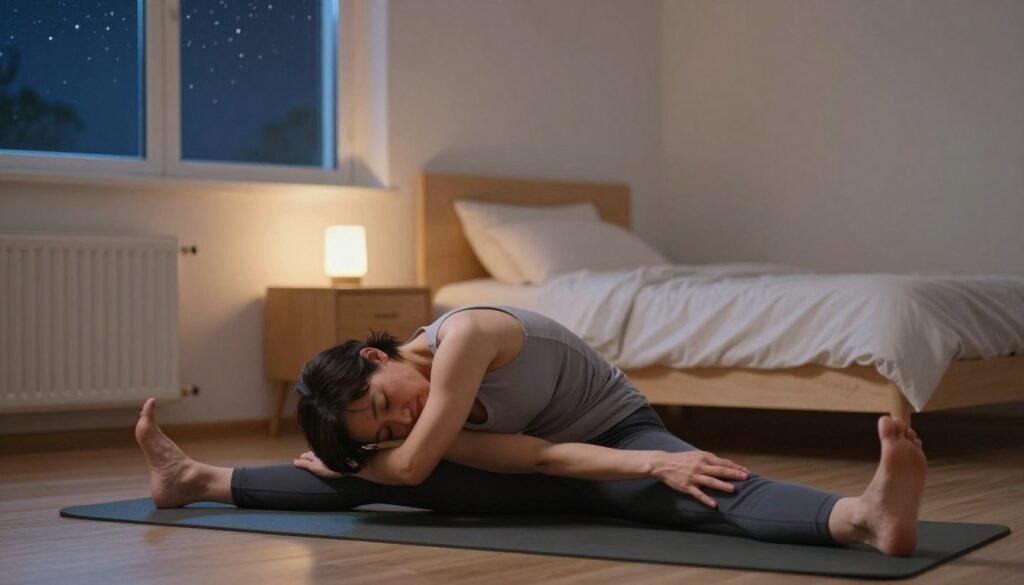
Meditation and deep breathing can cut pain by up to 30%. Also, try topical treatments with menthol or arnica for extra relief.
Conclusion
Figuring out why arthritis hurts more at night is a big step towards feeling better. Stress hormones and inflammation tend to rise in the evening. This can make your joints feel tighter and more painful.
People with constant knee pain at night might find relief in specific strategies. These could include improving circulation, changing how you sit, and taking care of your joints.
What you eat can also affect your joint pain. Some foods might help, while others could make it worse. Weighted blankets might help with anxiety, but they could be hard to use if you have arthritis in your hands or shoulders.
It’s important to have realistic hopes when dealing with joint pain. Most people start to feel better in 2-4 weeks with the right approach. If your pain is severe, you have a fever, swelling, or can’t sleep for weeks, see a doctor or physical therapist.
They can find the cause and suggest treatments. This could include medicines, injections, or special therapy programs.
Some people also choose to add natural joint support supplements to their routine as part of managing nighttime stiffness and discomfort. These products are not a replacement for medical care, but many users report they help support joint flexibility and comfort over time.
If you want to see one option people are using, you can learn more about JointVive here.
Even though nighttime joint pain can be tough, knowing what causes it can help. Start your journey to better sleep and life by learning, being patient, and actively managing your symptoms. Don’t forget, experts can offer more help with treatments and therapies.