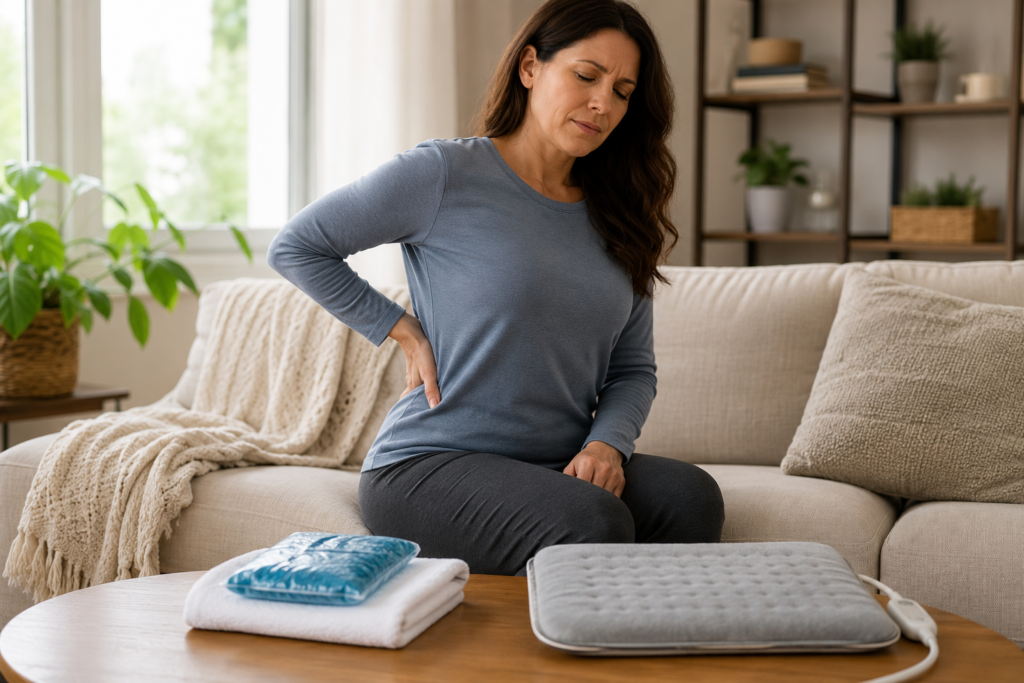
Learn how long to use heat or ice for lower back pain, safe session times, when each may help, common mistakes, and when to seek care.
Lower back pain can make even simple decisions confusing.
Should you reach for an ice pack? A heating pad? How long should you leave it on? And is it actually necessary to switch from cold to heat after a certain number of hours?
The answer depends partly on what your back feels like, what may have triggered the pain, and how your body responds.
Cold therapy may temporarily numb soreness and may be useful when a minor injury is accompanied by swelling or irritation. Heat, on the other hand, often feels better when the main problem is muscle tightness, stiffness, or spasms. Both are intended for short-term symptom relief, not as treatments for every possible cause of back pain.
This guide explains how long to use each one, how to protect your skin, when alternating may be reasonable, and when back pain deserves medical attention.
Quick Answer: How Long Should You Use Heat or Ice?
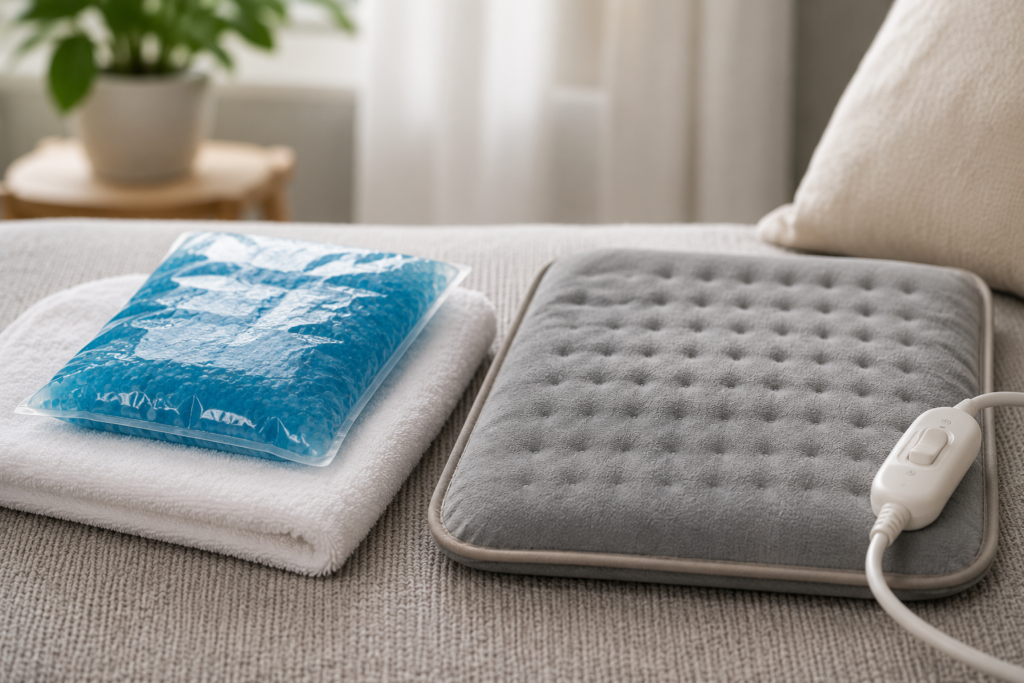
For many adults using home temperature therapy for uncomplicated lower-back discomfort:
Cold pack: about 15–20 minutes at a time
Heat: about 15–20 minutes at a time to start
Always place a layer of fabric between your skin and the cold or heat source, and check your skin regularly.
Mayo Clinic guidance for back pain advises keeping a cold wrap on for no more than 20 minutes at a time. Its home-care guidance also suggests heat for up to about 20 minutes at a time and specifically warns against sleeping with a heating pad.
Those numbers are practical safety limits—not a guarantee that heat or cold will resolve the underlying reason your back hurts.
How Long Should You Use Ice for Lower Back Pain?
A reasonable starting point is:
15–20 minutes per session
Cold therapy may be helpful when lower-back pain begins after a minor strain, awkward movement, exercise, or another situation where the area feels irritated or swollen.
Cold can temporarily decrease sensation in the area and may reduce some pain and swelling associated with a minor soft-tissue injury. Mayo Clinic recommends wrapping an ice pack or even a bag of frozen vegetables in cloth rather than putting it directly against the skin.
How often can you repeat it?
Give your skin plenty of time to return to its normal temperature before applying cold again.
For a recent minor injury, some guidance suggests spacing applications by a few hours. Mayo Clinic, for example, describes cold use every two to four hours during the first day or two following a minor strain while limiting individual sessions to 20 minutes.
You do not need to keep icing continuously.
Longer is not necessarily better.
Why You Shouldn’t Leave Ice on Too Long
Cold applied for excessive periods can injure the skin and underlying tissues.
Stop the application if you experience:
- increasing pain rather than relief
- excessive numbness
- burning or stinging
- unusual skin discoloration
- significant skin irritation
Never fall asleep with an ice pack strapped to your back.
And never place ice directly against bare skin.
A thin towel or cloth creates an important barrier.
How Long Should You Use Heat for Lower Back Pain?
Start with approximately:
15–20 minutes at a time
Heat often feels good when back discomfort involves:
- tight muscles
- stiffness
- muscle spasms
- soreness after prolonged sitting
- aching that improves when the area warms up
The NHS recommends a wrapped heat pack or hot-water bottle as one possible self-care option for joint stiffness or muscle spasms associated with back pain.
Mayo Clinic similarly notes that heat can relax tense muscles and may help reduce discomfort.
You don’t need your heating pad at its highest temperature.
Use a comfortable low or moderate setting and protect your skin.
Should You Use a Heating Pad for 30 Minutes?
Some heating products provide instructions that allow sessions longer than 20 minutes, but there is no reason to assume that longer sessions are automatically more effective.
For a general home-care article like this one, 15–20 minutes is a sensible starting point.
If your heating pad’s manufacturer gives different instructions, follow the product’s safety directions.
Most importantly:
Do not fall asleep while using a heating pad unless a specific medical device is expressly designed and instructed for that purpose.
Standard heating pads can continue exposing one area of skin to warmth after you stop noticing how hot it feels.
Mayo Clinic specifically advises against sleeping with a heating pad.
Heat or Ice: Which Should You Use First?
There isn’t one rule that fits every type of lower-back pain.
For a recent minor strain accompanied by swelling or tenderness, cold may feel better initially.
For muscle tightness, spasms, or stiffness, heat may be more soothing.
MedlinePlus describes one traditional approach for acute low-back pain as using ice during the first 48–72 hours and heat afterward.
However, that should not be interpreted as a rigid countdown that everyone must follow.
If there is no swelling and your discomfort feels primarily muscular, you may find heat more comfortable even earlier.
Likewise, some people simply respond better to cold.
The goal is symptom relief without damaging your skin or masking worsening symptoms.
Do You Have to Switch From Ice to Heat After 48 Hours?
No.
The “48-hour rule” is a useful general guideline, not a requirement.
Think of it this way:
If your pain followed a minor injury and the area feels swollen, warm, or irritated, cold may be worth trying.
As that initial irritation settles, heat may become more comfortable for muscle stiffness.
But if heat makes you feel noticeably worse, stop using it.
If cold makes you tighten up and increases discomfort, stop using that as well.
Your response matters.
Can You Alternate Heat and Ice?
Some people like alternating the two.
For example:
Use heat for a short session when your lower back feels tight.
Later in the day, use cold if an activity leaves the area feeling irritated.
There is generally no need to switch immediately from extreme heat to extreme cold.
Give your skin time to return toward its normal temperature between applications.
Mayo Clinic describes heat and cold as options that may be used individually or in combination, noting that different people respond differently.
The key point is that alternating is optional.
You don’t need to alternate simply because an internet routine tells you to.
Heat May Be Better When Your Back Feels Stiff
Imagine waking up with an achy lower back that feels stiff but isn’t visibly swollen.
You take a few steps, move around, and gradually loosen up.
That is the type of situation in which gentle warmth may feel especially comforting.
Heat can help muscles feel less tense and may make gentle movement more comfortable.
That doesn’t mean heat is “healing” every cause of back pain. It is primarily a symptom-management tool.
If morning discomfort is a recurring problem, it may be helpful to look beyond temperature therapy and consider factors such as sleeping position, mattress support, activity level, and prolonged inactivity.
Cold May Be Better After a Minor Strain
Now imagine you lift something awkwardly and immediately feel soreness in the lower back.
Later, the area feels irritated and tender.
A wrapped cold pack for 15–20 minutes may provide temporary relief.
But remember that significant pain after lifting can sometimes involve more than a minor muscle strain.
If pain is severe, progressively worsening, or accompanied by neurological symptoms, don’t simply continue icing it for several days and hope it disappears.
Don’t Let Heat or Ice Replace Movement Entirely
One common mistake is spending an entire day lying still because your back hurts.
For most uncomplicated back pain, prolonged bed rest isn’t recommended.
The NHS encourages people with back pain to remain active and continue normal daily activity as much as they reasonably can.
Mayo Clinic likewise recommends continuing activity as tolerated and using light movement such as walking rather than prolonged bed rest.
That doesn’t mean forcing yourself through severe pain.
It means that once you’re comfortable enough, brief gentle movement is often more useful than staying completely immobilized.
A simple routine might look like this:
- Use heat or cold for 15–20 minutes if it helps.
- Remove the pack and let your skin return to normal.
- Walk around your home for a few minutes.
- Avoid movements that sharply increase the pain.
- Change positions regularly instead of remaining seated or lying down for hours.
Common Heat and Ice Mistakes
Putting ice directly on the skin
Always use a cloth barrier.
Direct contact increases the risk of cold-related skin injury.
Using the hottest heating-pad setting
More heat does not automatically mean more relief.
A comfortable low or moderate setting is generally preferable.
Falling asleep with heat
This is one of the most important mistakes to avoid.
Sleeping reduces your ability to notice excessive heat or prolonged exposure.
Leaving ice on because the area feels numb
Numbness isn’t a sign that you should continue indefinitely.
Once sensation decreases significantly—or 15–20 minutes has passed—remove the cold source.
Treating every back problem like a pulled muscle
Lower-back pain has many possible causes.
Temperature therapy may relieve symptoms without addressing the actual source of pain.
Staying completely inactive
Gentle activity is generally encouraged for uncomplicated back pain rather than extended bed rest.
Who Should Be Extra Careful With Heat or Cold?
Temperature therapy isn’t equally safe for everyone.
Use extra caution—and ask a healthcare professional before using it if appropriate—if you have reduced sensation or difficulty judging temperature in the area.
That may happen with certain nerve problems or other medical conditions.
You should also avoid applying heat or cold over:
- broken skin
- an open wound
- severely irritated skin
- an area where you cannot adequately feel temperature
If your healthcare professional has given you specific instructions, follow those instead of general online guidance.
When Lower-Back Pain Needs Medical Attention
Heat and ice are appropriate only for relatively minor symptom management.
Seek urgent medical attention if lower-back pain occurs with symptoms such as:
- new loss of bladder or bowel control
- significant weakness or numbness
- numbness around the groin or saddle area
- severe pain following a major fall, collision, or other trauma
- fever with significant back pain
- rapidly worsening neurological symptoms
Mayo Clinic lists new bowel or bladder problems, fever, and pain following significant trauma among reasons back pain may require urgent evaluation.
You should also speak with a healthcare professional if your pain is severe, keeps returning, interferes significantly with normal activity, or does not improve as expected.
Frequently Asked Questions
How long should I ice my lower back?
For home use, 15–20 minutes at a time is a common recommendation. Do not exceed about 20 minutes in one session, and protect your skin with a cloth barrier.
How long should I use a heating pad on my lower back?
A good starting point is 15–20 minutes using a comfortable temperature. Remove the pad sooner if your skin becomes uncomfortable.
Is 30 minutes of heat too long?
Not necessarily for every person or every device, but you don’t need 30 minutes to begin. Start with a shorter session and follow your heating product’s instructions.
Should I use heat or ice for back pain from sitting?
If sitting leaves your muscles feeling tight and stiff, heat may feel more soothing. Changing position, adjusting your chair, taking movement breaks, and addressing posture are also important.
Related: How to Sit Without Lower Back Pain
Should I use ice for the first 48 hours?
Cold is commonly suggested during the early period after a minor strain, particularly when swelling or irritation is present. But the 48-hour guideline is not an absolute rule for every case. MedlinePlus describes ice during the first 48–72 hours followed by heat as one home-care approach.
Can I use heat and ice on the same day?
Yes, some people use both at different times of the day. Allow your skin to return toward normal temperature between applications.
Can I sleep with a heating pad on my lower back?
Generally, no. Standard heating pads should not be left running while you sleep. Mayo Clinic specifically advises against sleeping with a heating pad.
What if neither heat nor ice helps?
Stop relying on temperature therapy alone. Persistent or worsening pain deserves evaluation, particularly when it interferes with walking, sleep, work, or normal daily activity.
The Bottom Line
You don’t need hours of heat or ice to give your lower back a chance to feel better.
For many people, a practical approach is:
Cold: about 15–20 minutes at a time, especially when a recent minor strain feels irritated or swollen.
Heat: start with approximately 15–20 minutes at a time when stiffness, tight muscles, or spasms are the bigger problem.
Protect your skin, don’t sleep with a heating pad, and remember that heat and cold are primarily short-term comfort tools.
Most importantly, don’t get trapped by the idea that everyone must follow an exact “ice first, heat later” formula. Back pain varies considerably from person to person.
Use the method that safely provides relief—and if your symptoms are severe, unusual, persistent, or worsening, get appropriate medical care.
PathwayToRelief.com provides general educational information and does not provide medical diagnosis or individualized treatment advice. This article is not a substitute for care from a qualified healthcare professional. Seek medical attention for severe, worsening, persistent, or concerning symptoms.