Do you wake up tired and sore? Maybe the key to feeling better in the morning is how you sleep. Learning the best sleep positions can make your nights more comfortable and healing.
Sleep is key for our bodies to recover, but bad sleep positions can harm us. How you sleep affects your muscles, spine, and joints. By changing your sleep position, you can lessen pain and help your body heal better.
This guide will show you sleep positions backed by science. We’ll look at ways to ease back pain, reduce hip strain, and lessen joint discomfort. This way, you can wake up feeling refreshed and pain-free.
Key Takeaways
- Sleep positioning critically impacts overall body comfort
- Proper alignment can reduce muscular and joint pain
- Different body types require personalized sleep strategies
- Small postural adjustments can lead to significant health improvements
- Consistent sleep positioning promotes long-term physical wellness
Understanding the Connection Between Sleep Position and Body Pain
Sleep is more than just rest—it’s a critical healing process for your body. The way you position yourself during these nightly hours can significantly impact your musculoskeletal health, creating either comfort or strain.
Your sleep posture plays a key role in maintaining overall body wellness. Different sleeping positions interact uniquely with your muscles, joints, and skeletal structure. This can trigger pain or promote recovery.
Some people find that using general sleep-position support tools can help maintain better alignment and reduce pressure while resting. You can explore commonly used options here.
👉 View sleep position support options on Amazon
How Sleep Posture Affects Your Musculoskeletal System
Sleep positions dramatically influence your body’s structural integrity. Ergonomic sleeping alignment helps prevent unnecessary muscle tension and joint stress. The wrong position can lead to:
- Increased muscle strain
- Restricted blood circulation
- Potential nerve compression
- Misalignment of critical body structures
The Role of Spinal Alignment During Rest
Spine support during sleep is fundamental to preventing morning stiffness and long-term musculoskeletal issues. Your spine has natural curves that require proper maintenance, even while you’re unconscious.
The human spine consists of three primary curves:
- Cervical curve (neck region)
- Thoracic curve (upper back)
- Lumbar curve (lower back)
Maintaining these natural curves during sleep helps your body recover, reduces pain, and supports overall physical health. Understanding your sleep posture can be a powerful tool in preventing chronic discomfort and promoting optimal wellness.
The Science Behind Pain-Free Sleeping Positions
Learning about sleep biomechanics can change how we rest. Pain-free sleeping positions are more than just comfy. They involve aligning your body to reduce muscle and joint stress.
The human body faces unique challenges while sleeping. Orthopedic sleep postures are key to keeping the spine healthy and avoiding pain. How our muscles and joints feel at night depends on gravity and how our body weight is spread out.
- Neutral spine positioning reduces muscle tension
- Weight distribution prevents pressure point development
- Proper alignment minimizes nerve compression
Studies show that certain sleep positions can greatly affect our muscles and bones. Biomechanical principles show how different postures meet our body’s natural needs.
| Sleep Position | Pressure Impact | Joint Stress Level |
|---|---|---|
| Back Sleeping | Low | Minimal |
| Side Sleeping | Moderate | Variable |
| Stomach Sleeping | High | Significant |
By grasping these scientific facts, people can choose better sleep positions. This supports their long-term muscle and bone health.
Best Sleep Positions for Back, Hip, and Joint Comfort
Finding the right sleep position can make a big difference in your comfort and reduce pain. The best positions for back, hip, and joint comfort depend on how your body aligns and what you need.
Choosing the right sleep position is key for keeping your spine healthy and avoiding discomfort. Each sleep position has its own benefits for managing pain and supporting your muscles and bones.
Side Sleeping for Optimal Spine Support
Side sleeping is highly recommended for those looking for back, hip, and joint comfort. It offers several key benefits:
- Maintains natural spinal curvature
- Reduces pressure on key joint areas
- Helps distribute body weight evenly
Proper side sleeping technique involves keeping your spine in a neutral alignment. Use a supportive pillow between your knees to stop hip misalignment and lower back strain.
Back Sleeping and Pressure Point Distribution
Back sleeping is another great way to manage body discomfort. It naturally spreads your body weight over a larger area, reducing pressure on joints.
- Supports neutral spine positioning
- Reduces muscle tension
- Allows even weight distribution
When sleeping on your back, use a small pillow under your knees. This helps keep your lumbar curve right and lowers back stress.
Keep in mind, what works best for you can vary. It depends on your body and any health issues you might have.
How to Relieve Lower Back Pain Through Proper Sleep Alignment
Reducing back pain starts with knowing how your body rests. The right sleep position can lessen stress on your lower back. Many people hurt their backs because of bad sleep postures.
Here are some ways to ease back pain while sleeping:
- Keep your spine straight all night
- Use pillows to support your body’s curves
- Choose positions that spread out your weight
Proper alignment is key to avoiding lower back tension. Side sleepers might want a pillow between their knees for balance. Back sleepers can use a small pillow under their knees to keep their spine straight and ease back pain.
Relaxing before bed can also help. Gentle stretches or yoga can loosen tight muscles and improve sleep. But, if back pain doesn’t go away, see a doctor.
Your sleep environment is important for reducing back pain and keeping your spine healthy.
Setting up an ergonomic sleep area means knowing what your body needs. Different people need different mattress support to ease back pain. Try different pillow setups and sleep positions to find what’s best for you.
Hip-Friendly Sleeping Techniques for Side Sleepers
Side sleeping is a favorite for many, but it can put pressure on the hips. Learning about hip alignment sleep techniques can make a big difference. It helps prevent muscle strain and improves sleep quality.
Maintaining Proper Hip Alignment
Proper hip alignment is key to a good night’s sleep. It means keeping your hips straight and avoiding rotation. This helps prevent joint stress and keeps your spine neutral.
- Keep knees slightly bent
- Align shoulders directly above hips
- Use a supportive pillow between knees
- Avoid twisting your torso
Cushioning Strategies for Hip Pressure Relief
Smart cushioning can ease hip pressure. A well-placed pillow helps spread out your weight. This reduces discomfort and boosts sleep quality.
- Choose a medium-firm mattress
- Use memory foam pillows for targeted support
- Rotate sleeping sides to prevent consistent pressure
- Consider a body pillow for additional alignment
By using these techniques, side sleepers can enjoy better sleep. They’ll wake up feeling refreshed and ready to go.
Joint-Supportive Sleep Postures for Arthritis Sufferers
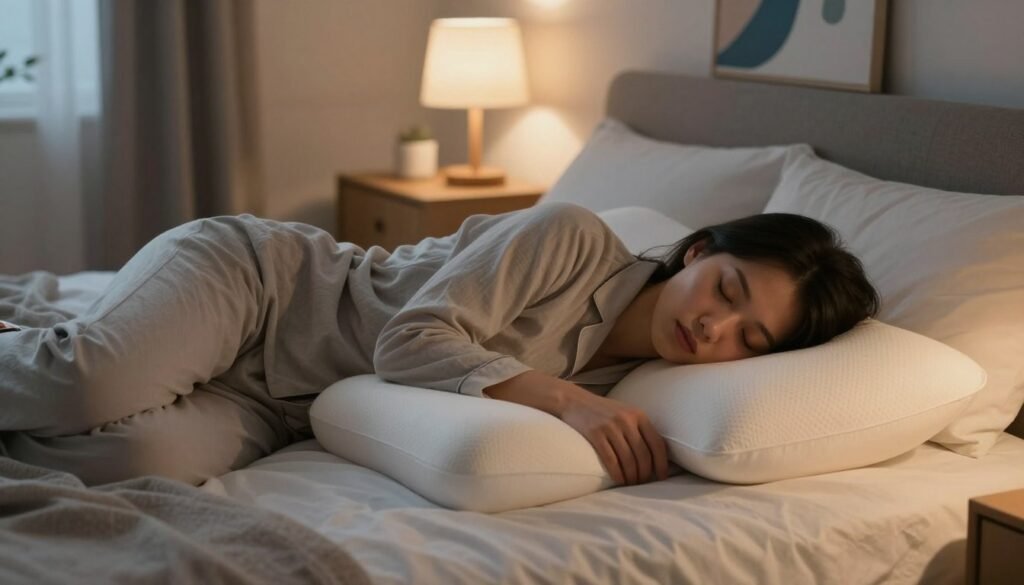
For those looking to improve overall sleep comfort, some explore bed support options designed to reduce pressure and support better rest throughout the night.
👉 Explore sleep comfort support options on Amazon
Managing arthritis at night means choosing the right sleep position. The right posture can lessen pain and stiffness in the morning. It’s important to find a sleep position that’s easy on your joints.
Here are some tips to protect your joints while you sleep:
- Maintain a neutral spine alignment
- Use supportive pillows for extra cushioning
- Stay away from positions that put pressure on swollen joints
- Let your body move naturally while you rest
Arthritis affects people differently, so sleep positions vary. Side sleepers with shoulder arthritis might need extra support. Those with knee arthritis should keep their legs slightly bent and cushioned between the knees. People with wrist and hand arthritis should keep their joints relaxed and in a neutral position.
Creating a sleep environment for arthritis goes beyond just how you sleep. The room’s temperature is key, as cold can make joints stiffer. Soft, breathable bedding and adjustable mattresses can also offer more comfort.
Comfort is personal: What works for one person might not work for another.
While these tips can help with arthritis sleep issues, always talk to your doctor. They can give you advice that fits your specific needs.
The Worst Sleep Positions for Back and Joint Health
Sleep positions greatly affect your body’s health, mainly spine support. Not all sleeping positions are good for your body. Some can put a lot of strain on your muscles and bones.
Knowing the risks of some sleep positions can help avoid long-term pain. Some positions can mess up your body’s natural alignment. This can put extra stress on your joints and muscles.
Why Stomach Sleeping Creates Spinal Stress
Stomach sleeping is bad for your spine. It makes your body bend in unnatural ways. This can lead to several health problems:
- Neck rotation causing prolonged strain
- Flattening of the lumbar spine’s natural curve
- Excessive lower back extension
- Increased pressure on vertebrae and joints
When you sleep on your stomach, your neck must twist to allow breathing, which creates sustained tension in cervical muscles. This position gets rid of the spine’s natural curve. It can cause morning pain, headaches, and long-term posture issues.
If you’re a stomach sleeper, here are some tips to help:
- Use minimal head elevation
- Place a thin pillow under your pelvis
- Practice gradual position shifting
- Use supportive mattresses that minimize pressure points
Changing your sleep habits takes time and patience. The aim is to become more aware and improve your sleep position for better health.
Creating an Ergonomic Sleep Environment
Making your sleep space just right is key for better sleep. The right setup can make your sleep time restorative. It helps your body stay in its natural position.
Key elements of an ergonomic sleep environment include:
- Temperature control: Keep your room cool, between 60-67 degrees Fahrenheit, for better sleep
- Darkness and noise reduction: Use blackout curtains and keep sounds down
- A supportive surface that fits your body’s shape
Knowing what your body needs is the first step. Ergonomic sleeping starts with noticing how your current sleep space affects you. Check your mattress for signs of wear, like sagging or morning stiffness.
Improving pressure point relief is more than just your mattress. Think about pillow height, blanket weight, and sheet materials too. The aim is to support your body’s natural alignment and ease joint and muscle stress.
Your sleep environment should work in harmony with your body, not against it.
Check how you feel in the morning to see if your sleep space needs work. Look for signs like:
- Regular morning pain or stiffness
- Hard time finding a comfy sleeping spot
- Waking up often
- Feeling tired even after enough sleep
Creating a great sleep space is a journey. It’s about paying attention to your body’s needs and making small changes as you go.
Transitioning to a New Sleep Position Successfully
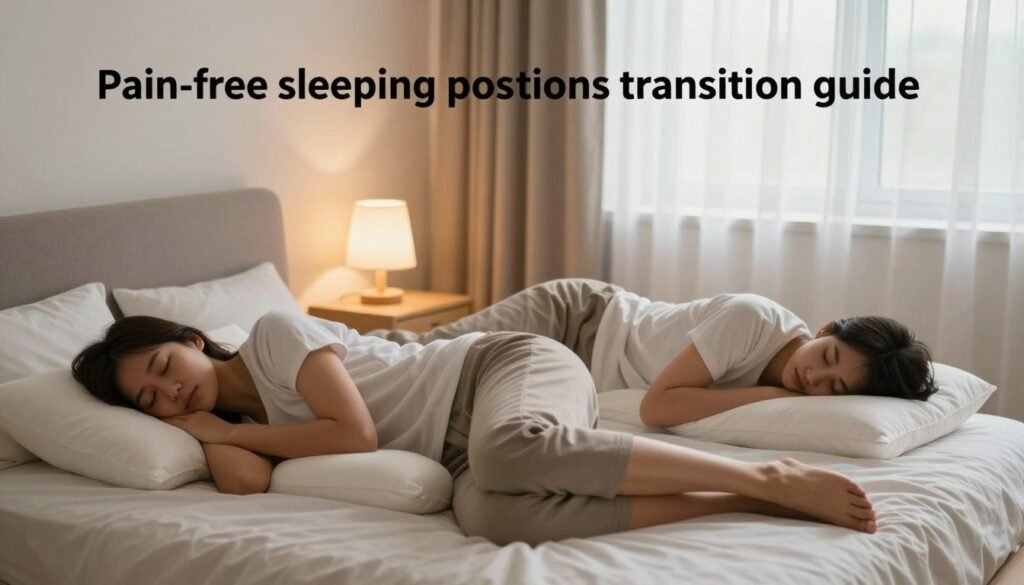
Changing your sleep position can be tough, but it’s key to avoiding pain. Our bodies tend to stick to what’s familiar. So, changing sleep positions needs patience and a smart plan.
Tips for Breaking Old Sleep Habits
Changing your sleep habits takes effort and smart tips. Here are some helpful strategies:
- Use strategic pillow placement to discourage rolling into old positions
- Practice the new sleep position during daytime relaxation
- Start each night in the desired position, even if you shift later
- Gradually increase time spent in the new position
Getting your mind ready is also important for changing sleep positions. Remember, it’s okay if you move a bit. You don’t have to be perfect right away.
What to Expect During the Adjustment Period
Adapting to a new sleep position takes time. You might face some initial hurdles:
- Potential increased waking frequency
- Temporary reduction in sleep quality
- Mild discomfort as muscles adjust
- Slight changes in sleep duration
It usually takes 2-4 weeks to get used to a new sleep position. Keep going, stay patient, and think about the long-term benefits to your health and comfort.
Additional Lifestyle Factors That Support Pain-Free Sleep
Getting comfortable sleep isn’t just about how you sleep at night. What you do during the day also matters a lot. Adding wellness habits to your daily routine can help ease back pain and keep your muscles healthy.
Important lifestyle choices that affect your sleep include:
- Regular physical activity to strengthen supporting muscles
- Maintaining proper hydration for tissue flexibility
- Stress management techniques
- Ergonomic workplace practices
Moving your body is key to getting ready for good sleep. Strategic exercise routines can balance your muscles and lower tension that might mess up your sleep.
| Lifestyle Factor | Impact on Sleep Comfort |
|---|---|
| Daily Movement | Reduces muscle stiffness, improves joint mobility |
| Stress Reduction | Minimizes muscle tension, promotes relaxation |
| Hydration | Supports tissue elasticity, reduces inflammation |
Evening routines that calm you down can make a big difference in your sleep. Try gentle stretching, meditation, or light yoga to get your body ready for a good night’s sleep.
When to Seek Professional Help for Sleep-Related Pain
Knowing when to get help for sleep pain is key to staying healthy. Many issues can be fixed by changing how you sleep. But, some signs mean you should see a doctor.
Look out for these signs that you might need a doctor’s help with your sleep:
- Persistent pain that doesn’t improve with position changes
- Pain that progressively worsens over time
- Accompanying symptoms like numbness or tingling
- Significant interference with daily activities
- Unexplained weakness or reduced mobility
There are many doctors who can help with sleep pain. Potential experts you might consult include:
- Primary care physicians
- Physical therapists
- Chiropractors
- Sleep specialists
- Pain management experts
These doctors can create plans just for you. They’ll look at your body, health history, and pain to suggest the best ways to sleep better.
Remember, seeking professional help is a proactive step in self-care, not a sign of weakness.
Your body tells you things through pain. Paying attention to it can stop long-term pain. Trust your body and see a doctor if sleep pain keeps bothering you.
Conclusion
Finding the best sleep positions for back, hip, and joint comfort is a journey. It takes patience and knowing yourself. The right sleep position can change your sleep for the better, reducing pain and boosting wellness.
Knowing how sleep positions affect your body is key. Side and back sleeping are usually best for your spine and joints. Avoiding stomach sleeping helps prevent strain. Adding ergonomic pillows and mattresses can also help your body rest better.
Changing sleep positions takes time. Listen to your body and make small changes. Notice how these changes affect your comfort. Even small adjustments can greatly improve your sleep and health.
Medical Disclaimer: This article is for educational and informational purposes only. It is not medical advice, diagnosis, or treatment. Always talk to a healthcare professional before changing your sleep routine or dealing with pain. Everyone’s experience is different, and getting professional advice is important for your health.
Affiliate Disclosure:
As an Amazon Associate I earn from qualifying purchases. This article may contain affiliate links, which means I may earn a commission at no extra cost to you.