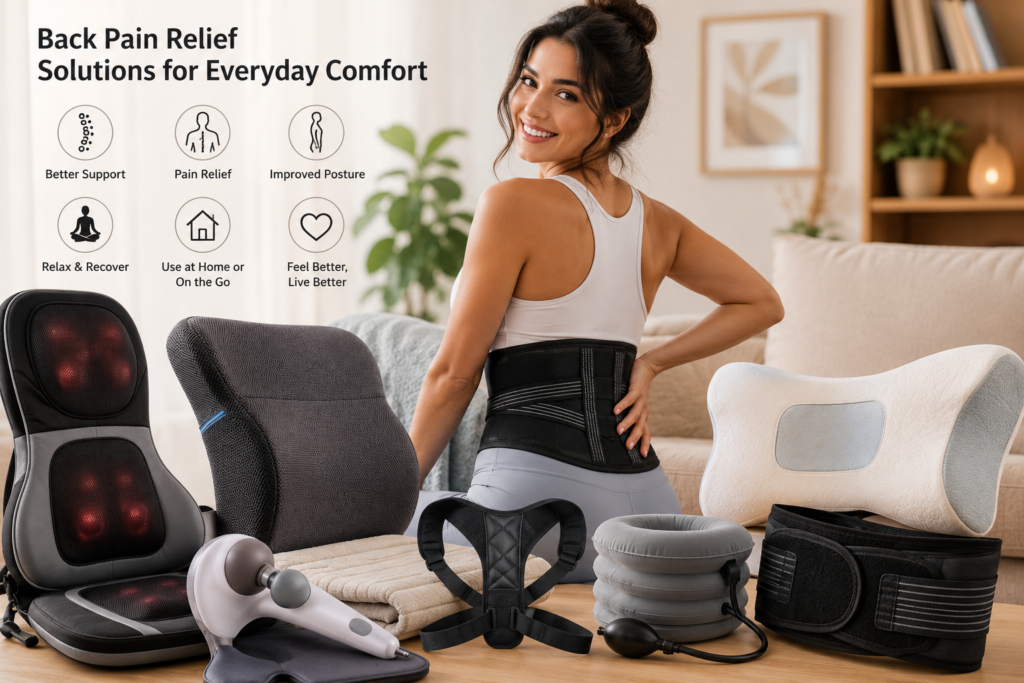
Discover the best back pain relief products for home use, including heating pads, TENS units, lumbar cushions, massage tools, and more. Learn how to choose the right option based on your symptoms.
Back pain can make even the simplest daily activities difficult. Whether your discomfort comes from sitting too long, lifting something heavy, poor posture, or everyday muscle tension, the right home relief products may help improve comfort and support your recovery.
The important thing to remember is that there isn’t one product that works for everyone. Someone with muscle tightness may benefit from heat therapy, while another person whose pain is caused by poor posture may experience greater relief from improving spinal support while sitting.
This guide explains which home back pain relief products may be worth considering, when to use them, and how they fit into a complete home recovery routine.
If you’re looking for additional ways to manage discomfort naturally, read our complete guide:
How to Relieve Lower Back Pain at Home
| If your back pain is caused by… | Product that may help |
|---|---|
| Tight muscles | Heating Pad |
| Sitting all day | Lumbar Support Cushion |
| Tailbone pressure | Seat Cushion |
| Muscle soreness | Massage Gun |
| Chronic stiffness | Foam Roller |
| Difficulty sleeping | Knee Pillow |
| Temporary support while lifting | Back Brace |
Why Home Relief Products Can Help
Most lower back pain develops because the muscles, joints, ligaments, and discs are placed under repeated stress throughout the day.
Common causes include:
- Sitting for long periods
- Poor posture
- Muscle tightness
- Weak core muscles
- Heavy lifting
- Sleeping in unsupported positions
- Age-related wear and tear
While these products aren’t cures, many people use them to reduce daily discomfort while continuing to improve posture, stay active, and strengthen their backs.
Using several approaches together is often more effective than relying on one product alone.
Choose Products Based on Your Symptoms
Before buying anything, ask yourself what seems to trigger your pain.
Tight muscles and stiffness
Heat therapy, massage tools, and gentle stretching often help people whose muscles feel tight rather than injured.
Pain after sitting
If your pain becomes worse after spending time in an office chair or driving, improving posture may be one of the biggest improvements you can make.
Learn more here:
Best Sitting Position for Lower Back Pain
If sitting itself causes discomfort, also read:
Lower Back Pain Gets Worse After Sitting
Morning stiffness
Many people wake up feeling stiff because muscles remain inactive overnight.
Starting your day with gentle movement may help improve flexibility before normal daily activities.
Read:
Morning Stretches for Lower Back Pain Relief
1. Heating Pads
Heating pads remain one of the most popular home back pain products because they are inexpensive, easy to use, and may help relax tight muscles.
Gentle heat may:
- Improve circulation
- Reduce muscle stiffness
- Make stretching easier
- Increase comfort before activity
Many manufacturers recommend using a heating pad for approximately 15–20 minutes per session.
Recommended Product
Many people choose a flexible heating pad with multiple heat settings and an automatic shutoff feature because it provides consistent warmth while helping tight muscles relax.
If you’re unsure how often heat should be used safely, read:
How Often Should You Use a Heating Pad for Back Pain?
If you’re thinking about using one overnight, read first:
How to Use a Heating Pad Before Bed Safely
A flexible wrap-around heating pad designed for the lower back is often a good choice because it stays in place while resting around the waist.
2. TENS Units
TENS (Transcutaneous Electrical Nerve Stimulation) units deliver small electrical pulses through adhesive pads placed on the skin.
Many people use them as a drug-free way to temporarily manage discomfort.
Benefits may include:
- Portable pain relief
- Adjustable intensity
- Multiple treatment modes
- Easy home use
Results vary from person to person, but many individuals include TENS therapy as part of a broader home pain management plan.
Recommended TENS Unit
A portable TENS unit offers adjustable intensity levels and multiple treatment modes, making it a convenient option for people looking for drug-free temporary pain relief at home or while traveling.
3. Lumbar Support Cushions
Poor sitting posture places continuous pressure on the lower spine.
A lumbar support cushion helps maintain the natural curve of your back while sitting.
They are commonly used in:
- Office chairs
- Car seats
- Dining chairs
- Airplane seats
For people who spend several hours sitting each day, improving posture alone may significantly reduce daily strain.
Recommended Lumbar Support Cushion
If you spend several hours sitting at a desk or driving, an ergonomic memory foam lumbar support cushion may help encourage better posture while reducing pressure on your lower back.
4. Seat Cushions
Seat cushions work differently from lumbar supports.
Instead of supporting the back, they reduce pressure beneath the hips and tailbone.
Memory foam cushions are especially popular among people who:
- Work from home
- Drive frequently
- Sit for extended periods
- Experience tailbone discomfort
Many people use both a seat cushion and lumbar cushion together for better overall spinal support.
Recommended Seat Cushion
A high-quality memory foam seat cushion helps distribute body weight more evenly, reducing pressure on the hips and tailbone during long periods of sitting.
5. Massage Guns
Massage guns provide rapid percussion to help loosen tight muscles surrounding the lower back.
Rather than using them directly over the spine, they’re generally best suited for the surrounding muscles such as the glutes, hips, and upper thighs.
Some people find that using a massage gun before stretching helps prepare tight muscles for movement.
Recommended Massage Gun
A handheld percussion massage gun can help loosen tight muscles surrounding the lower back, hips, and glutes after exercise or long workdays.
👉 Check Price on Amazon
6. Foam Rollers for Muscle Recovery
Foam rollers are one of the most affordable tools for improving flexibility and reducing muscle tightness. Instead of targeting the spine directly, foam rolling focuses on the surrounding muscles that often contribute to lower back discomfort.
Many people use foam rollers to release tension in the:
- Glutes
- Hamstrings
- Hip flexors
- Upper back
- Quadriceps
Tight muscles in these areas can affect your posture and place additional stress on the lower back.
When using a foam roller, move slowly and avoid rolling directly over the bones of your spine. Spending just five to ten minutes each day can help improve flexibility over time.
Foam rolling works best when followed by gentle stretching.
Recommended Foam Roller
A high-density foam roller is an affordable tool that many people use to release muscle tension, improve flexibility, and support recovery after stretching or exercise.
7. Back Braces for Temporary Support
Back braces are designed to provide additional support during activities that place extra strain on your lower back.
Some people wear them while:
- Lifting heavy objects
- Doing yard work
- Moving furniture
- Performing household chores
A brace may remind you to maintain better posture while reducing some of the stress placed on your lower back.
However, braces should generally be viewed as temporary support rather than a long-term solution. Relying on them every day without strengthening your back muscles may actually reduce muscle conditioning over time.
8. Wedge Pillows and Sleep Support
Many people focus on daytime activities but overlook how sleeping position affects their back.
A supportive wedge pillow or knee pillow may help keep the spine in a more comfortable position during sleep.
Depending on your preferred sleeping position, you may benefit from:
- A pillow between your knees if you sleep on your side.
- A pillow under your knees if you sleep on your back.
- A wedge pillow to slightly elevate your upper body.
Improving sleep posture may help reduce morning stiffness for some individuals.
Heat or Ice: Which Should You Choose?
One of the most common questions people ask is whether heat or ice works better for lower back pain.
In general:
Heat may be helpful for:
- Muscle tightness
- Chronic stiffness
- Ongoing muscle discomfort
Cold therapy may be more appropriate for:
- New injuries
- Swelling
- Inflammation
- Pain immediately after lifting
Choosing the right therapy often depends on the cause of your symptoms.
Learn more in our complete guide:
Heat or Ice for Lower Back Pain: What Works Faster?
Don’t Forget Movement
Even the best back pain products cannot replace regular movement.
Remaining inactive for long periods often causes muscles to become tighter and joints to become stiffer.
Simple activities like walking throughout the day may help maintain flexibility while reducing prolonged pressure on the lower back.
If you spend most of your day sitting, try standing and walking for a few minutes every hour.
Many people notice gradual improvements simply by moving more consistently.
Build a Daily Back Pain Relief Routine
Instead of relying on one product, many people find better results by combining several healthy habits.
A simple daily routine might include:
Morning
- Gentle stretching
- Short walk
- Heating pad if muscles feel stiff
During Work
- Lumbar support cushion
- Seat cushion if needed
- Standing and moving every hour
Evening
- Foam rolling
- Massage gun for tight muscles
- Gentle stretching
- Heat therapy if recommended
Small daily habits often have a greater long-term impact than using any single product occasionally.
Common Mistakes to Avoid
Many people accidentally slow their recovery by making simple mistakes.
Avoid:
- Sitting for several hours without standing.
- Using products without addressing poor posture.
- Ignoring regular exercise.
- Applying excessive heat for long periods.
- Using massage tools directly on the spine.
- Purchasing expensive products while neglecting healthy daily habits.
Products work best when combined with movement, stretching, and good posture.
How to Choose the Right Back Pain Relief Product
Choosing the right product depends on what’s causing your discomfort.
If your muscles feel tight, a heating pad or massage gun may provide temporary relief. If sitting all day causes your pain, improving your posture with a lumbar support cushion and ergonomic seat cushion may make a noticeable difference. People who wake up stiff often benefit from combining gentle stretching with supportive sleep positioning.
Instead of purchasing several products at once, start with the one that addresses your biggest daily challenge. Many people discover that a few simple changes provide more relief than buying multiple expensive devices.
Frequently Asked Questions
What is the best back pain relief product for home use?
There isn’t one product that’s best for everyone. The right choice depends on the cause of your pain. Heating pads may help tight muscles, while lumbar cushions are often beneficial for people who sit for long periods.
Do heating pads really help lower back pain?
Many people find that gentle heat temporarily relaxes tight muscles and improves comfort. Always follow the manufacturer’s safety instructions.
Are TENS units safe?
Many adults use TENS units safely at home. However, they may not be appropriate for everyone, especially individuals with certain implanted medical devices or specific medical conditions. Consult your healthcare provider if you are unsure.
Should I wear a back brace every day?
Back braces are generally intended for temporary support during certain activities rather than continuous daily use.
Can home products cure chronic back pain?
Home relief products may improve comfort and support daily activities, but they are not cures. Persistent or worsening pain should always be evaluated by a qualified healthcare professional.
Final Thoughts
The best back pain relief products for home use are the ones that address the underlying cause of your discomfort rather than simply masking the symptoms.
For some people, a heating pad provides enough relief to make daily activities easier. Others benefit more from improving posture with lumbar support, adding regular stretching, or using massage tools to reduce muscle tightness.
The most effective approach usually combines supportive products with healthy habits such as regular movement, proper posture, stretching, and strengthening exercises.
Remember that recovery often takes consistency. Small improvements made every day can have a meaningful impact over time.
If your pain is severe, persistent, follows a traumatic injury, or is accompanied by numbness, weakness, fever, or loss of bladder or bowel control, seek medical attention immediately.
Related Articles
How to Relieve Lower Back Pain at Home
Best Sitting Position for Lower Back Pain
Morning Stretches for Lower Back Pain Relief
How Often Should You Use a Heating Pad for Back Pain?
Heat or Ice for Lower Back Pain: What Works Faster?
Home relief products work best when combined with regular movement, stretching, proper posture, and maintaining a healthy body weight.
These products are commonly used to improve comfort, reduce muscle tightness, and support healthy posture during daily activities.
This article contains affiliate links. If you purchase a product through one of these links, we may earn a small commission at no additional cost to you.
This content is for educational purposes only and should not be considered medical advice. Always consult a qualified healthcare professional before beginning any new treatment, exercise program, or pain management routine, especially if your symptoms are severe, persistent, or accompanied by other concerning signs.