Ever felt your back hurt after a long day at the desk? Lower back pain from sitting too long is a big problem. It affects millions of people who work at desks or remotely in the U.S.
Lower back pain from sitting too long is more complicated than you might think. Our bodies are meant to move, not sit for hours. Sitting for long periods puts stress on our spine, leading to pain.
Workplaces often require us to sit for a long time. This goes against our natural way of standing. Sitting forces our muscles and spine into unnatural positions, causing strain and discomfort.
Key Takeaways
- Prolonged sitting can cause significant back pain
- Human bodies are not designed for extended stationary periods
- Desk jobs create unique physical challenges
- Back pain involves multiple body systems
- Movement is key for spinal health
What Causes Lower Back Pain After Sitting Too Long?
Sitting for too long can harm your spine. Knowing how sitting affects your back helps keep your lower back safe.
Today, we sit a lot, which hurts our spine. Our bodies aren’t made for sitting for hours. This makes our spine face many challenges.
How Posture Affects Your Spine
Bad sitting posture puts a lot of pressure on your spine. Many people sit on their upper buttocks, not their sit bones. This puts extra stress on your lower back.
- Rounded shoulders strain neck muscles
- Extended lower back creates spinal compression
- Uneven weight distribution disrupts natural alignment
The Role of Disc Pressure in Prolonged Sitting
Sitting makes your discs press harder than standing. Studies show disc pressure can double or triple when you sit down.
| Posture | Disc Pressure Increase |
|---|---|
| Standing | 100% |
| Sitting Upright | 140% |
| Leaning Forward | 190% |
Muscle Weakness and Sitting-Related Pain
Sitting for a long time weakens your muscles. Your hip flexors relax, and your hamstrings work too hard. This makes your glutes unstable.
- Hip flexors become inactive
- Hamstrings overcompensate
- Gluteal muscles lose strength
Knowing these issues can help you avoid back pain from sitting. You can do this by moving more and using better sitting setups.
The Anatomy Behind Sitting-Related Back Pain
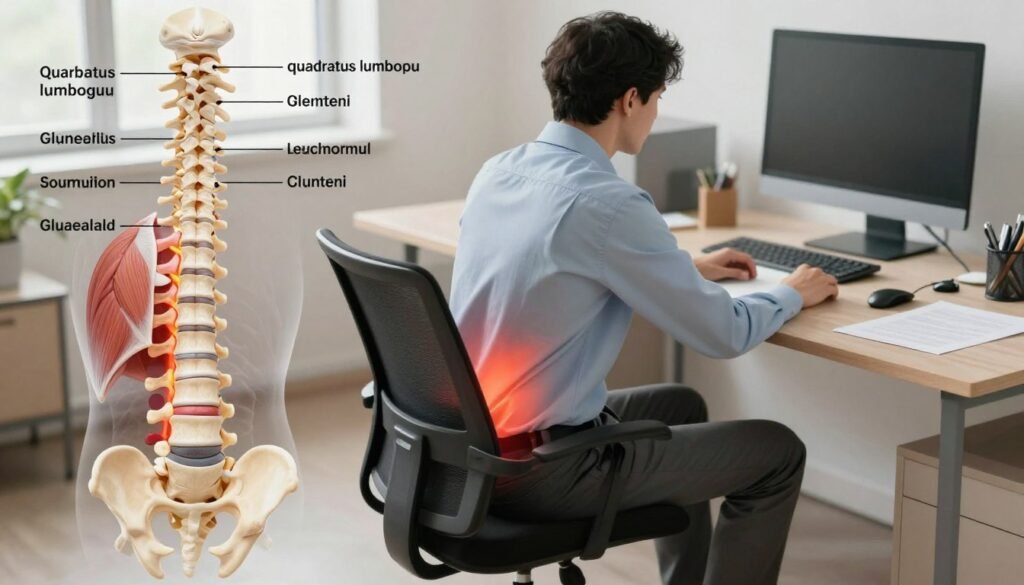
Desk job lower back pain is common because of how our lower back is built. The lumbar spine is made to support our weight and move. But sitting for long times puts a lot of stress on it.
The lower back has five vertebrae that curve naturally. Between these vertebrae are intervertebral discs, which are like shock absorbers. These gel-like cushions help our spine move smoothly and prevent bones from rubbing together.
- Vertebrae provide structural support
- Intervertebral discs create cushioning
- Muscles stabilize spinal alignment
- Nerves transmit signals throughout the body
Sitting for long periods can push these discs together, making them less effective. This can cause them to wear down over time. It might lead to back pain and less flexibility in the spine.
| Spinal Component | Function | Impact of Prolonged Sitting |
|---|---|---|
| Vertebrae | Structural support | Increased compression |
| Intervertebral Discs | Shock absorption | Reduced cushioning |
| Muscles | Stabilization | Potential weakness |
Understanding how desk job lower back pain starts is key. Knowing how our spine works helps us protect it when we sit for long. This knowledge can help us stay healthy in our work environments.
Common Medical Conditions That Worsen with Prolonged Sitting
Sitting for long periods can harm your back. It can make or worsen many health issues. Knowing how sitting affects your body helps avoid long-term back problems.

Some health problems get harder when you sit for a long time. These issues can hurt your spinal health and comfort.
Sciatica and Herniated Discs
Sciatica is a painful condition caused by nerve compression. Sitting for a long time puts more pressure on spinal discs. This can make sciatic nerve pain worse.
- Pain can extend from lower back through hips
- Nerve compression increases with prolonged sitting
- Individuals aged 30-50 are most susceptible
Degenerative Disc Disease and Spinal Stenosis
Sitting too much can lead to disc degeneration. As discs wear down, they lose their cushioning. This can cause nerve compression.
- Disc degeneration begins in middle age
- Spinal spaces can narrow, increasing nerve pressure
- Osteoarthritis becomes more prevalent with age
If you have ongoing back pain, see a doctor. They can give you a proper diagnosis and treatment plan.
How Desk Jobs and Sedentary Lifestyles Contribute to Lumbar Pain
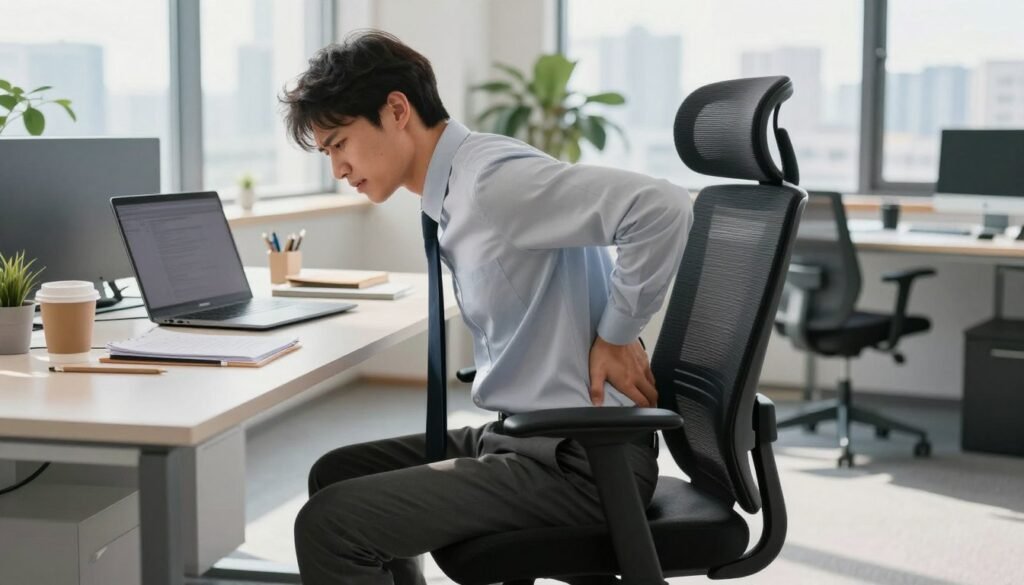
Today’s work settings have changed a lot, leading to big problems for back pain. People in many jobs sit for long hours, often in bad ergonomic spots.
Working from home has added new challenges to keeping our backs healthy. We often move between different places like:
- Kitchen tables
- Living room couches
- Bedroom workstations
- Temporary home office setups
These places usually don’t have good support for our lower backs. This makes it more likely for us to get chronic back pain. Prolonged sitting without moving puts a lot of pressure on our spines.
| Work Environment | Back Pain Risk | Recommended Intervention |
|---|---|---|
| Traditional Office | Moderate | Ergonomic Chair |
| Home Office | High | Adjustable Workspace |
| Mobile/Flexible Work | Very High | Regular Posture Breaks |
Sitting too much isn’t just a work problem. It also happens during commutes, free time, and when we use devices. All this sitting adds up and hurts our spines over time.
Understanding your body’s signals and creating intentional movement can help mitigate sitting-related back pain risks.
Preventing Sitting-Related Back Pain Through Ergonomic Solutions
Keeping your spine safe from sitting harm needs smart steps in work ergonomics and health care. To stop back pain from sitting, first know how your work space affects your body.
Choosing the Right Office Chair and Desk Setup
Finding the right chair is key to less back pain. Look for chairs with features that help your spine stay right:
- Adjustable height to keep feet flat on the floor
- Strong lumbar support for the spine’s natural curve
- Seat depth for full back support
- Armrests for relaxed shoulders
Good sitting isn’t just about the chair. Your desk setup is also important for keeping good posture. Make sure your monitor is at eye level to avoid leaning forward, which can hurt your spine.
Movement Breaks and Stretching Techniques
Moving often is key to avoiding back pain from sitting. Experts say to take short breaks every 30-60 minutes to keep your spine healthy:
- Try the Brugger relief position to fix your posture
- Do gentle doorway shoulder stretches
- Take standing or walking breaks
- Use standing desk options when you can
Adding these tips can lower the chance of long-term back issues from sitting too much. Small, steady changes can greatly help keep your spine healthy.
Treatment Options for Lower Back Pain from Sitting
Managing lower back pain from sitting needs a mix of self-care and medical help. There are many ways to ease the pain and keep your spine healthy.
For quick relief, try these home steps:
- Apply ice packs for acute inflammation
- Use heating pads to relax muscle tension
- Practice gentle stretching exercises
- Take over-the-counter anti-inflammatory medications
For more serious back pain, see a doctor. They offer specific treatments:
- Physical Therapy: Customized exercise programs to strengthen core muscles
- Chiropractic adjustments
- Targeted massage treatments
- Specialized pain management techniques
If pain lasts or gets worse, see a healthcare expert. Orthopedic specialists can help with a full check-up and treatment plan. This can include simple steps or more advanced care.
“Prevention and proactive management are key to addressing sitting-related back pain,” experts suggest.
Using ergonomic cushions, posture correctors, and back supports can also help. These tools offer extra comfort and support when sitting for a long time.
Conclusion
Understanding back pain prevention starts with recognizing the challenges of sedentary work environments. Healthy sitting habits are not just a luxury but a necessity for maintaining spinal health. Modern professionals spend countless hours seated, which increases the risk of developing chronic lower back discomfort.
The key to reducing sitting-related back pain lies in proactive strategies. Regular movement breaks, ergonomic workspace design, and conscious posture management can significantly minimize risks. Physical therapists recommend incorporating gentle stretches and strength training exercises to support your spine’s natural alignment.
While this article provides valuable insights into back pain prevention, it cannot replace professional medical advice. Individuals experiencing persistent or severe back pain should consult healthcare specialists who can provide personalized treatment recommendations. Every body is unique, and professional guidance ensures a targeted approach to managing spinal health.
Your journey toward better back health begins with awareness and small, consistent changes. By implementing healthy sitting habits and staying attuned to your body’s signals, you can create a more comfortable and supportive work environment. Remember, prevention is always more effective than treatment when it comes to maintaining your spinal well-being.
You May Also Like
➡️ Heat or Ice for Lower Back Pain: What Works Faster?
➡️ How to Relieve Lower Back Pain at Home (Step-by-Step Daily Routine)
➡️ Morning Stretches for Lower Back Pain Relief
Medical Disclaimer: This content is for informational purposes only and is not a substitute for professional medical advice, diagnosis, or treatment. Always consult a qualified healthcare provider with any questions regarding a medical condition.
FTC Disclosure: This article contains affiliate links. If you make a purchase, I may earn a small commission at no extra cost to you.