This article may contain affiliate links. If you purchase through these links, we may earn a small commission at no extra cost to you.
Back pain can quietly take over everyday life. Sitting too long, poor posture, lifting something the wrong way, or even sleeping awkwardly can leave your lower back stiff and sore. For many people, the discomfort isn’t severe enough to require medical treatment — but it is enough to interfere with sleep, work, and normal daily activities.
One of the simplest ways people support comfort at home is heat therapy.
Heat therapy works by relaxing tight muscles and encouraging healthy circulation to the affected area. When warmth reaches the muscles, they loosen, tension decreases, and movement often becomes easier. Because of this, heating pads have become one of the most commonly used at-home comfort tools for back pain.
In this guide, you’ll learn how heating pads work, which types are available, and how to choose one that fits your needs safely.
Best Heating Pads for Back Pain Relief (Top Picks)
If you’re looking for a simple and effective way to ease back discomfort at home, choosing the right heating pad can make a big difference. The best options include adjustable heat settings, automatic shut-off features, and designs that comfortably cover the lower back.
Here are some of the most common types people use:
- 👉 Best Overall: Large heating pad with adjustable heat and auto shut-off
- 👉 Budget Option: Simple heating pad with consistent, gentle warmth
- 👉 Premium Option: Deep heat therapy pad designed for full back coverage
👉 View top-rated heating pads for back pain relief here
These options are widely used to help relax muscles, improve circulation, and support daily comfort routines safely.
Why Heat Therapy Helps Back Discomfort
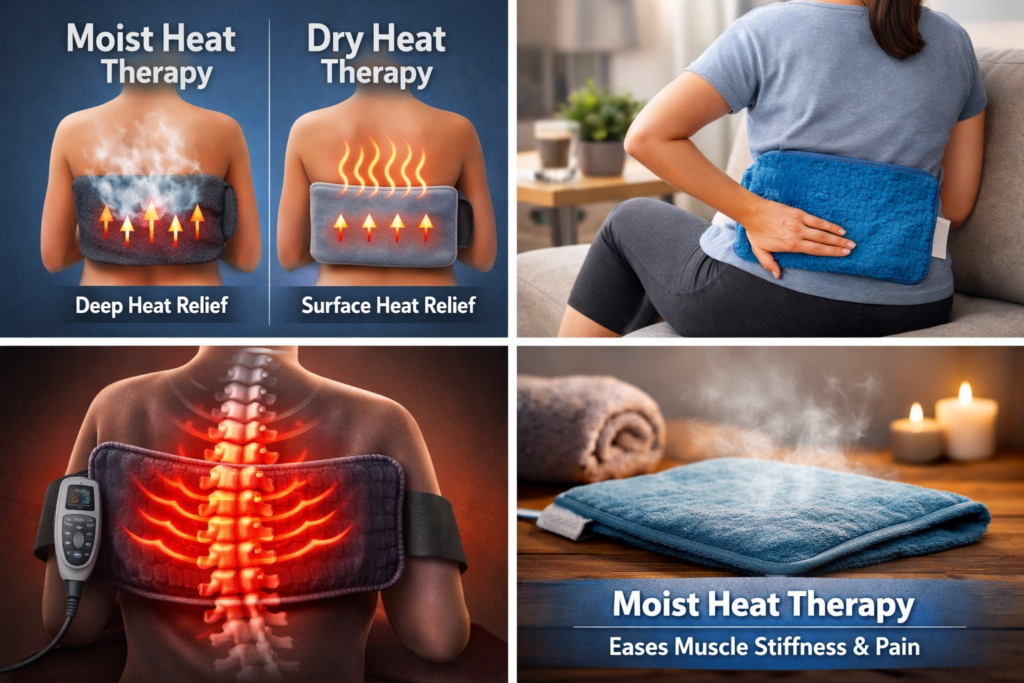
Heat therapy supports comfort in several ways:
• encourages blood flow to tight muscles
• helps muscles relax
• reduces stiffness
• improves mobility
When muscles tighten, they limit movement and can create soreness. Warmth helps loosen those tissues, which is why many people feel relief shortly after applying a heating pad. “Understanding when to use heat is just as important as choosing the right device. Learn more in our guide Do Heating Pads Actually Help Back Pain?”
Heat therapy is typically most helpful for:
- muscle tightness
- stiffness from sitting
- morning soreness
- mild recurring back discomfort
It is commonly used as part of a daily comfort routine, especially in the evening after a long day.
Heat therapy is often combined with other at-home comfort methods.
Types of Heating Pads
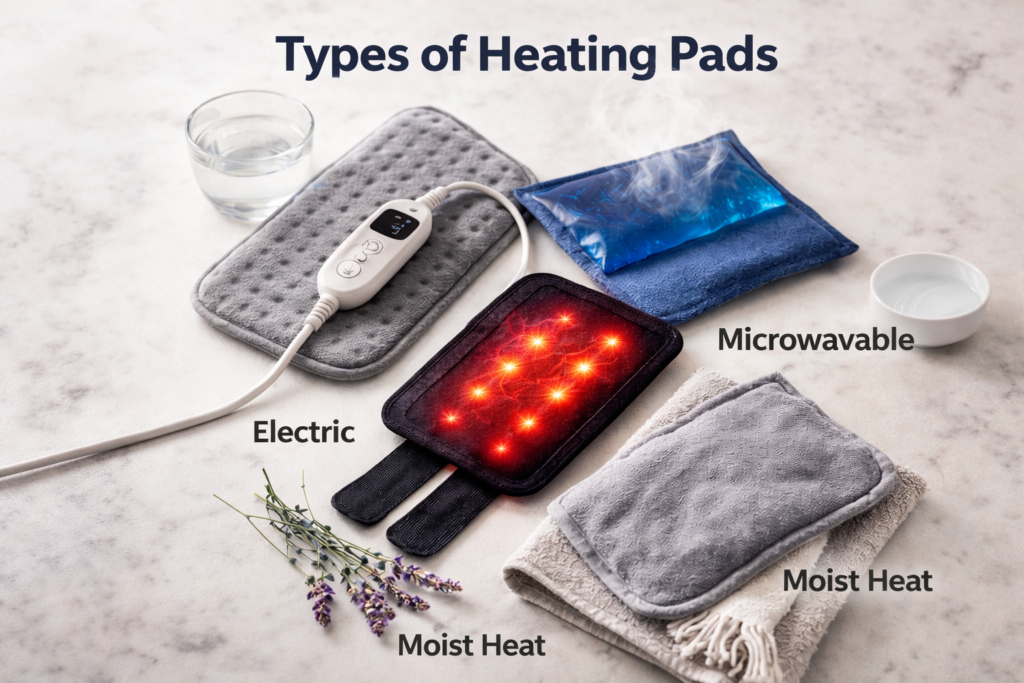
Not all heating pads work the same. Each type has advantages depending on how and when you plan to use it.
1. Electric Heating Pads
These plug into an outlet and provide consistent heat. Most include adjustable temperature settings and automatic shut-off timers.
Best for: regular daily use at home.
2. Microwavable Heat Packs
Filled with gel, flaxseed, or rice materials that hold warmth. They are flexible and portable.
Best for: quick relief and travel.
3. Infrared Heating Pads
Designed to provide deeper warmth and even heat distribution.
Best for: larger back areas and extended relaxation sessions.
4. Moist Heat Therapy Pads
These combine heat with gentle moisture. Many people find them especially soothing for stiffness.
Best for: tight muscles and morning stiffness.
How to Choose the Right Heating Pad
Choosing a heating pad is less about brand names and more about matching it to your routine.
Consider:
Size
Larger pads cover the lower back better and are easier to keep in place.
Temperature control
Adjustable settings help you find a comfortable warmth level.
Auto shut-off feature
Important for safety, especially if used before sleep.
Portability
Microwavable packs are useful if you move around the house.
A comfortable heating pad should feel warm — never hot.
Safe Use Guidelines
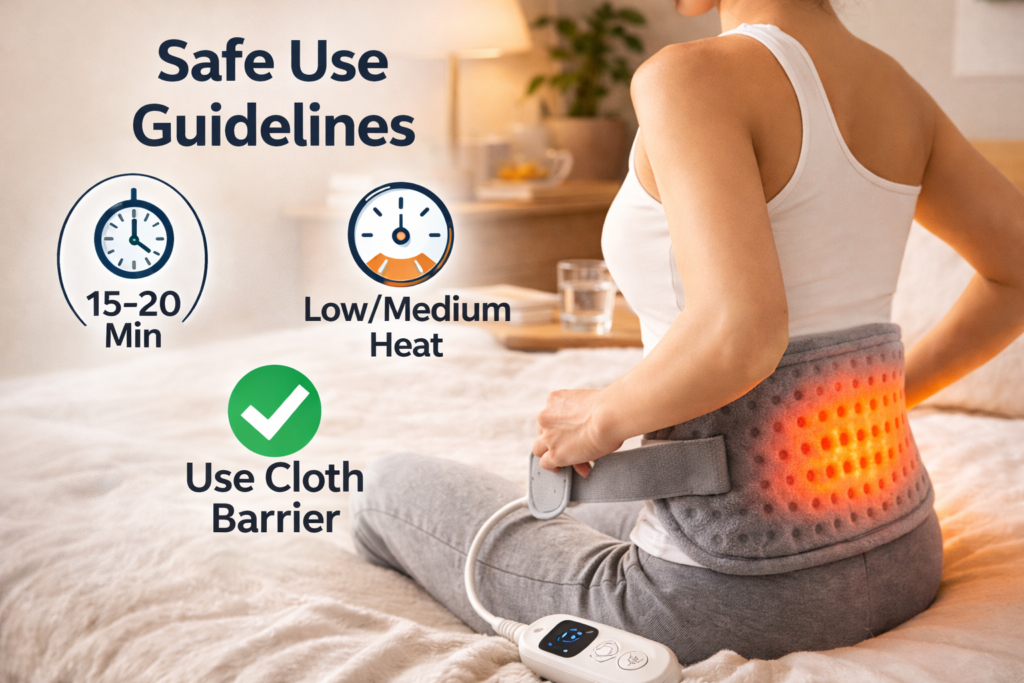
Using heat therapy correctly matters.
Follow these tips:
• Limit sessions to about 15–20 minutes
• Always start at a low heat setting
• Place cloth or clothing between skin and pad
• Allow skin to cool before repeating use
Avoid heat therapy if:
- swelling is present
- there is a new injury
- skin irritation exists
- you cannot feel temperature well
Other Ways to Support Back Comfort at Home
Heating pads work best when combined with small daily habits.
Helpful additions include:
Gentle movement – light stretching helps prevent stiffness
Posture awareness – sitting upright reduces strain
Sleep positioning – placing a pillow under knees (back sleepers) or between knees (side sleepers)
Hydration – muscles function better when properly hydrated
“Daily movement routines can support ongoing back comfort.”
Choosing a Heating Pad That’s Safe and Effective
Not all heating pads are designed the same way. If you plan to use heat therapy regularly, it’s important to choose one that includes safety features and provides consistent, comfortable heat.
When selecting a heating pad, look for:
- Adjustable heat levels
- Automatic shut-off functionality
- Soft, skin-friendly materials
- Proper size for full back coverage
👉 Check recommended heating pads designed for comfort and safety
Using a well-designed heating pad for short, controlled sessions can help you get the benefits of heat therapy while reducing the risk of irritation or overheating.
Conclusion
Heating pads are one of the simplest comfort tools you can use at home. They are affordable, easy to use, and can fit naturally into an evening relaxation routine.
While they don’t address the cause of back pain, they can help muscles loosen, reduce stiffness, and make normal activities feel easier. When combined with posture habits, gentle movement, and supportive sleep positions, heat therapy becomes a helpful part of everyday comfort care.
The goal isn’t just temporary relief — it’s creating daily habits that help your body feel better over time.
Wellness Disclaimer
PathwayToRelief.com provides educational information about comfort, wellness routines, and everyday support products. This content is not medical advice and should not replace guidance from a qualified healthcare professional. Individual needs vary. Always consult a medical professional regarding persistent pain or health concerns.