Waking up with lower back pain can often be traced back to how you sleep. The position your body stays in for hours overnight has a direct impact on your spine, muscles, and overall comfort.
The good news? Small adjustments to your sleeping position can make a big difference.
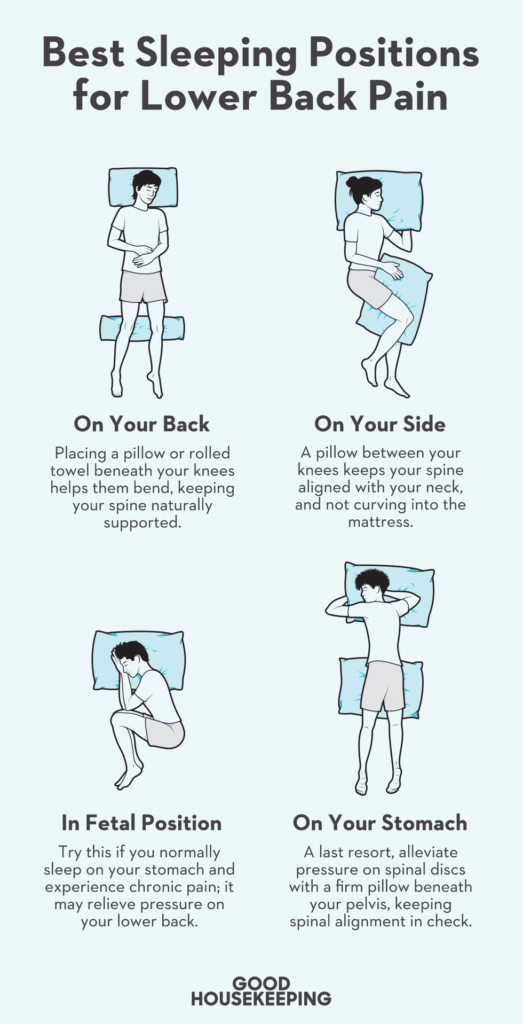
1. Side Sleeping with a Pillow Between Your Knees
Sleeping on your side is one of the best positions for reducing lower back strain.
Placing a pillow between your knees helps:
- Keep your hips aligned
- Reduce twisting in your spine
- Lower pressure on your lower back
Make sure your pillow supports your neck so your spine stays in a straight line from head to hips.
2. Back Sleeping with Knee Support
If you prefer sleeping on your back, adding support under your knees can significantly reduce pressure.
Place a pillow under your knees to:
- Maintain the natural curve of your spine
- Reduce tension in your lower back
- Prevent your back from arching too much
This position works especially well for people who experience stiffness in the morning.
❌ Sleeping Positions to Avoid
Stomach Sleeping
Sleeping on your stomach is one of the worst positions for lower back pain.
It can:
- Increase strain on your spine
- Force your neck into an unnatural position
- Create long-term discomfort
If you can’t avoid it, try placing a pillow under your hips to reduce pressure.
🛏 Simple Support Tips That Make a Big Difference
Your sleeping position is only part of the solution. Adding proper support can improve results even more.
- Use a medium-firm mattress for better spinal support
- Choose a pillow that keeps your neck aligned
- Avoid very soft surfaces that cause your body to sink
👉 For more guidance on supportive sleep posture, read
👉 If you often wake up stiff or sore, this can help explain why
Your sleeping position is only part of the solution. Adding proper support can improve results even more.
🌙 Build Better Sleep Habits
Consistency matters. Try to:
- Stick to one supportive position
- Adjust your pillows as needed
- Avoid sudden position changes during the night
Over time, your body will adapt and your discomfort should improve.
🧠 Final Thoughts
The best sleeping position for lower back pain is one that keeps your spine aligned and supported.
With a few simple adjustments, you can reduce strain, improve sleep quality, and wake up feeling better.
PathwayToRelief.com provides educational wellness information only and does not offer medical advice. Always consult a qualified healthcare professional before making changes to your health routine.