Introduction
Waking up with lower back stiffness is extremely common — and many people never realize their sleep position is the cause.
Your body repairs muscles, joints, and spinal discs while you sleep. But if your spine stays twisted or unsupported for 6–8 hours every night, pressure builds on nerves and muscles. That’s why some people go to bed feeling fine and wake up sore.
The goal isn’t a “perfect” mattress or expensive products.
The real key is keeping your spine in a neutral position while you sleep.
This guide shows the safest sleeping positions, how to support your body correctly, and simple habits that help your back recover overnight.
Key Takeaways
- Neutral spine alignment reduces pressure on the lower back
- Side sleeping with a pillow between the knees helps prevent twisting
- Back sleeping with knees elevated relaxes spinal muscles
- Stomach sleeping usually worsens back pain
- Proper pillow placement matters more than mattress price
Why Sleep Position Affects Lower Back Pain
Your spine is not straight — it has natural curves.
When those curves are supported, muscles relax and discs rehydrate overnight.
When unsupported:
• muscles stay tight
• joints compress
• nerves become irritated
This is why poor sleep posture can create morning pain even without an injury.
Best Sleeping Positions for Lower Back Pain
1. Side Sleeping (Best Overall Position)
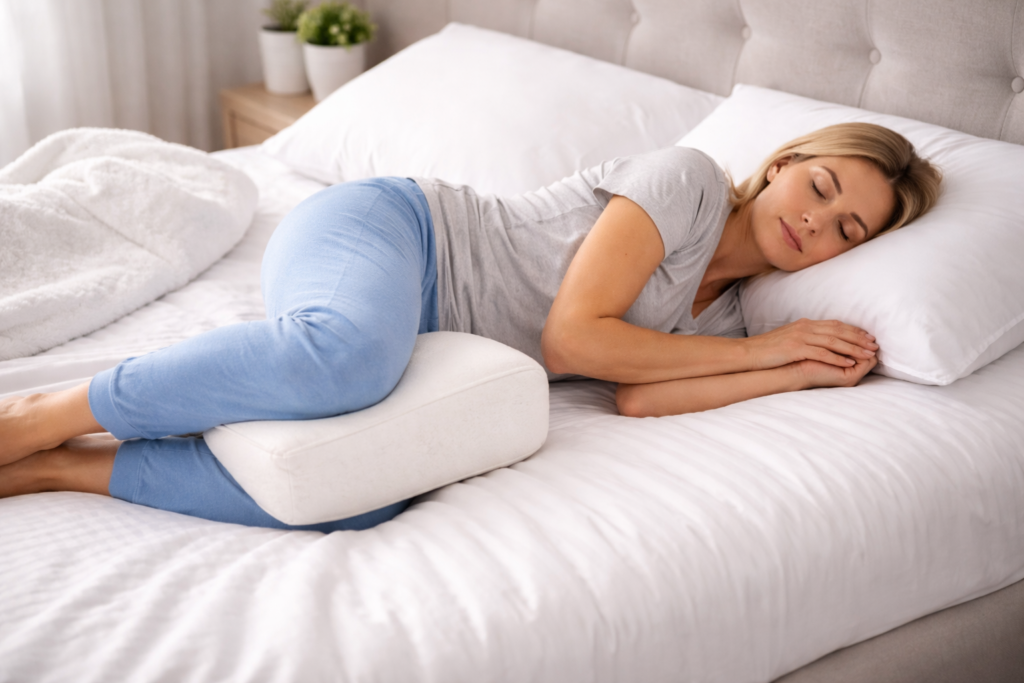
Side sleeping position with pillow between knees for lower back pain.
How to do it properly
- Lie on your side
- Bend knees slightly
- Place a pillow between your knees
- Keep ears, shoulders, and hips aligned
The pillow prevents your top leg from pulling your spine downward.
2. Back Sleeping With Knees Elevated
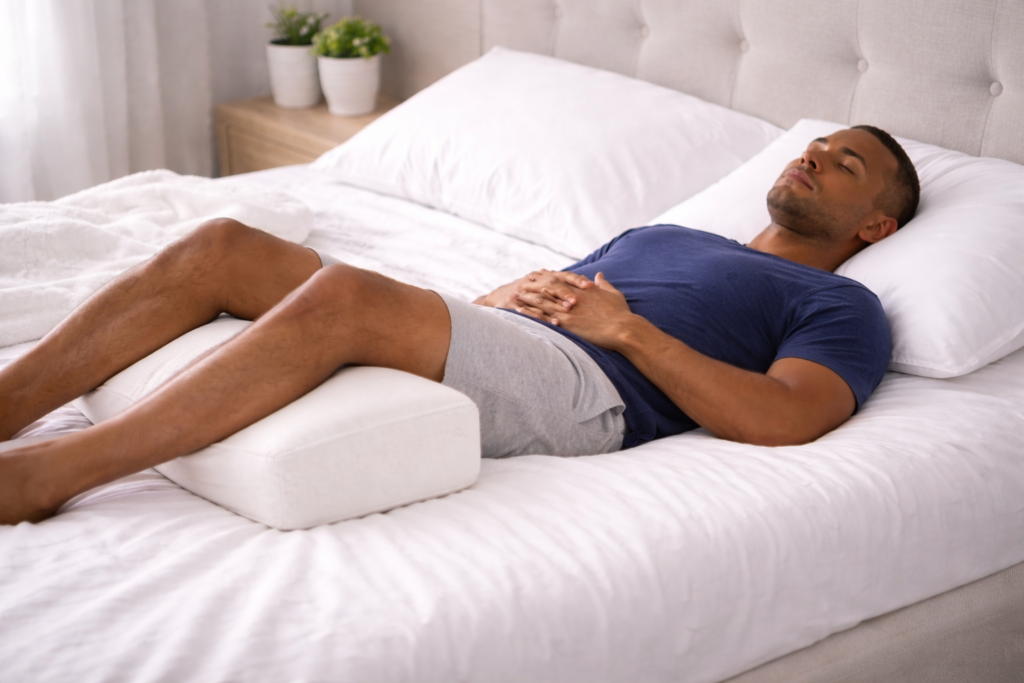
Back sleeping position with pillow under knees for spine support
Place a pillow under your knees.
This flattens the arch in your lower back and relaxes spinal muscles.
Why it works
- reduces disc pressure
- relaxes lumbar muscles
- improves circulation
3. Modified Fetal Position (For Disc Pain)
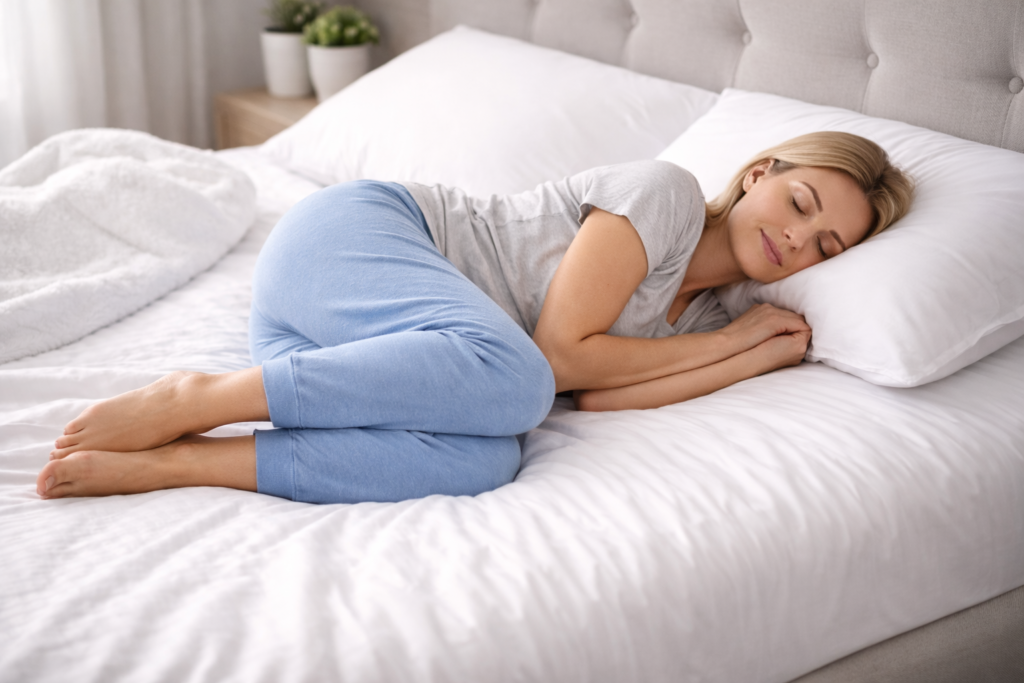
Gentle fetal sleeping position for herniated disc relief
Important:
Do NOT curl tightly. Over-curling rounds your spine too much and can worsen pain.
Positions to Avoid
Stomach Sleeping
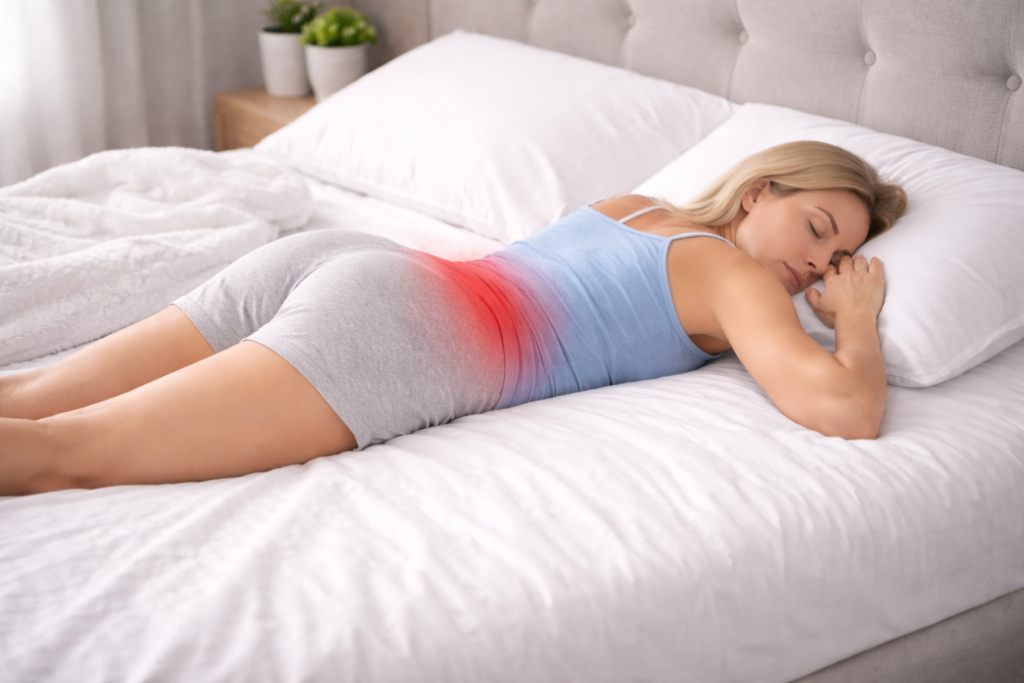
This is the worst position for most people with back pain.
Why:
- forces neck rotation
- compresses lumbar spine
- tightens hip flexors
If you cannot stop:
Place a thin pillow under your hips.
Setting Up Your Sleep Environment
Pillow Setup
Your pillow should keep your neck level with your spine.
Too high = neck strain
Too flat = shoulder collapse
Helpful supports
- knee pillow (side sleepers)
- leg pillow (back sleepers)
- body pillow (frequent movers)
Mattress Firmness
Most back pain sufferers do best with medium-firm support.
Too soft → spine sinks
Too firm → pressure points form
Evening Routine That Helps Your Back
Doing a short routine before bed makes a huge difference.
Gentle Stretches
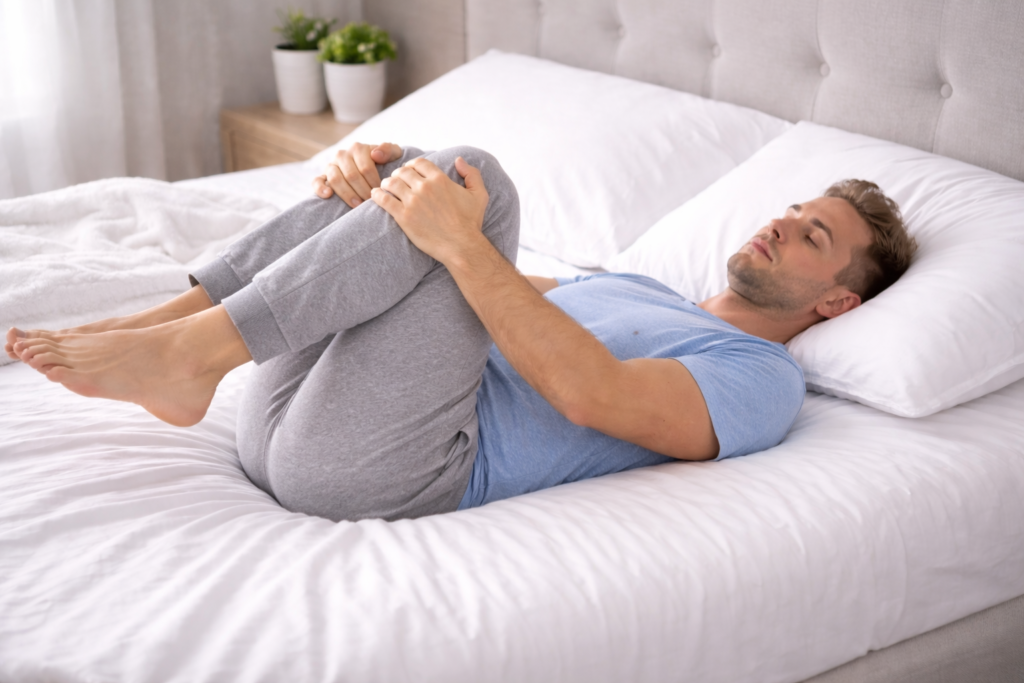
Knees to chest stretch for lower back pain relief
Do 5–10 minutes before bed:
• knees-to-chest stretch
• cat-cow stretch
• hamstring stretch
This relaxes muscles so they don’t tighten overnight.
Heat Therapy
A heating pad for 15–20 minutes before sleep helps muscles loosen and improves blood flow.
Daytime Habits That Improve Night Pain
Night pain usually starts during the day.
Helpful habits:
- stand every 30–60 minutes
- walk daily
- strengthen core muscles
- avoid slouching
Even small posture changes dramatically affect morning pain.
Conclusion
Your sleeping position plays a major role in lower back pain.
By supporting your spine and avoiding positions that twist or compress it, many people notice improvement within days. Combined with gentle stretching and proper posture, better sleep posture allows your body to recover naturally overnight.
You don’t need complicated treatments — often your body just needs proper support while resting.The information on PathwayToRelief.com is for educational and informational purposes only and is not intended as medical advice, diagnosis, or treatment. Always consult a qualified healthcare professional before starting any exercise routine, stretching program, or health-related change, especially if you have an existing injury, chronic pain condition, or medical concern. Reliance on any information provided on this website is solely at your own risk.
Medical Disclaimer
The information on PathwayToRelief.com is for educational and informational purposes only and is not intended as medical advice, diagnosis, or treatment. Always consult a qualified healthcare professional before starting any exercise routine, stretching program, or health-related change, especially if you have an existing injury, chronic pain condition, or medical concern. Reliance on any information provided on this website is solely at your own risk.
You can also follow a simple daily recovery routine in our guide: How to Relieve Lower Back Pain at Home (Step-by-Step Daily Routine)