Ever feel like your bed is making your back pain worse instead of better?
Learning the best sleeping positions for lower back pain can completely change how you feel when you wake up. Many people deal with stiffness, tightness, or soreness in the morning — and often, the root cause is simply how they’re sleeping.
The good news? Small adjustments can take pressure off your spine, help your muscles recover overnight, and improve your overall sleep quality.
Let’s break down the positions that actually help your body heal.
Key Takeaways
- Proper spinal alignment reduces pressure on the lower back
- Side sleeping with support helps keep hips balanced
- Back sleeping with elevation relieves spinal compression
- Poor posture during sleep can worsen pain overnight
- Your mattress and pillow play a major role in comfort
Understanding the Connection Between Sleep and Back Pain
Why Sleep Posture Matters
Your spine has a natural curve — and when you sleep in a position that supports that curve, your muscles can relax and recover.
When your posture is off:
- Muscles stay tense
- Pressure builds in the lower back
- Pain increases by morning
That’s why sleep position is one of the most overlooked causes of back discomfort.
Common Causes of Nighttime Back Pain
- Unsupportive mattress
- Poor pillow alignment
- Sleeping on your stomach
- Tight muscles from sitting all day
👉If you’re dealing with pain after long hours sitting, improving your setup can also help:
Best Sleeping Positions for Lower Back Pain (Doctor-Recommended Relief Guide 2026)
Sleeping on Your Side (BEST OVERALL)
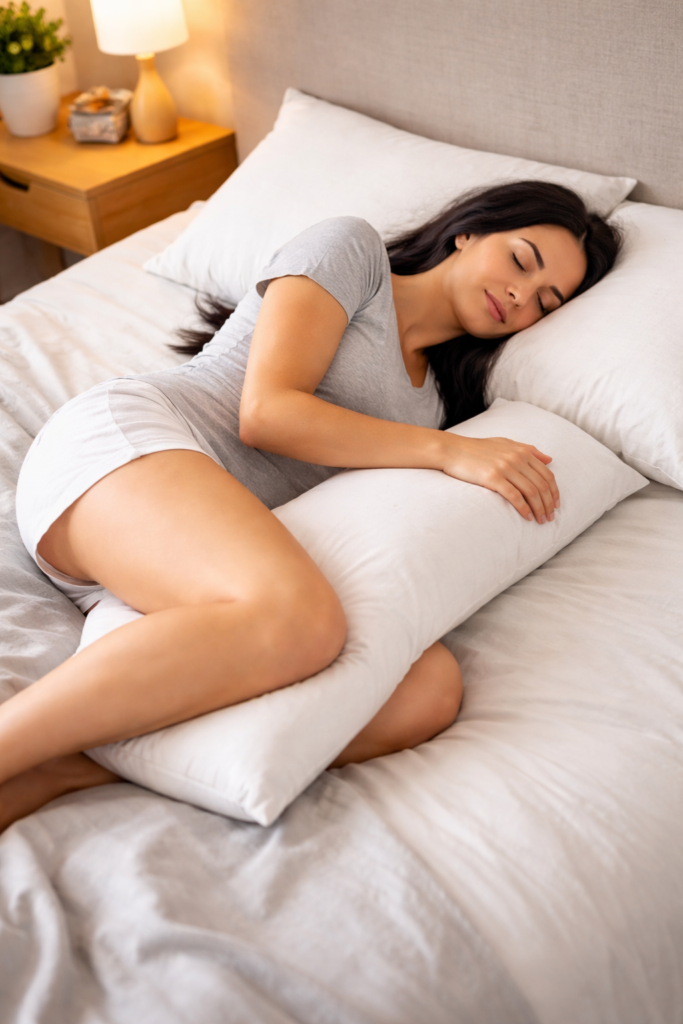
side sleeping position with pillow between knees for spinal alignment
Sleeping on your side is one of the most recommended positions.
How to do it right:
- Place a pillow between your knees
- Keep your spine straight
- Avoid curling too tightly
Why it works:
- Keeps hips aligned
- Reduces pressure on the lower back
- Supports natural spinal position
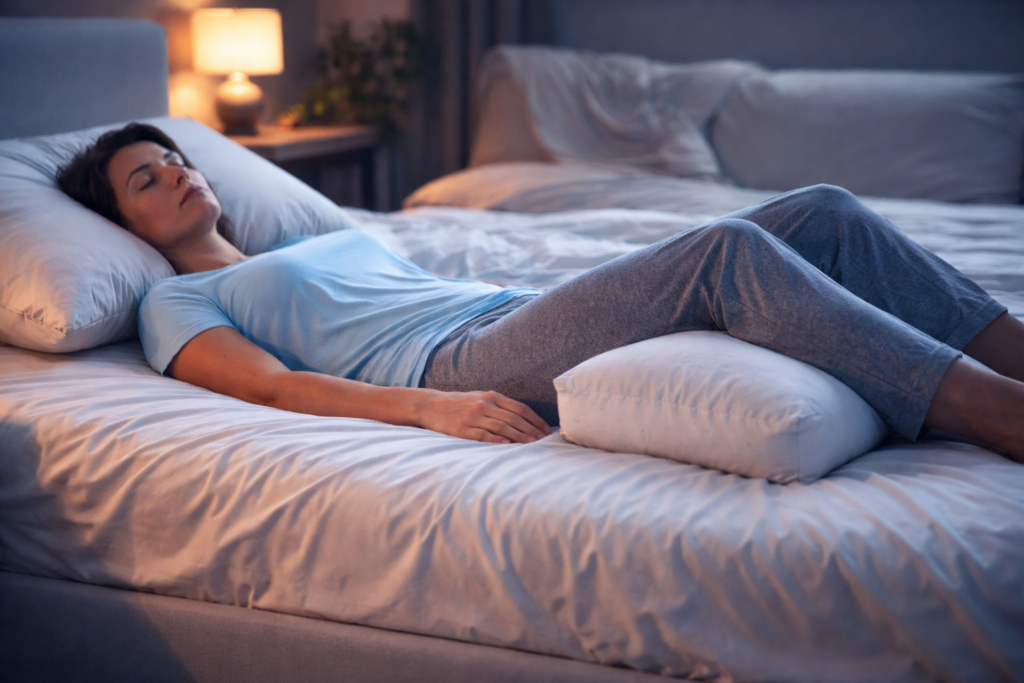
Person sleeping on back with pillow under knees for lower back support
Back sleeping can be very effective when done properly.
How to do it right:
- Place a pillow under your knees
- Add a small towel under your lower back
- Keep your head supported but not elevated too high
Why it works:
- Distributes body weight evenly
- Reduces pressure points
- Supports spinal curvature
Why Stomach Sleeping Makes It Worse
Sleeping on your stomach is one of the worst positions for lower back pain.
Problems it causes:
- Twists your neck
- Flattens your spine unnaturally
- Adds pressure to your lower back
If you’re a stomach sleeper, try slowly transitioning to side sleeping for better results.
Optimizing Your Sleep Environment
Choosing the Right Mattress
A medium-firm mattress is usually the best choice.
- Too soft → spine sinks
- Too firm → pressure points increase
Your mattress should support your body while keeping your spine aligned.
Using the Right Pillow
- Side sleepers → thicker pillow
- Back sleepers → thinner pillow
- Neck should stay aligned with spine
Temperature Matters More Than You Think
Breathable materials like cotton or bamboo help:
- Prevent overheating
- Improve sleep quality
- Reduce nighttime discomfort
Daily Habits That Improve Sleep and Reduce Pain
Build a Simple Night Routine
- Light stretching
- Deep breathing
- No screens before bed
Even 10 minutes helps your body relax.
Fix Your Daytime Posture
If you sit a lot, this is huge.
👉 Improve your posture with this guide: How to sit without lower back pain
Stretch Before Bed
Try:
- Knee-to-chest stretch
- Cat-cow stretch
- Pelvic tilts
These help release tension before sleep.
Movement & Hydration for Spinal Health
Stay Hydrated
Your spinal discs need water to stay flexible.
- Aim for consistent hydration daily
- Dehydration can increase stiffness
Keep Your Body Moving
- Short walks
- Gentle stretching
- Light activity throughout the day
Movement prevents stiffness from building up.
Conclusion
Improving your sleep position is one of the simplest ways to reduce lower back pain naturally.
By choosing the right position, improving your sleep setup, and building better daily habits, you can wake up feeling more comfortable and supported.
Small changes really do make a big difference.
Disclaimer
PathwayToRelief.com provides educational wellness information only and does not offer medical advice. Always consult a qualified healthcare professional before making changes to your health routine.