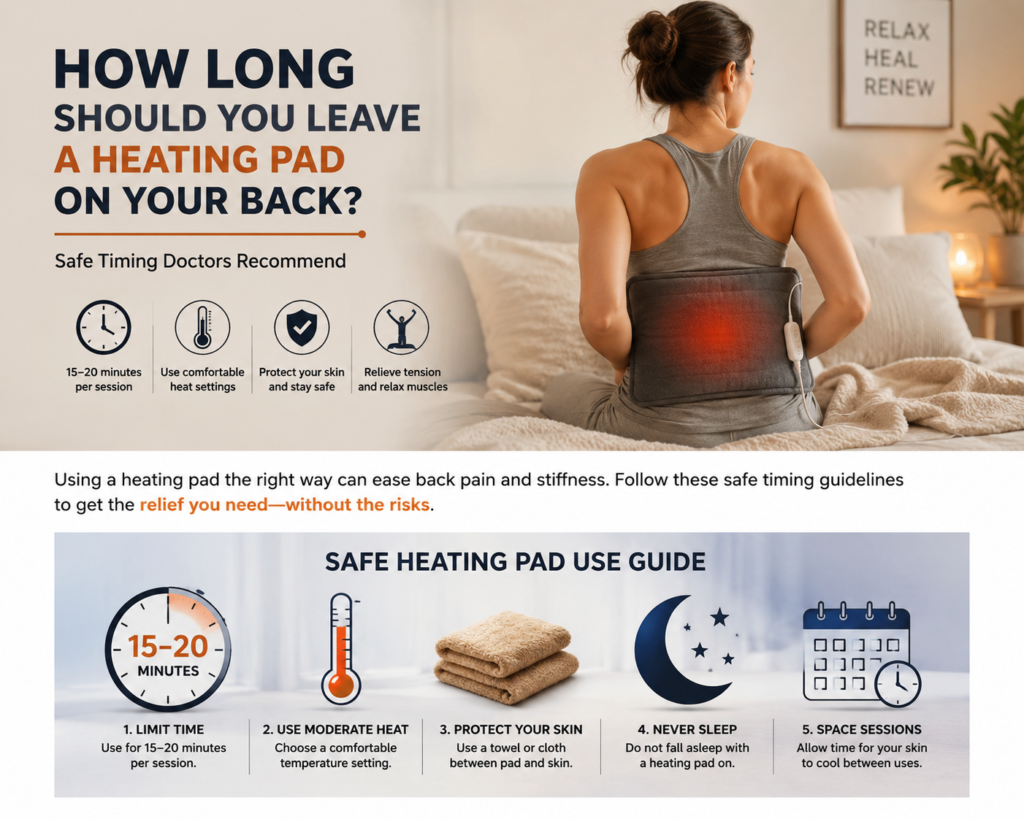
Learn how long to leave a heating pad on your back, why 15–20 minute sessions are commonly recommended, and how to use heat safely.
A heating pad can feel incredibly soothing when your back is stiff, tight, or sore. But when it comes to heat therapy, longer isn’t necessarily better.
For many people, a short heating-pad session is enough to warm tight muscles and provide temporary comfort. Leaving a heating pad on for too long, using excessive heat, or falling asleep with one can increase the risk of skin irritation and burns.
So, how long should you leave a heating pad on your back?
For ordinary at-home use, about 15–20 minutes at a time is a sensible general guideline, unless the instructions for your heating pad or your healthcare professional recommend something different.
This guide explains how long to use heat, why timing matters, when to stop, and how to use a heating pad more safely.
Key Takeaways
- A typical heating-pad session is about 15–20 minutes
- Use comfortable warmth rather than the highest temperature
- Protect your skin from excessive or direct heat
- Never fall asleep while using an electric heating pad
- Stop if your skin becomes painful, unusually red, irritated, or numb
- Heat is generally better suited to stiffness and muscle tension than a newly injured area that is swollen, red, or hot
- Persistent or worsening back pain should be evaluated by a healthcare professional
How Long Should You Leave a Heating Pad on Your Back?
A good general starting point is 15–20 minutes per session.
You don’t need to keep increasing the amount of time simply because your back still feels sore.
Heat can temporarily increase circulation near the surface of the body and help tense muscles relax. This is one reason warmth may feel especially comforting when back discomfort is associated with stiffness or muscle tension.
The goal isn’t to make your back as hot as possible. You want comfortable, controlled warmth.
After your session, turn the heating pad off and give your skin time to return to its normal temperature before deciding whether you need another session later.
Why Is 15–20 Minutes a Good General Guideline?
Your skin continues absorbing heat while the heating pad is in place.
Keeping a heat source against the same area for an extended period can increase the possibility of:
- Redness
- Skin irritation
- Discomfort
- Burns
- Changes in skin sensitivity
The risk can be greater when a heating pad is very hot, pressed tightly against the body, used directly against bare skin, or used when someone has reduced sensation.
Shorter sessions allow you to check both your skin and your symptoms before applying additional heat.
Always follow the manufacturer’s instructions for your particular heating pad because products can differ.
Is It Safe to Use a Heating Pad for Longer Than 20 Minutes?
It isn’t a good idea to assume that more time automatically means more relief.
Some heat-therapy products have different instructions, but with a typical electric heating pad, limiting a session to around 20 minutes is a cautious approach.
If 20 minutes of heat doesn’t help, continuously extending the session may simply expose your skin to more heat without addressing the underlying reason your back hurts.
Turn the heating pad off if the area becomes:
- Uncomfortably hot
- Painful
- Very red
- Irritated
- Numb or unusually sensitive
If you regularly need prolonged heat just to get through the day, consider discussing the underlying back pain with a healthcare professional.
How Hot Should a Heating Pad Be?
Start with the lowest comfortable setting.
A heating pad should feel pleasantly warm — not intensely hot.
You don’t need to tolerate uncomfortable heat for the therapy to be useful. In fact, excessive temperature increases the risk of burns.
If your heating pad has several settings, begin low and only increase the temperature if necessary and if the manufacturer’s directions allow it.
Check your skin periodically during use.
Should You Put a Heating Pad Directly on Your Skin?
It’s generally safer to avoid excessive direct heat against bare skin.
Depending on the design of your heating pad, you may be able to use a thin layer of clothing or an appropriate fabric barrier between the heat source and your skin.
Johns Hopkins Medicine specifically recommends protecting the skin by placing a towel between the body and the heat source when treating lumbar strain.
However, always read your heating pad’s instructions. Don’t add thick blankets or coverings around an electric heating pad if the manufacturer warns against doing so, because trapped heat can create its own safety problem.
Can You Use a Heating Pad Several Times a Day?
Heat may be used more than once during the day, but each application should still be controlled.
Rather than leaving the heating pad on continuously, use a short session and allow your skin to cool completely between applications.
For example, someone experiencing stiffness might use heat once in the morning and again later in the day when needed.
Mayo Clinic guidance describes heat applications of up to 20 minutes, as many as three times per day, for some types of pain.
Your individual needs may differ depending on why your back hurts and your health history.
Can You Sleep With a Heating Pad on Your Back?
No. You should not fall asleep with an electric heating pad operating against your body.
When you’re awake, you can notice when something becomes too hot and move or turn off the pad.
When you’re asleep, you may not respond quickly enough to increasing heat or skin irritation.
If you like using heat at bedtime, use your heating pad for a short session before you intend to fall asleep. Turn it off and remove it before sleeping.
Related Guide
Is It Safe to Sleep With a Heating Pad on Your Back?
This guide explains the overnight risks and safer ways to use heat before bed.
When Does Heat Make the Most Sense for Back Pain?
Heat tends to be most useful when your discomfort involves muscle tightness, stiffness, or spasms.
You might find warmth comfortable:
After Sitting for a Long Time
Long periods at a desk can leave the muscles around your lower back feeling tight.
Heat followed by gentle movement may help you feel more comfortable.
If sitting is a frequent trigger, see:
How to Sit Without Lower Back Pain
When You Wake Up Feeling Stiff
Some people enjoy a brief heat session before beginning gentle morning movement.
After a Long Day
A short evening heat session can be relaxing when your back feels tense after work, standing, driving, or everyday activities.
When Should You Avoid Using Heat?
Heat isn’t appropriate for every situation.
Harvard Health advises against applying heat to an area that is swollen, red, or already hot, including a newly sustained injury, because heat may worsen inflammation.
You should also be especially careful with heating pads if you have reduced skin sensation or another medical condition that makes it difficult to accurately feel temperature.
Talk with a healthcare professional before using heat if you’re uncertain whether it is appropriate for you.
Heat or Ice: Which Should You Use?
Heat and cold have different purposes.
Cold is commonly used soon after certain injuries to help with pain and swelling, while heat may be more comfortable later when stiffness and muscle tension become the bigger issue.
The right choice depends on what’s causing your back pain.
If you’re not sure which one makes sense, read:
Should You Use Heat or Ice for Lower Back Pain?
Signs You’re Using Too Much Heat
Your body and skin can give you clues that it’s time to stop.
Turn the heating pad off if you notice:
- Burning or stinging
- Increasing discomfort
- Significant redness
- Skin irritation
- Numbness
- Unusual changes in skin appearance
Don’t keep applying heat to irritated skin.
If you develop a burn, significant skin changes, or symptoms that concern you, seek medical advice.
How to Use a Heating Pad Safely
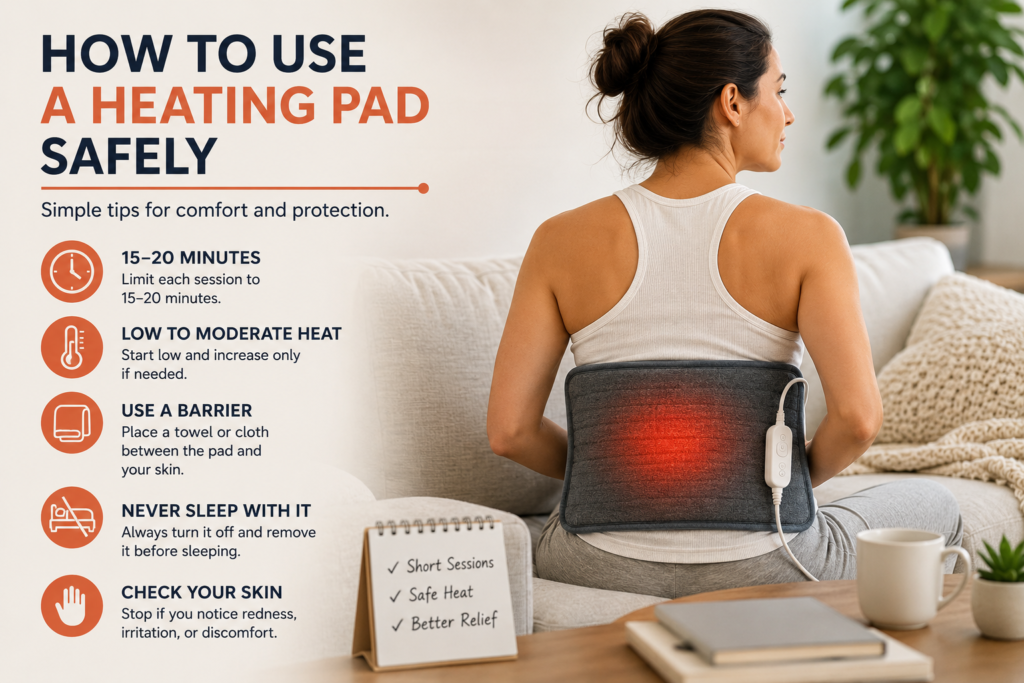
A simple routine can help reduce unnecessary heat exposure.
- Read the manufacturer’s directions. Heating pads aren’t all designed exactly the same way.
- Start on a low setting. Increase the temperature only if necessary and permitted by the product instructions.
- Protect your skin. Avoid uncomfortable direct heat and follow the manufacturer’s recommendations regarding clothing or barriers.
- Set a timer for 15–20 minutes. It’s surprisingly easy to lose track of time while watching television or relaxing.
- Check your skin. Stop if you notice pain, irritation, excessive redness, or unusual sensitivity.
- Turn the heating pad completely off after the session.
- Never fall asleep with it operating.
These habits are simple, but they’re more important than trying to make the heating pad hotter or keeping it on longer.
What If Heat Makes Your Back Pain Worse?
A heating pad should feel comfortable.
If your pain consistently increases while using heat, stop using it.
Heat isn’t appropriate for every type of back pain, and worsening symptoms are a reason to reconsider what you’re doing rather than simply increasing the temperature or duration.
You may also want to read:
Can a Heating Pad Make Back Pain Worse?
Heat Works Best as Part of a Bigger Back-Care Routine
A heating pad may provide temporary comfort, but it doesn’t replace movement or address every cause of back pain.
Depending on the reason for your discomfort, your routine may also include:
Gentle Movement
Long periods of complete inactivity can contribute to stiffness. Light walking and normal daily movement are often preferable to prolonged bed rest for ordinary back pain.
Comfortable Sitting Habits
If your back becomes sore after hours at a desk, changing your sitting position and workspace may be more helpful long term than repeatedly applying heat.
Gentle Stretching
Some people find that warming tight muscles before gentle stretching makes movement feel more comfortable.
Never force a painful stretch.
When Should Back Pain Be Checked by a Healthcare Professional?
Most ordinary episodes of back discomfort improve with time and basic self-care, but persistent or severe symptoms deserve attention.
Contact a healthcare professional if your back pain continues to worsen or isn’t improving after several weeks of self-care.
Seek prompt medical attention for back pain accompanied by concerning symptoms such as:
- New weakness, numbness, or significant tingling in a leg
- Loss of bladder or bowel control
- Fever
- Severe pain after a fall or significant injury
- Unexplained weight loss
- Pain that spreads down one or both legs and is severe or worsening
These symptoms shouldn’t simply be treated with additional heat.
Frequently Asked Questions
How long should you leave a heating pad on your lower back?
For a typical at-home heating pad, about 15–20 minutes at a time is a reasonable general guideline. Always follow your particular product’s directions.
Is 30 minutes too long for a heating pad?
For routine home use, it’s safer to begin with shorter sessions rather than automatically using heat for 30 minutes or longer. Some products may have different manufacturer instructions.
Can I use a heating pad multiple times per day?
Heat may be used at different points during the day, but give your skin time to cool between sessions and keep individual sessions controlled.
Should I use the highest heating-pad setting?
Usually, no. Start with the lowest setting that provides comfortable warmth. The goal is not intense heat.
Can I lie on top of my heating pad?
Unless your particular product is specifically designed for that purpose, avoid putting your body weight on an electric heating pad. Pressure can trap heat and may damage some pads. Follow the manufacturer’s directions.
Can I fall asleep with a heating pad?
No. Turn off and remove an electric heating pad before going to sleep.
Does heat actually cure back pain?
No. Heat may temporarily reduce discomfort and relax tense muscles, but it doesn’t cure every underlying cause of back pain.
Final Thoughts
So, how long should you leave a heating pad on your back?
For many people using a standard heating pad at home, 15–20 minutes at a time is a practical general guideline.
Keep the temperature comfortably warm, pay attention to your skin, follow the manufacturer’s instructions, and never fall asleep with an electric heating pad operating.
Most importantly, don’t assume that keeping the pad hotter or leaving it on longer will provide better results.
Heat can be one useful part of a broader back-care routine — but persistent, severe, or worsening back pain deserves proper medical evaluation.
PathwayToRelief.com provides general educational and wellness information only. This content is not medical advice and is not intended to diagnose, treat, cure, or prevent any medical condition. If you have persistent, severe, worsening, or unexplained back pain, or questions about whether heat therapy is appropriate for you, consult a qualified healthcare professional.