Learn how long to use a heating pad for back pain, how often to apply heat, important safety precautions, and when back pain needs medical attention.
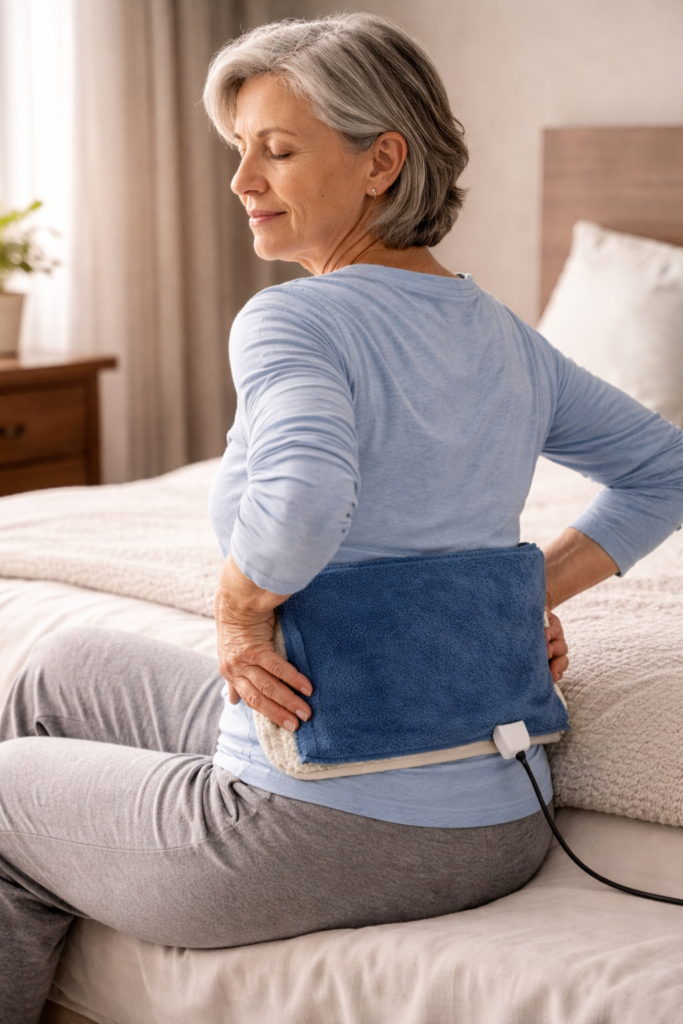
Learn how long to use a heating pad for back pain, how often to apply heat, important safety precautions, and when back pain needs medical attention.
A heating pad can feel incredibly comforting when your back is stiff, tight, or sore. Whether your discomfort comes after sitting at a desk, standing for hours, exercising, or simply waking up with tense muscles, gentle heat may help your back feel more relaxed.
But more heat isn’t necessarily better.
Leaving a heating pad on too long, using a temperature that’s too high, or falling asleep while using one can increase the risk of burns and skin irritation. That’s why it’s important to understand how long to use a heating pad for back pain and how to use heat safely.
For many people, a short heating session of around 15–20 minutes is a practical starting point. However, recommendations can vary depending on the type of heating product, its temperature, your health, and the instructions provided by the manufacturer.
Below, we’ll look at how heat may help back discomfort, how to use a heating pad more safely, when heat may not be appropriate, and when back pain deserves medical attention.
Quick Takeaways
- Start with short heating sessions, such as 15–20 minutes.
- Use a comfortable low or medium setting rather than the highest temperature.
- Follow the instructions provided with your particular heating pad.
- Avoid placing intense heat directly against bare skin.
- Check your skin periodically for excessive redness or irritation.
- Don’t fall asleep while using a heating pad unless the product is specifically designed and instructed for that use.
- Be particularly cautious if you have reduced skin sensation, poor circulation, diabetes, or another condition that may affect your ability to feel heat.
- Stop using heat if it makes your symptoms worse.
- Persistent, severe, or unusual back pain should be evaluated by a healthcare professional.
How Heat Therapy May Help Back Pain
Heat doesn’t treat every cause of back pain, but it can be useful for certain types of discomfort—particularly stiffness, muscle tension, and soreness.
Applying comfortable warmth to an area of the back can increase local blood flow and may help tight muscles relax. Heat can also temporarily change the way pain signals are perceived, which may make an aching or stiff back feel more comfortable.
This is one reason people often reach for a heating pad after a long day of sitting, standing, driving, working around the house, or exercising.
Heat may be especially comforting when your back feels:
- Stiff after sitting for a long time
- Tight after physical activity
- Achy rather than sharply injured
- Tense because of muscle spasms
- Uncomfortable first thing in the morning
- Sore at the end of the day
However, heat is a comfort measure—not a diagnosis or cure. Back pain can have many different causes, and persistent symptoms shouldn’t simply be covered up with repeated heating sessions.
How Long Should You Keep a Heating Pad on Your Back?
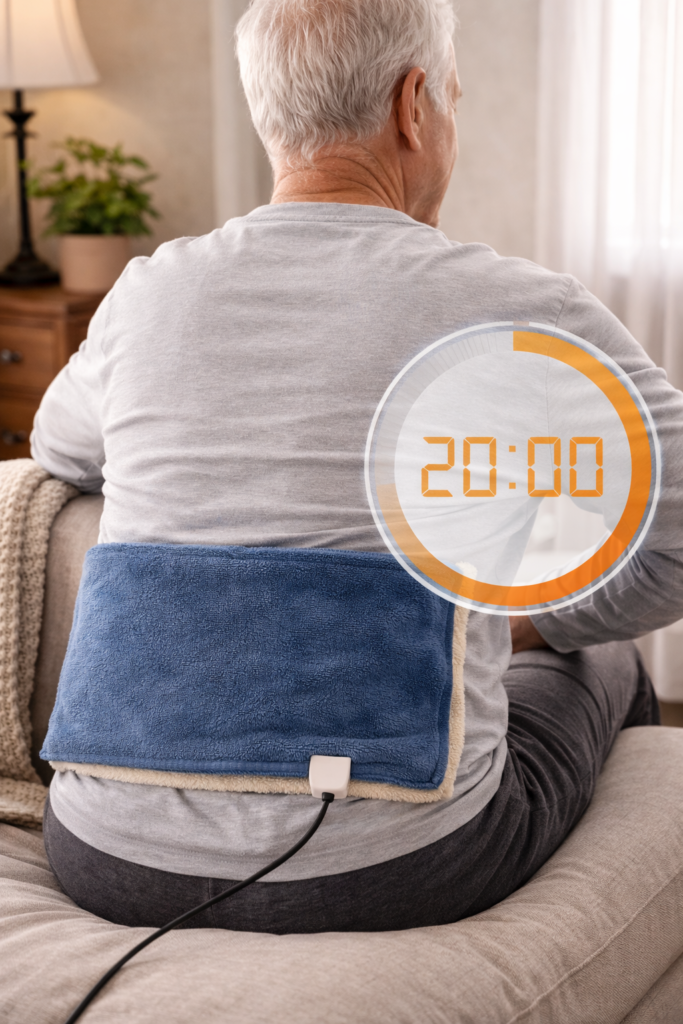
For a standard electric heating pad, 15–20 minutes at a time is a reasonable conservative starting point for many adults.
The exact safe duration isn’t identical for every heating product. Heating pads vary in temperature, design, size, automatic shutoff features, and manufacturer instructions.
For that reason, always check the directions that came with your particular heating pad.
If your pad becomes uncomfortably hot before your planned session is finished, remove it immediately. You don’t need to tolerate intense heat for heat therapy to be useful.
Your heating pad should feel comfortably warm—not painfully hot.
Is 20 Minutes Enough?
Often, yes.
A short session may be enough to help tense muscles relax and make movement feel more comfortable. If you’re still uncomfortable afterward, don’t assume that keeping the pad on continuously for another hour will produce better results.
Give your skin and body a break instead.
You can reassess how you feel and use another short session later if appropriate and consistent with your heating pad’s instructions.
Can You Use a Heating Pad More Than Once a Day?
Some people use heat more than once during the day, but there isn’t one universal number of daily sessions that’s appropriate for everyone.
A better approach is to focus on short, spaced-out sessions rather than continuous heat exposure.
After removing the heating pad, allow your skin to return to its normal temperature before using heat again. Check the area for redness, unusual sensitivity, discoloration, or irritation.
If your skin remains very red or irritated after the heat is removed, don’t immediately start another session.
Repeatedly applying heat to the same area for long periods can damage the skin over time.
Why You Shouldn’t Use a Heating Pad for Too Long
A heating pad may feel soothing enough that it’s tempting to leave it on while watching television, working, reading, or relaxing in bed.
The problem is that prolonged exposure can gradually overheat the skin.
You may not realize how hot your skin has become until irritation has already occurred.
Burns
Electric heating pads can cause thermal burns, particularly when they’re used at high temperatures, pressed firmly against the body, or left in place for extended periods.
The risk can be greater for people who have difficulty sensing temperature changes.
Stop using the heating pad if your skin begins to feel painfully hot, develops unusual redness, blisters, or becomes irritated.
Skin Discoloration From Repeated Heat Exposure
Repeated exposure to heat can sometimes cause a skin condition known as erythema ab igne, sometimes informally called “toasted skin syndrome.”
It can appear as a reddish, brownish, or net-like pattern on areas repeatedly exposed to heat.
Heating pads, heated seats, hot-water bottles, and other heat sources can potentially contribute when they’re used repeatedly on the same area.
If you notice persistent skin discoloration where you regularly use your heating pad, stop applying heat to the area and consider speaking with a healthcare professional.
Should You Put a Heating Pad Directly on Your Skin?
Follow your heating pad manufacturer’s instructions.
In general, avoiding prolonged high heat directly against bare skin can reduce the chance of burns. Depending on the product, you may be instructed to use a cover or place a thin layer of clothing or fabric between your skin and the heat source.
Don’t add thick blankets or other materials around an electric heating pad unless the manufacturer says it’s safe. Trapping heat can cause some devices to become hotter than intended.
And never use a heating pad that has damaged wiring, cracks, exposed heating elements, or other visible damage.
What Temperature Should You Use?
You don’t need the highest setting to get the comforting effects of heat.
Start low and increase the temperature only if necessary. The goal is gentle, comfortable warmth.
A lower setting may be especially appropriate if you’re using heat on a sensitive area or if you plan to sit quietly with the pad in place.
If the heat feels uncomfortable, stings, burns, or makes you instinctively want to move away from it, it’s too hot.
Can You Sleep With a Heating Pad on Your Back?
It’s generally safer to turn off and remove a standard heating pad before falling asleep, unless the manufacturer’s instructions specifically state that the device is designed for that type of use.
When you’re asleep, you may not notice that your skin is becoming too hot. You may also stay in one position for an extended period, increasing prolonged exposure to the same area.
A safer bedtime routine is to use your heating pad while you’re awake, remove it when the session is finished, and then get comfortable for sleep.
If nighttime back discomfort is a frequent problem, your sleeping position may also make a difference. Read our guide to the best sleeping positions for lower back pain for additional ways to make bedtime more comfortable.
Who Should Be Extra Careful With Heating Pads?
Some people need additional caution because they may not feel excessive heat normally or may be at greater risk of skin injury.
Talk with a healthcare professional before regularly using a heating pad if you have:
- Diabetes, particularly if you have neuropathy or reduced sensation
- Poor circulation
- Numbness or decreased sensation in the area
- Certain neurological conditions
- Fragile or damaged skin
- An open wound in the area you want to heat
- A medical condition that affects your ability to recognize temperature
Don’t apply a heating pad over an area where you can’t reliably tell whether the temperature is becoming too hot.
Heat or Ice: Which Is Better for Back Pain?
The answer depends on what’s causing the discomfort.
Heat is often used when the main problem feels like muscle tightness, stiffness, or spasms. Cold therapy is often used after some acute injuries or when swelling is present.
But the old rule of “ice for injuries and heat for everything else” is overly simplistic. Different people and conditions respond differently.
The most useful treatment is the one that’s appropriate for the cause of your symptoms and doesn’t make them worse.
If you’re trying to decide between the two, see our complete guide to heat vs. ice for lower back pain.
A Simple Heating Pad Routine for Back Discomfort
Instead of leaving a heating pad on for a long time, build heat into a short routine that also encourages movement.
Step 1: Get Comfortable
Sit or lie in a comfortable position that doesn’t increase your pain.
Place the heating pad according to its instructions and start with a low setting.
Step 2: Set a Timer
If your heating pad doesn’t automatically shut off, set a timer so you don’t accidentally lose track of time.
For many people, starting with approximately 15–20 minutes keeps the session manageable.
Step 3: Check Your Skin
Periodically check how the skin feels.
Warmth is expected. Burning, stinging, intense redness, or pain isn’t.
Step 4: Remove the Heat
When your session is finished, turn the pad off and remove it.
Allow your skin to cool normally.
Step 5: Add Gentle Movement
If movement is comfortable and appropriate for you, try standing up, walking around the room, or performing a few gentle stretches afterward.
Warm muscles may feel easier to move, but stretching should never be forced through sharp pain.
For additional ideas, see our guide to natural ways to relieve back pain at home without medication.
When Is the Best Time to Use a Heating Pad?
There’s no single best time of day. It depends on when your back tends to feel stiff or uncomfortable.
In the Morning
If your back feels stiff when you wake up, a short heat session may help you feel more comfortable before beginning your normal activities.
Gentle movement afterward can help you transition into your day.
After Sitting for a Long Time
Long periods at a desk or in a car can leave your back feeling stiff.
Before reaching for the heating pad every time, get up and move if you’re able. A short walk or change of position may be enough.
If stiffness remains, heat can be one part of your comfort routine.
After Physical Activity
Heat may feel good on tired, tense muscles after activity, but sudden pain after lifting, twisting, falling, or another injury deserves more caution.
If you’ve sustained an injury or aren’t sure what’s causing the pain, consider seeking medical advice rather than repeatedly applying heat.
Before Bed
A short heating session while you’re still awake may help tight muscles feel more relaxed before bed.
Finish the session and remove the heating pad before going to sleep.
Other Ways to Manage Back Stiffness at Home
A heating pad can be helpful, but relying on heat alone may not address why your back keeps becoming uncomfortable.
Consider combining heat with simple daily habits.
Change Positions Regularly
Sitting or standing in the same position for long stretches can contribute to stiffness.
Try changing positions and moving periodically throughout your day.
Use Gentle Movement
Walking and comfortable range-of-motion movements can help keep your back from becoming overly stiff.
You don’t need an intense workout every time your back feels tight.
Pay Attention to Your Workspace
If discomfort repeatedly appears after working at your desk, look at your chair height, monitor position, keyboard placement, and how long you’re sitting without breaks.
Support Comfortable Sleep
Your mattress, pillow setup, and sleeping position can influence how your back feels in the morning.
Experiment with comfortable positioning rather than forcing yourself into a sleep posture that hurts.
Heating Pad Features That Can Make Use Easier
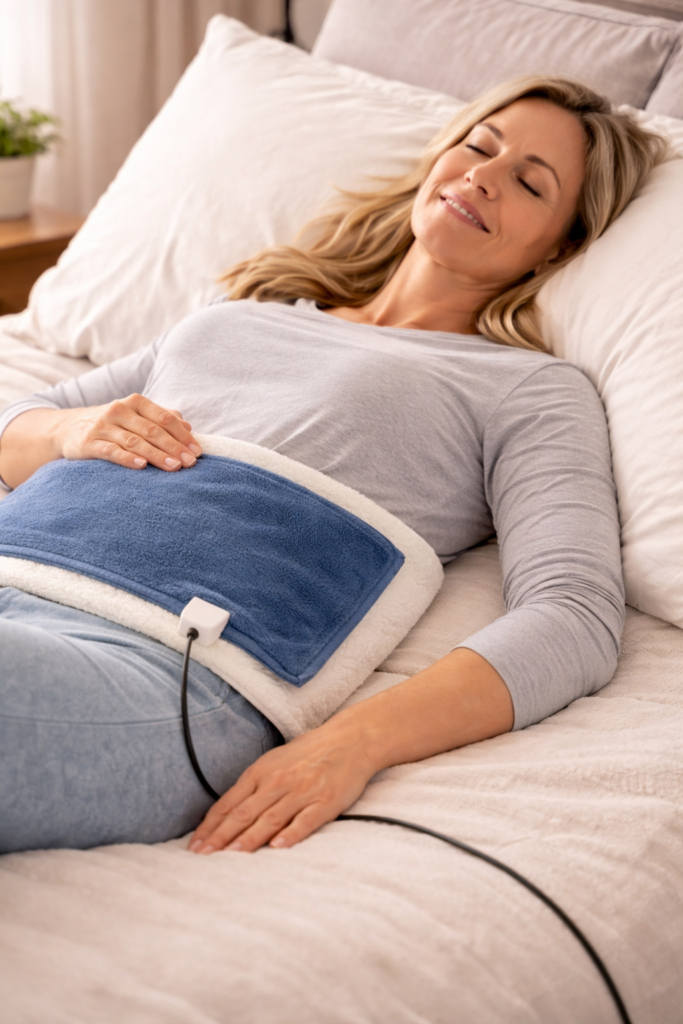
If you use heat regularly, certain features can make a heating pad easier to manage.
Automatic Shutoff
An automatic shutoff timer can reduce the chance that you accidentally leave the heating pad running after you’ve finished your session.
Multiple Heat Settings
Adjustable temperature settings make it easier to use gentle warmth instead of relying on one high temperature.
Flexible Design
A flexible pad can conform more comfortably to the lower or upper back without requiring you to press it firmly against your body.
Washable Cover
A removable washable cover can make regular use more hygienic and comfortable.
Amazon Product Callout
If you’re replacing an older heating pad, consider looking for a model with adjustable heat settings, an automatic shutoff timer, and a soft washable cover.
CTA: Check Heating Pads with Automatic Shutoff on Amazon
As an Amazon Associate, PathwayToRelief may earn from qualifying purchases at no additional cost to you.
When Heat May Not Be the Right Choice
Don’t assume every type of back pain needs heat.
Avoid applying heat to skin that’s injured, infected, severely irritated, or unable to sense temperature normally unless you’ve been specifically advised to do so by a healthcare professional.
You should also stop using heat if it consistently makes your symptoms worse.
More importantly, heat shouldn’t delay medical care when your symptoms suggest something more serious may be happening.
When Should You See a Doctor for Back Pain?
Many episodes of uncomplicated back discomfort improve over time, but the duration of pain alone isn’t the only factor that determines whether you need medical care.
Seek prompt medical attention if back pain is accompanied by concerning symptoms such as:
- New loss of bladder or bowel control
- Numbness around the groin, genitals, or inner thighs
- Significant or worsening weakness in one or both legs
- Severe pain following a significant fall, accident, or injury
- Fever or feeling seriously unwell along with back pain
You should also consider contacting a healthcare professional if your pain is severe, keeps getting worse, repeatedly returns, interferes substantially with daily activities or sleep, or simply isn’t improving as expected.
Frequently Asked Questions
How long should I leave a heating pad on my back?
For many adults using a standard heating pad, a short session of approximately 15–20 minutes is a reasonable starting point. Follow the manufacturer’s instructions for your specific device and stop sooner if your skin becomes uncomfortable.
Can I use a heating pad for 30 minutes?
That depends on the device, heat setting, your skin, and the manufacturer’s directions. Don’t assume that longer exposure is automatically better. If you’re unsure, use a shorter session and follow the instructions supplied with your heating pad.
How often can I use a heating pad for back pain?
There’s no universal number that’s appropriate for everyone. If you use heat several times during the day, keep sessions reasonably short and allow your skin to cool between them. Stop if you develop irritation or persistent redness.
Should I use high heat for severe back pain?
No. More pain doesn’t mean you should use a hotter setting. High temperatures can increase the risk of burns. Start with gentle heat and seek medical advice if your back pain is severe.
Can I lie directly on top of a heating pad?
Don’t use a heating pad in a way that conflicts with the manufacturer’s directions. Lying directly on some electric heating pads can trap heat or place pressure on the device. Check your particular product’s instructions.
Can a heating pad make back pain worse?
It can. If your symptoms become noticeably worse during or after heat therapy, stop using the heating pad. The underlying cause of your pain may require a different approach.
Is a heating pad good for lower back pain?
It may temporarily relieve certain types of lower-back stiffness, muscle tension, or soreness. It won’t treat every cause of lower-back pain, however, so persistent or concerning symptoms should be evaluated.
Final Thoughts
A heating pad can be a useful comfort tool when back pain is related to muscle tension or stiffness, but safe use matters.
For many people, the simplest approach is to begin with about 15–20 minutes of comfortable, low-to-moderate heat, follow the heating pad manufacturer’s instructions, check the skin regularly, and take breaks between sessions.
Don’t fall asleep with a standard heating pad running, don’t use intense heat on areas with reduced sensation, and don’t continue using heat if it makes your symptoms worse.
Most importantly, remember that a heating pad is intended to provide temporary comfort. If back pain is severe, persistent, worsening, or accompanied by concerning symptoms, get appropriate medical care rather than relying on heat alone.
PathwayToRelief participates in affiliate programs, including the Amazon Services LLC Associates Program. This means we may earn a commission from qualifying purchases made through links on this website at no additional cost to you.
The information provided on PathwayToRelief is for general educational and informational purposes only and is not intended as medical advice, diagnosis, or treatment. Individual health needs and medical conditions vary. Always consult a qualified healthcare professional with questions about symptoms, medical conditions, or treatment options. If you believe you may be experiencing a medical emergency, seek immediate medical attention.