Many people notice something strange — they feel fine while sitting, but the moment they stand up, their lower back hurts.
This is one of the most common modern back pain problems. Long periods of sitting place stress on your spine, tighten muscles, and weaken the parts of your body that are supposed to support your back.
The good news: this type of pain is usually mechanical, not dangerous. With a few daily changes and simple movements, most people can improve it at home.
If your discomfort happens daily, you should also read our step-by-step routine here:
→ How to Relieve Lower Back Pain at Home (Step-by-Step Daily Routine)
What Happens to Your Lower Back When You Sit
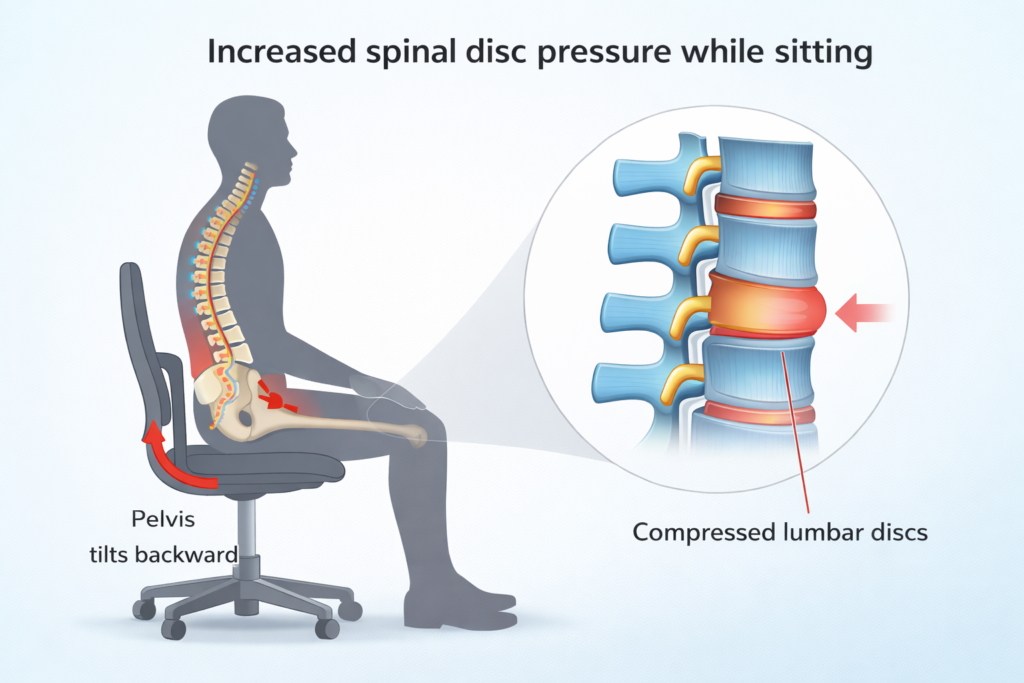
spinal disc pressure while sitting posture illustration
When you sit, your spine is placed under more pressure than when you stand or walk. Your pelvis tilts backward and your natural lower back curve flattens.
This increases pressure on the spinal discs and surrounding muscles.
Over time this causes:
- stiffness
- tight hips
- irritated joints
- muscle fatigue
Why Sitting Strains the Lumbar Spine
Sitting itself isn’t harmful.
Sitting too long without movement is the problem.
When your body stays still, blood flow decreases and muscles tighten. Your lower back muscles begin doing all the work while your core muscles become inactive.
This is why many people feel pain when they stand up — the muscles suddenly reactivate all at once.
The Real Causes of Back Pain After Sitting
Poor Posture

slouching posture at desk causing lower back pain
Slouching pushes your head forward and overloads the lumbar spine.
Lack of Movement
Remaining in one position compresses joints and reduces circulation.
Weak Core Muscles
Your core stabilizes your spine.
When it weakens, your lower back takes over.
No Lumbar Support
Flat chairs force your spine out of alignment.
How to Set Up Your Sitting Space Properly
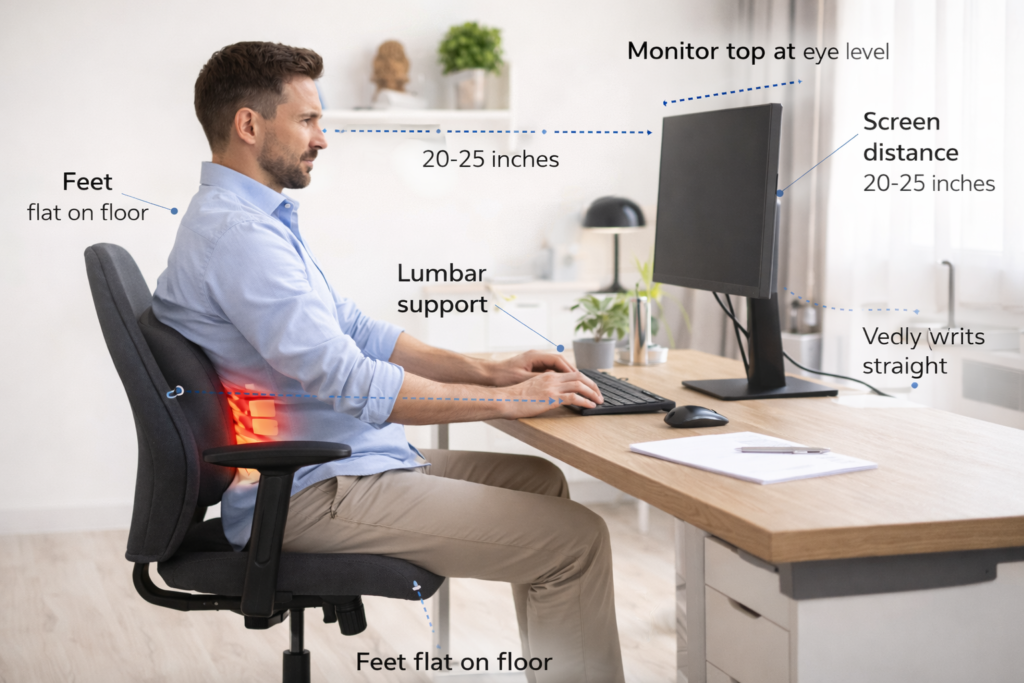
proper ergonomic workstation setup chair monitor and keyboard
Follow these rules:
• Feet flat on floor
• Knees level with hips
• Monitor at eye level
• Back supported
• Keyboard at elbow height
A small pillow or lumbar cushion can make a huge difference.
Simple Stretches You Can Do Immediatel
Seated Figure-Four Stretch
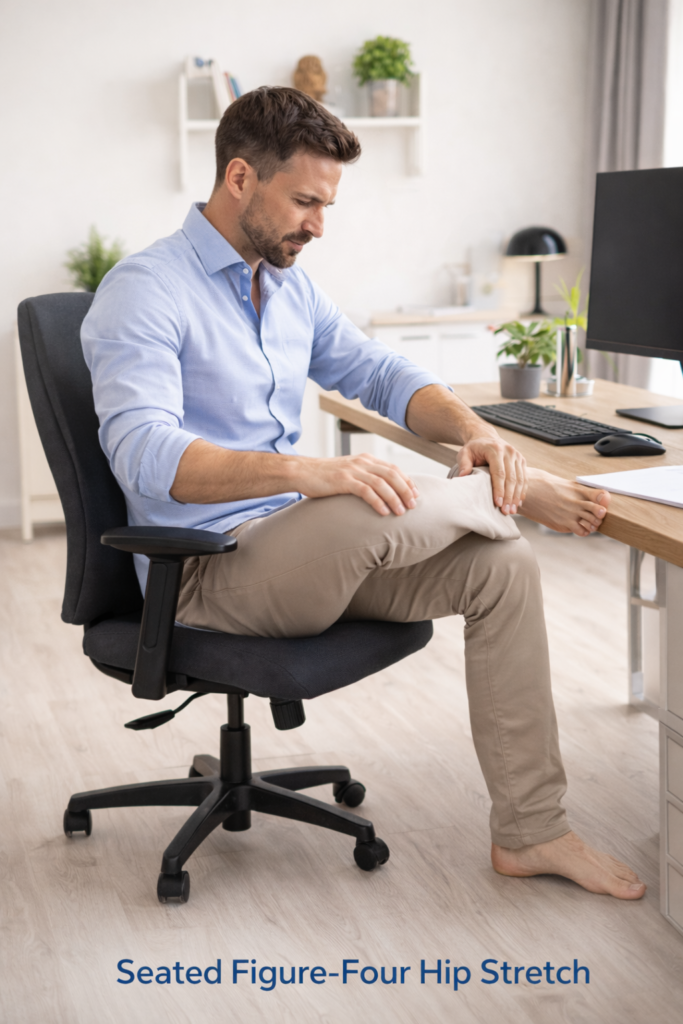
Hold 30 seconds each side.
Seated Spinal Rotation
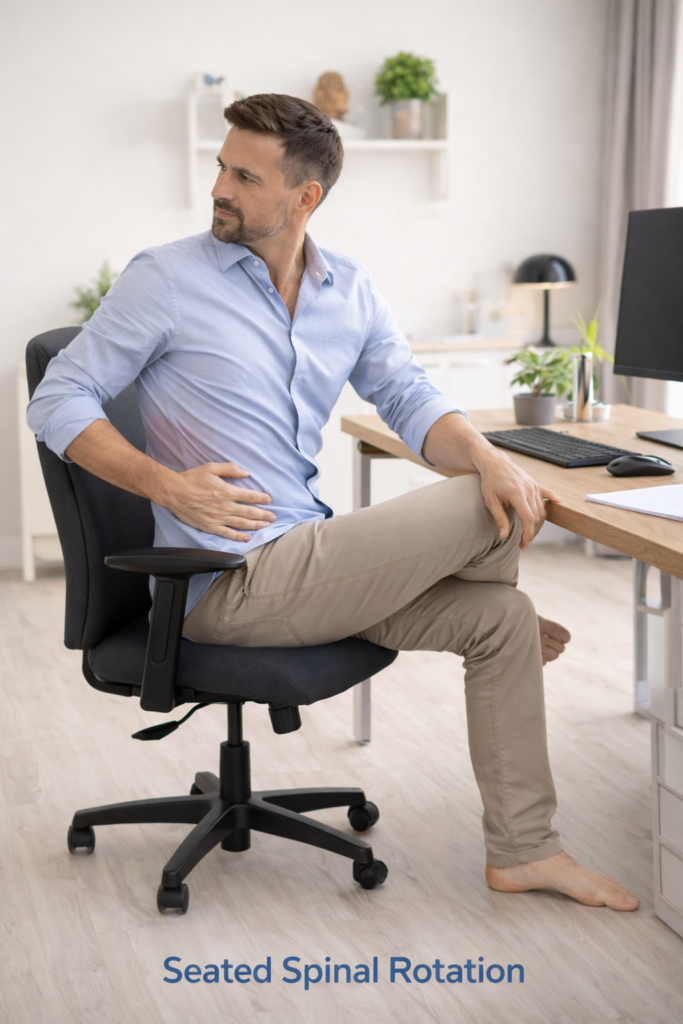
seated spinal rotation stretch for back stiffness
Standing Hip Flexor Stretch
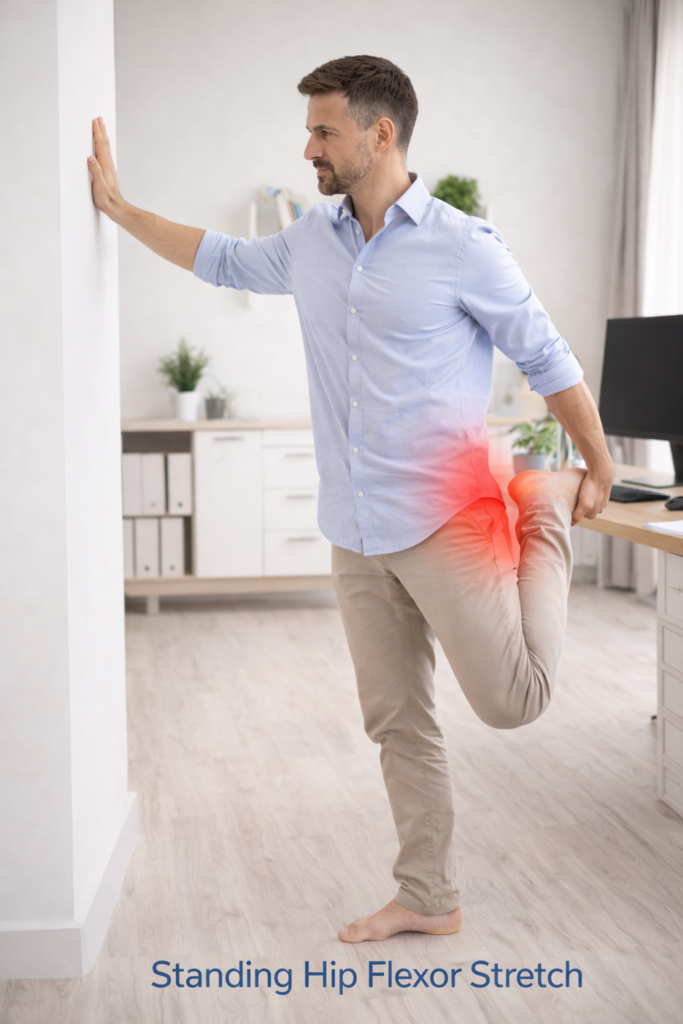
standing hip flexor stretch relieving lower back tension
Bird Dog Exercise

bird dog exercise strengthening core for back pain relief
This is one of the best exercises for desk-related back pain.
Daily Habits That Prevent Pain
Follow the 30-minute rule
Stand or walk every 30 minutes.
Drink water regularly — spinal discs depend on hydration.
Sleep correctly:
• Back sleeping → pillow under knees
• Side sleeping → pillow between knees
You can learn proper sleep positions here:
→Best Sleeping Positions for Lower Back Pain
Conclusion
Lower back pain after sitting is extremely common, but it is also very fixable. Most cases come from posture habits, weak support muscles, and lack of movement — not injury.
By improving your workspace, stretching daily, and strengthening your core, you can greatly reduce pain and stiffness and move comfortably again.
Medical Disclaimer
PathwayToRelief.com provides educational information only and is not medical advice. This content is not intended to diagnose, treat, cure, or prevent any condition. Always consult a licensed healthcare professional before starting any exercise or health program, especially if you have persistent, severe, or worsening pain.