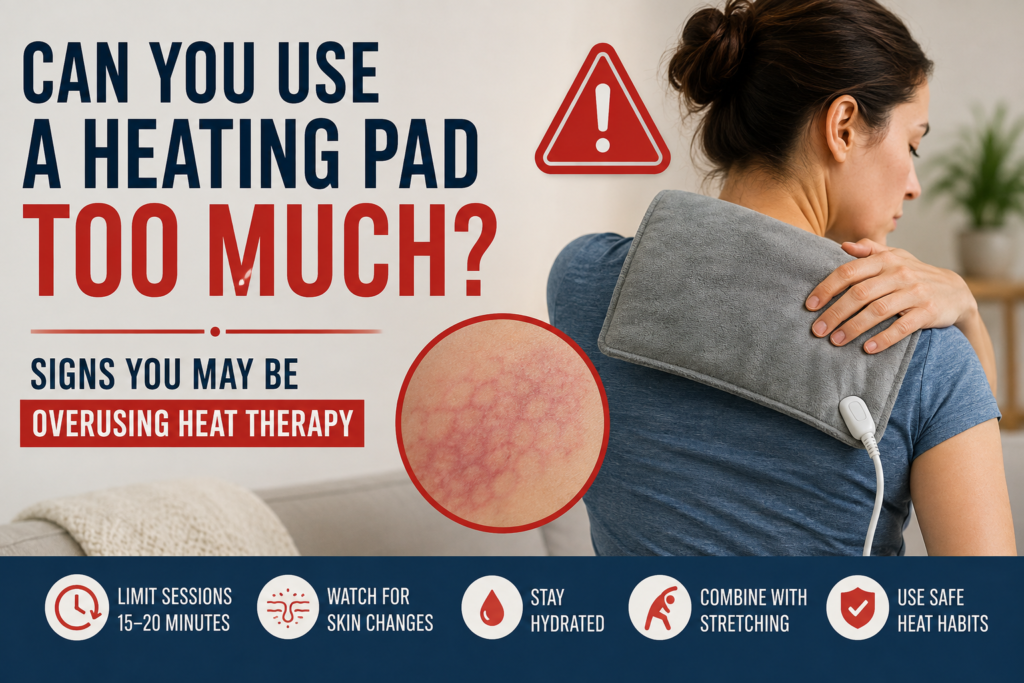
Heating pads can feel incredibly comforting when your back is stiff, your muscles are tight, or you’re sore after a long day. But when something provides relief, it’s easy to assume that using it more often—or for longer periods—will provide even more relief.
That’s not always the case.
Yes, it is possible to overuse a heating pad. Repeated or excessive heat exposure can irritate the skin, cause burns, and, over time, contribute to noticeable skin discoloration.
The important thing isn’t to be afraid of heat therapy. It’s to recognize when your body is telling you that you’ve had enough.
In this guide, we’ll focus specifically on the signs of heating pad overuse, what changes you should watch for, and how to use heat more carefully.
Key Takeaways
- Heating pads can cause problems when they’re too hot, used for too long, or repeatedly applied to the same area.
- Persistent redness, burning, tenderness, or unusual skin discoloration are signs to stop using heat.
- Repeated low-level heat exposure can cause a mottled skin condition known as erythema ab igne, or toasted skin syndrome.
- A heating pad should feel comfortably warm—not painfully hot.
- People who have reduced skin sensation or certain circulation problems should be particularly cautious with heat.
- Persistent or worsening pain shouldn’t simply be covered up with repeated heating-pad sessions.
Can You Really Overuse a Heating Pad?
Yes.
Heating pads are designed to provide temporary, localized warmth. That warmth may help muscles feel more relaxed and make stiffness more manageable.
Problems can develop when heat exposure becomes excessive.
For example, someone might begin with a short heating session after work but gradually start leaving the pad on longer because it feels good. Another person might repeatedly place a heating pad on exactly the same spot several times throughout the day.
Neither situation automatically means an injury will occur, but repeated exposure increases the importance of watching your skin and following the instructions provided with your particular heating pad.
If your main question is about session length rather than signs of overuse, read our separate guide:
How Long Should You Use a Heating Pad for Back Pain?
That article focuses specifically on timing, while this guide focuses on recognizing when heat may be becoming too much.
7 Signs You May Be Overusing Your Heating Pad
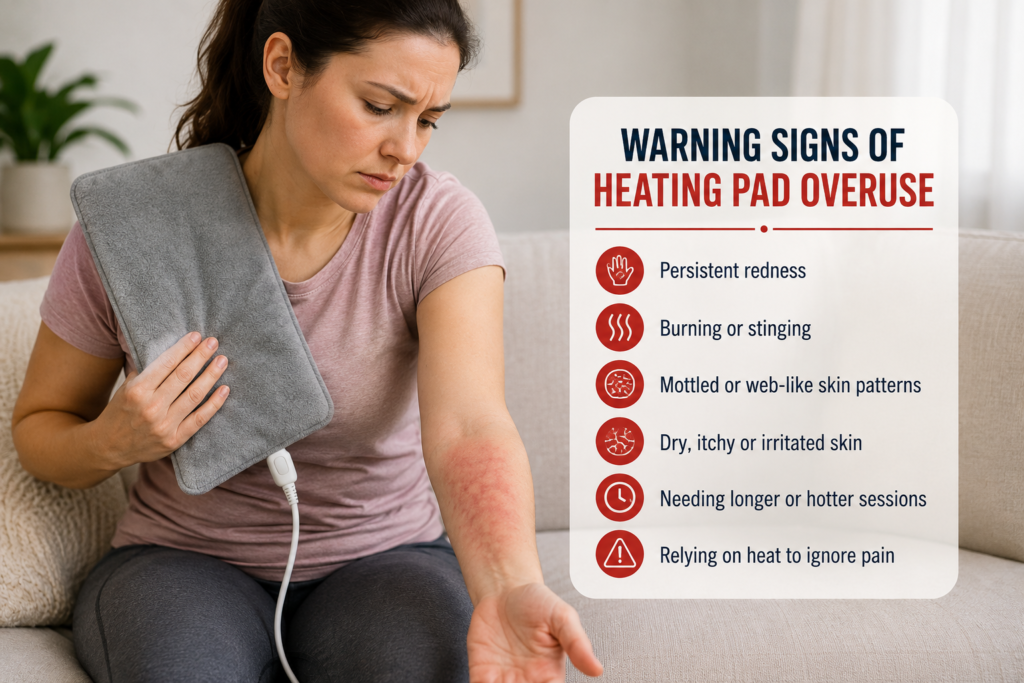
Your skin and symptoms can provide important clues that it’s time to stop using heat.
1. Redness That Doesn’t Quickly Settle Down
Some temporary warmth and mild pinkness can occur after using heat.
What deserves more attention is redness that remains noticeable after you’ve removed the heating pad and allowed your skin to cool.
Don’t simply put the heating pad back over irritated skin.
Give the area a break and monitor it. If the redness is significant, painful, blistering, or doesn’t improve, contact a healthcare professional.
2. Your Skin Feels Like It’s Burning
A heating pad should feel pleasantly warm.
It should not hurt.
If you notice:
- Burning
- Stinging
- Sharp heat
- Significant tenderness
- Painful sensitivity
remove the heating pad immediately.
Don’t try to tolerate uncomfortable heat because you think a hotter temperature will work better. More heat isn’t necessarily more effective, and excessive temperatures increase the risk of skin injury.
3. You Notice a Mottled or Web-Like Pattern on Your Skin
One of the more recognizable consequences of repeated heat exposure is a skin condition called erythema ab igne, commonly known as toasted skin syndrome.
It can create a reddish, brownish, or purplish discoloration with a mottled or net-like appearance.
This isn’t the same thing as an immediate burn.
Instead, it can develop after repeated exposure to a heat source that may not feel hot enough to burn you at the time.
Heating pads are one possible source.
If you begin noticing unusual patterned discoloration where you regularly use your heating pad, stop applying heat to that area and consider having the skin evaluated by a healthcare professional.
4. Your Skin Becomes Dry, Itchy, or Irritated
Heat can sometimes leave frequently exposed skin feeling uncomfortable.
You might notice:
- Dryness
- Itching
- Increased sensitivity
- Flaking
- Irritation
These symptoms don’t necessarily mean you’ve seriously damaged your skin, but they’re a good reason to stop applying more heat until you understand what’s happening.
Continuing to heat already irritated skin can make the area more uncomfortable.
5. You Keep Increasing the Temperature
Pay attention to how you use the controls on your heating pad.
Have you gradually moved from low heat to medium and then to the highest setting because the lower temperatures don’t feel strong enough anymore?
That doesn’t necessarily mean your body has become physically “dependent” on heat.
But it is a behavioral warning sign that you may be chasing a stronger warming sensation rather than using the device conservatively.
Try returning to a comfortable lower setting and follow the manufacturer’s instructions for your specific device.
If you need increasingly intense heat to manage ongoing pain, the underlying discomfort may deserve more attention.
6. You Keep Extending Your Heating Sessions
Another common pattern is gradually extending the amount of time you spend using heat.
A session that once lasted a short period can turn into sitting with the heating pad for much of the evening.
This is especially easy to do while:
- Watching television
- Reading
- Working on a laptop
- Relaxing on the sofa
- Scrolling on your phone
Because you’re distracted, you may stop paying attention to how hot your skin feels.
Using a phone timer can help you stay aware of how long the heat has been applied.
For more detailed timing information, see:
How Long Should You Use a Heating Pad for Back Pain?
7. You’re Using Heat to Ignore Pain That Keeps Returning
This may be the most important sign on the list.
Heat can temporarily make sore or tight muscles feel better, but it doesn’t identify why you’re experiencing recurring pain.
If you constantly reach for your heating pad because the same pain keeps returning, consider what else might be contributing to the problem.
For example:
- Long periods of sitting
- Poor workstation setup
- Repetitive movements
- Lack of movement
- Sleeping position
- Physical strain
- An underlying injury or health condition
Heat can be one part of a comfort routine, but it shouldn’t prevent you from investigating persistent symptoms.
If sitting is a major trigger for your discomfort, you may also find this helpful:
Why Lower Back Pain Gets Worse After Sitting
What Is Toasted Skin Syndrome?
Toasted skin syndrome deserves special attention because it’s directly associated with repeated heat exposure.
Its medical name is erythema ab igne.
It develops after the skin is repeatedly exposed to heat that may be below the temperature required to cause an immediate burn.
Over time, the exposed area may develop a patterned discoloration.
Common heat sources can include:
- Heating pads
- Space heaters
- Heated seats
- Hot water bottles
- Laptops resting against the body
Early changes may improve after the heat source is removed, but prolonged exposure can sometimes leave longer-lasting pigmentation.
Because persistent or changing skin lesions can have causes other than heat exposure, it’s sensible to have unusual skin changes evaluated rather than trying to diagnose them yourself.
Heating Pad With Adjustable Heat and Auto Shut-Off
If you use heat regularly, convenience and safety features matter.
Consider looking for a heating pad that includes:
- Multiple temperature settings
- Automatic shut-off
- A soft, flexible surface
- Easy-to-use controls
- A size appropriate for the area you’re treating
- Clear manufacturer safety instructions
👉 Check Heating Pads With Auto Shut-Off on Amazon
Affiliate disclosure: As an Amazon Associate, PathwayToRelief.com may earn from qualifying purchases at no additional cost to you.
Is Using a Heating Pad Every Day Automatically Too Much?
Not necessarily.
Frequency alone doesn’t tell the entire story.
How you use the heating pad matters too, including:
- Temperature
- Session duration
- Condition of your skin
- Whether you’re applying heat to the same location repeatedly
- Your ability to accurately sense temperature
- Manufacturer recommendations
- Why you’re using heat in the first place
Someone using comfortable heat carefully is in a very different situation from someone falling asleep on a heating pad at its highest setting.
Your skin should be checked regularly, particularly if you’re using heat frequently.
Never Ignore Reduced Sensation
One reason burns can happen is that a person doesn’t realize how hot the skin is becoming.
Be particularly cautious if you have reduced sensation in the area where you plan to apply heat.
Certain health conditions can affect sensation or circulation, and in those situations a healthcare professional may recommend additional precautions or advise against certain types of heat therapy.
When you’re unsure whether heat is appropriate for you, ask your healthcare provider before using it.
Don’t Fall Asleep With an Active Heating Pad
This is one of the most important heating-pad safety habits.
When you’re awake, you can notice that something feels too hot and move the heating pad.
When you’re asleep, you lose that ability.
You may remain in contact with the same heat source for much longer than intended.
Even if your device has an automatic shut-off feature, use it according to its manufacturer’s instructions rather than assuming the feature makes sleeping with the pad safe.
We have a separate guide dedicated to this question:
Sleeping With a Heating Pad for Lower Back Pain: Is It Safe?
How to Use a Heating Pad More Safely
You don’t necessarily need to stop using heat just because you’ve been using it frequently.
Instead, develop a more intentional routine.
Start With Comfortable Heat
Begin with a lower setting and increase it only if necessary and permitted by your device’s instructions.
Heat should feel soothing, not painful.
Protect Your Skin
Follow the manufacturer’s directions regarding direct skin contact. Depending on the device, clothing or an appropriate protective layer may help reduce direct heat exposure.
Pay Attention to Time
Don’t turn on a heating pad and forget about it.
Use a timer when necessary.
Check Your Skin
After using heat, look at the area.
Pay attention to new:
- Redness
- Tenderness
- Discoloration
- Blistering
- Rash-like patterns
Give Irritated Skin a Break
Don’t repeatedly apply heat to skin that’s already red, painful, irritated, blistered, or unusually discolored.
Inspect the Heating Pad
Don’t use a device with:
- Frayed wires
- Damaged controls
- Burn marks
- Exposed electrical components
- Unusual odors
- Areas that become excessively hot
Replace damaged heating pads rather than continuing to use them.
Should You Use Heat or Ice Instead?
Heat isn’t appropriate for every type of discomfort.
Warmth is commonly used when muscles feel tight or stiff, while cold therapy is often used for some new injuries where swelling is present.
However, there isn’t one universal rule that applies to every injury or medical condition.
If you’re uncertain which approach makes sense for your situation, read:
Heat or Ice for Lower Back Pain
And if your pain followed an injury or is severe, getting professional medical guidance is safer than experimenting with increasingly intense heat.
What Can You Do Instead of Constantly Using Heat?
If you notice that you’re reaching for your heating pad throughout the day, consider building other comfort strategies into your routine.
Move More Frequently
Sitting in the same position for hours can contribute to stiffness.
Try getting up periodically and walking around for a few minutes.
Try Gentle Movement
Gentle movement may help stiff muscles feel more mobile.
If stretching increases your pain, stop rather than forcing the movement.
Improve Your Sitting Position
If you work at a desk, examine your chair height, monitor position, lumbar support, and how frequently you change positions.
Our guide to the best sitting position for lower back pain explains several simple adjustments.
Build a Morning Mobility Routine
If stiffness is worse when you wake up, gentle morning movement may be more useful than immediately reaching for intense heat.
Try our 10-minute morning stretching routine for lower back pain for additional ideas.
When Should You Stop Using Heat and Get Medical Advice?
Stop using the heating pad if it causes burning, worsening pain, blistering, significant irritation, or unusual skin changes.
You should also seek medical attention for pain accompanied by concerning symptoms such as:
- New numbness or significant weakness
- Loss of bladder or bowel control
- Severe pain after an accident or fall
- Fever with significant back pain
- Rapidly worsening symptoms
- Pain that remains persistent despite self-care
Persistent pain deserves attention even when a heating pad temporarily makes it feel better.
A healthcare professional can help determine what’s causing the symptoms and whether heat is appropriate.
Frequently Asked Questions
Can using a heating pad too much damage your skin?
Yes. Excessive heat can cause irritation or burns. Repeated lower-level heat exposure can also contribute to erythema ab igne, which causes patterned skin discoloration.
What does heating pad overuse look like?
Possible signs include persistent redness, tenderness, burning, irritation, blistering, or mottled skin discoloration in the area repeatedly exposed to heat.
Can a heating pad cause permanent discoloration?
Repeated heat exposure can cause erythema ab igne. Some skin changes may fade after the heat source is removed, while prolonged exposure can sometimes result in persistent pigmentation.
Should I use a heating pad if my skin is already red?
Don’t continue applying heat to irritated or damaged skin. Allow the area to cool and recover. Significant, painful, blistering, persistent, or unexplained skin changes should be evaluated by a healthcare professional.
Is it safe to sleep with a heating pad?
Sleeping while a heating pad is operating can increase the risk of prolonged heat exposure because you may not notice overheating while asleep. Follow your device’s safety instructions and use heat while you’re awake.
Why does my back hurt again when I remove the heating pad?
Heat generally provides temporary symptom relief. If the discomfort repeatedly returns, the underlying cause may still be present. Persistent or worsening pain should be discussed with a healthcare professional.
Final Thoughts
A heating pad can be a useful tool for temporary comfort, but more heat isn’t necessarily better.
The biggest warning signs of heating pad overuse are changes in your skin or a pattern of continually increasing the temperature, duration, or frequency of your sessions just to manage recurring discomfort.
Pay attention to what your body is telling you.
If your skin becomes painful, irritated, blistered, or unusually discolored, stop applying heat. And if you’re relying on a heating pad day after day because pain keeps returning, consider addressing the source of the discomfort rather than simply increasing the heat.
Used thoughtfully, heat can remain one part of a broader routine that includes movement, appropriate support, healthy daily habits, and professional medical care when needed.
PathwayToRelief.com participates in affiliate programs, including the Amazon Services LLC Associates Program. We may earn a commission from qualifying purchases made through links on this site at no additional cost to you.
The information provided on PathwayToRelief.com is for general educational and informational purposes only. It is not intended to diagnose, treat, cure, or prevent any medical condition and should not replace professional medical advice, diagnosis, or treatment. Always consult a qualified healthcare professional regarding persistent pain, injuries, medical conditions, or questions about whether heat therapy is appropriate for you.