Ever crawl into bed hoping for relief, only to wake up with even more back pain?
You’re not alone. Millions of people struggle with lower back pain at night. What many don’t realize is that sleeping position plays a major role in how the spine recovers overnight.
The good news is that small adjustments can make a big difference. Doctors and chiropractors often recommend specific sleeping positions that reduce pressure on the spine and support natural alignment.
With the right sleeping posture, proper pillow support, and a few healthy bedtime habits, you can help your body relax, recover, and wake up feeling better.
Why Your Sleeping Position Matters for Lower Back Pain
Your spine works hard all day supporting your body. At night, it finally has a chance to rest and recover.
However, poor sleeping posture can keep your spine under stress for hours, which may lead to stiffness and increased pain in the morning.
The goal during sleep is simple: keep your spine in a neutral, natural position.
When your spine stays aligned, pressure on muscles, joints, and nerves is reduced.
The Connection Between Sleep Posture and Spine Alignment
The human spine naturally has gentle curves in the neck, middle back, and lower back.
When these curves are supported during sleep:
- Muscles relax more easily
- Spinal discs stay properly hydrated
- Pressure on nerves is reduced
For example, placing a pillow under your knees while sleeping on your back can help maintain the natural curve of the lower spine.
Small adjustments like this can significantly reduce nighttime discomfort.
How Poor Positioning Can Make Back Pain Worse
Some sleeping positions place unnecessary strain on the spine.
For example:
- Sleeping on your stomach forces the neck to twist for hours
- Twisted hips or knees can pull the lower spine out of alignment
- Unsupportive pillows may tilt the neck forward or backward
These small imbalances can gradually increase muscle tension and worsen existing back pain.
Best Sleeping Position for Lower Back Pain: What Doctors Recommend
Most spine specialists recommend positions that keep the spine neutral and evenly supported.
Here are the positions doctors most often suggest.
Side Sleeping (Most Recommended)
Side sleeping is often considered the best sleeping position for lower back pain.
It naturally keeps the spine more aligned than many other positions.
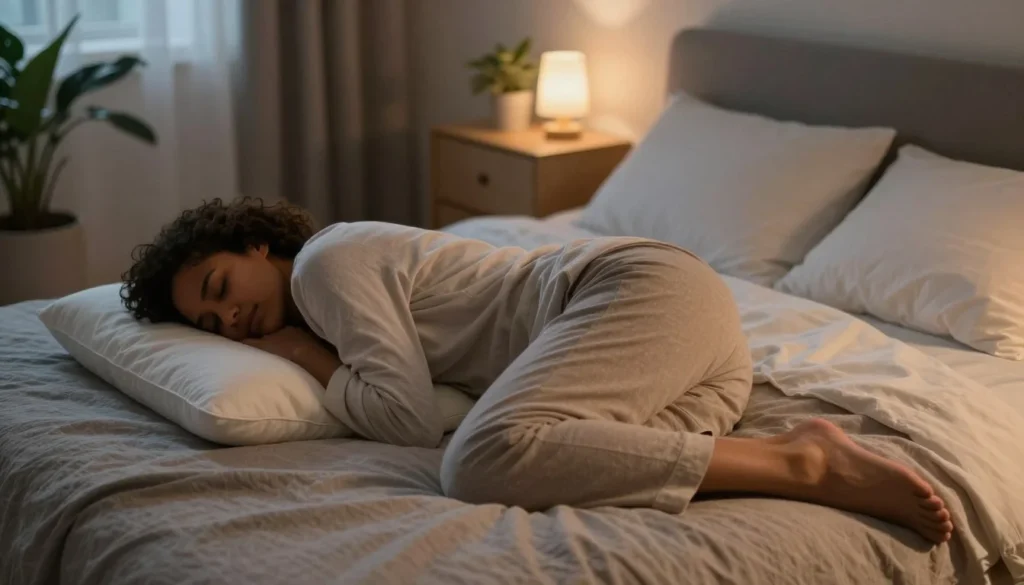
person sleeping on side with pillow between knees supporting spinal alignment
Use a Pillow Between Your Knees
A pillow placed between the knees helps align the hips and pelvis.
This simple trick prevents the upper leg from pulling the spine out of position.
Benefits include:
- Reduced pressure on the lower back
- Better hip alignment
- Less tension in the spine overnight
Adjust the Fetal Position for Comfort
Many people find the fetal position comfortable, but curling too tightly can strain the spine.
Instead:
- Bend your knees slightly
- Keep your back relatively straight
- Use a pillow between the knees
This creates a comfortable, supported sleeping posture.
Back Sleeping for Proper Spinal Alignment
Sleeping on your back can also be excellent for spinal health when done correctly.
This position distributes body weight evenly across the mattress.
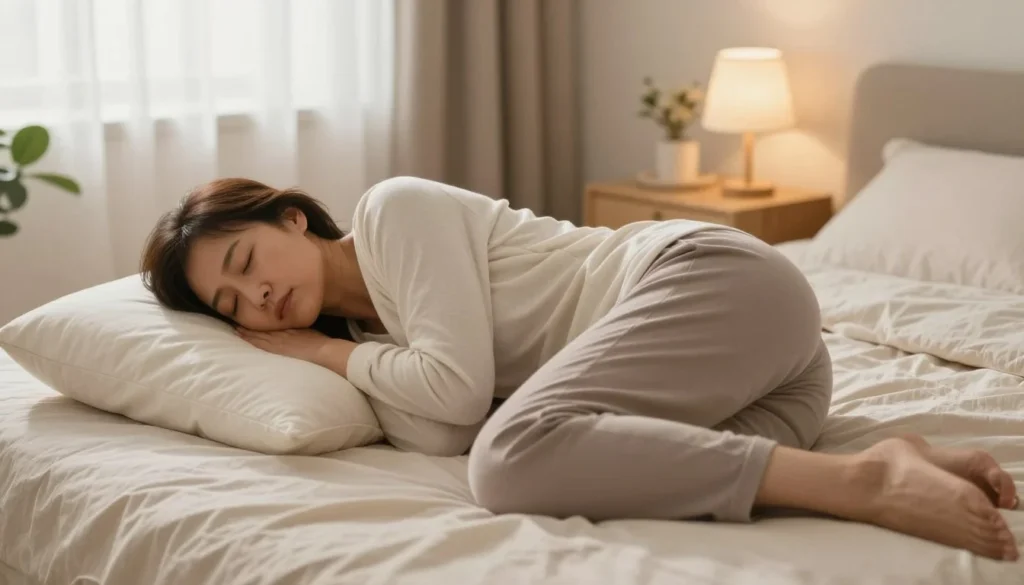
person sleeping on back with pillow under knees supporting lower back
Place a Pillow Under Your Knees
Putting a pillow under your knees slightly elevates the legs.
This helps flatten the lower back against the mattress and reduces pressure on spinal discs.
Add Gentle Lumbar Support
Some people benefit from extra support under the lower back.
You can try:
- A small lumbar cushion
- A rolled towel under the lower spine
This helps maintain the natural curve of the spine while sleeping.
Stomach Sleeping: How to Reduce Strain
Sleeping on your stomach is usually not recommended for back pain, but some people find it difficult to change positions.
If you prefer stomach sleeping, a few adjustments may help.
Use Pelvic Support
Place a thin pillow under the pelvis or lower abdomen.
This reduces pressure on the lower back and helps keep the spine from arching too much.
Use a Thin Pillow Under the Head
A thick pillow can force the neck into an awkward position.
Using a thin pillow—or none at all—may help keep your neck aligned.
Choosing the Right Pillow and Mattress
Even the best sleeping position won’t help much if your pillow or mattress doesn’t support your body properly.
Supportive sleep surfaces are essential for spinal health.
Pillow Height and Neck Alignment
Your pillow should keep your head in a neutral position, aligned with the rest of your spine.
General guidelines:
- Side sleepers: thicker pillow
- Back sleepers: medium height pillow
- Stomach sleepers: thin pillow
The goal is to avoid bending the neck too far forward or backward.
Mattress Firmness for Lower Back Support
Many chiropractors recommend a medium-firm mattress.
This firmness level typically provides:
- Enough support for spinal alignment
- Enough cushioning for pressure points
If a mattress is too soft, the body sinks and misaligns the spine. If it’s too firm, it can create uncomfortable pressure.
Body Pillows for Extra Support
Body pillows can help maintain proper alignment during sleep.
Examples include:
- Pillow between knees for side sleepers
- Lumbar support cushion for back sleepers
These simple tools help keep the body in a balanced sleeping position.
Nighttime Habits That Support Lower Back Health
Sleeping position matters, but daily habits also affect how your back feels at night.
Healthy routines can help your muscles relax and prepare your body for sleep.
Gentle Evening Stretching
Light stretching before bed can relax tight muscles.
Helpful stretches include:
- Knee-to-chest stretch
- Cat-cow stretch
- Gentle spinal twists
If your back feels worse when you wake up, you may also want to read why your lower back hurts more in the morning.
Stay Hydrated During the Day
Your spinal discs are made largely of water.
Proper hydration helps keep them flexible and able to absorb pressure.
Many people also combine better sleep posture with how to use a heating pad for lower back pain before bed.
Create a Relaxing Sleep Environment
A comfortable bedroom can also improve sleep quality.
Helpful tips include:
- Keeping the room cool and dark
- Reducing noise or distractions
- Following a relaxing bedtime routine
If you are thinking about using heat before bed, it also helps to know is it safe to sleep with a heating pad on your back.
Common Mistakes That Increase Nighttime Back Pain
Sometimes small habits can unknowingly make back pain worse.
Avoiding these mistakes can improve sleep comfort.
Twisting When Getting In or Out of Bed
Twisting the spine while getting into bed can strain muscles.
Instead:
- Sit on the edge of the bed
- Lower your body onto your side
- Swing your legs up together
This keeps the spine aligned.
Using Too Many or Too Few Pillows
Too many pillows can push the neck forward.
Too few pillows may leave the neck unsupported.
Aim for pillows that keep the neck and spine in a straight line.
Ignoring Persistent Pain
Pain is a signal that something needs attention.
If back pain continues for weeks or becomes severe, it’s important to speak with a healthcare professional.
Conclusion
The best sleeping position for lower back pain is one that keeps your spine properly aligned and supported throughout the night.
For most people, sleeping on the side with a pillow between the knees or sleeping on the back with a pillow under the knees provides the most relief.
When these positions are combined with a supportive mattress, proper pillows, and healthy nighttime habits, they can significantly improve sleep quality.
Small changes in how you sleep can make a big difference in how your back feels each morning.
Consistency is key. The more you support your spine during sleep, the more opportunity your body has to recover overnight.
Disclaimer
This article is for informational and educational purposes only and is not intended as medical advice. Always consult a qualified healthcare professional before starting any new treatment, exercise, or pain management routine, especially if you have persistent or severe back pain.