Waking up should feel refreshing — not painful. Yet many people struggle to stand up straight in the morning because their lower back feels tight and stiff.
If your lower back hurts when you wake up, you’re not alone. Morning back pain is extremely common and is usually caused by sleep posture, muscle tightness, or poor nighttime spinal support rather than serious injury.
The good news: small adjustments can often reduce or completely eliminate the pain.
Understanding Morning Lower Back Pain
Lower back pain in the morning usually comes from what your body does for 6–8 hours overnight. While you sleep, muscles relax, joints stiffen, and your spine stays in one position for long periods.
Common causes include:
- poor sleeping posture
- unsupported mattress
- tight hip flexors
- inflammation
- dehydration
Instead of a daytime injury, morning pain is typically a mechanical stiffness problem — meaning your spine simply isn’t supported correctly overnight.
Overnight Muscle Stiffness and Inflammation

When your body stays still for hours, blood circulation slows. Muscles tighten and small inflammatory chemicals build up around joints.
That’s why your back hurts most:
• right after waking
• when standing up
• during the first 10–20 minutes of movement
Quick Fix:
Before getting out of bed, pull one knee toward your chest and hold 20–30 seconds. This wakes up your spine gently.
Dehydration During Sleep
Your spinal discs are mostly water. During the night your body loses fluids through breathing and sweating. When discs lose hydration, they temporarily shrink and become less cushioned.
This is one of the biggest hidden causes of morning back pain.
What helps
- drink water in the evening
- drink a glass of water after waking
- gentle movement before bending
Tight Hip Flexors and the Lower Back Connection

Hip flexors shorten when you sit a lot during the day. Overnight they stay tight and pull your pelvis forward, placing stress directly on your lower spine.
This is extremely common in people who sit at desks or drive long hours.
A simple standing lunge stretch in the morning can immediately reduce tension.
How Your Mattress and Pillow Affect Back Pain
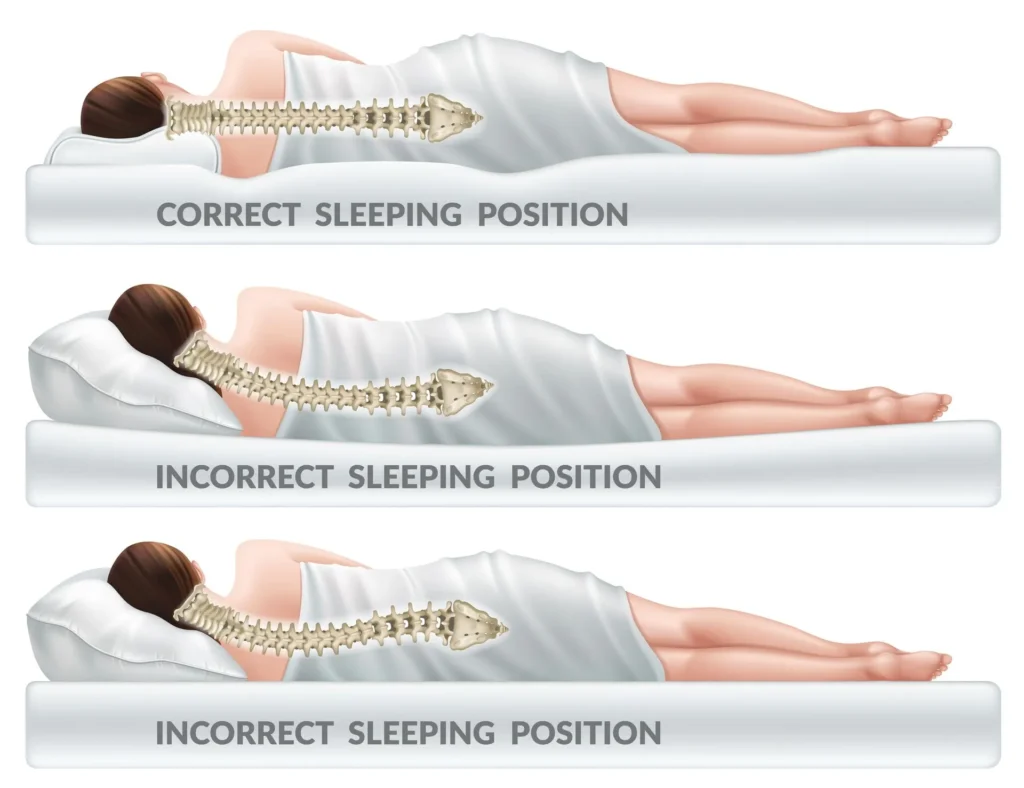
Your mattress determines whether your spine stays neutral for 8 hours.
Too soft: hips sink → spine bends
Too firm: pressure points → joint stiffness
Best choice: medium-firm support.
Your pillow matters too. If your head is pushed forward or tilted, your entire spine shifts out of alignment.
For a deeper explanation, read Best Sleeping Positions for Lower Back Pain.
Sleeping Positions That Help
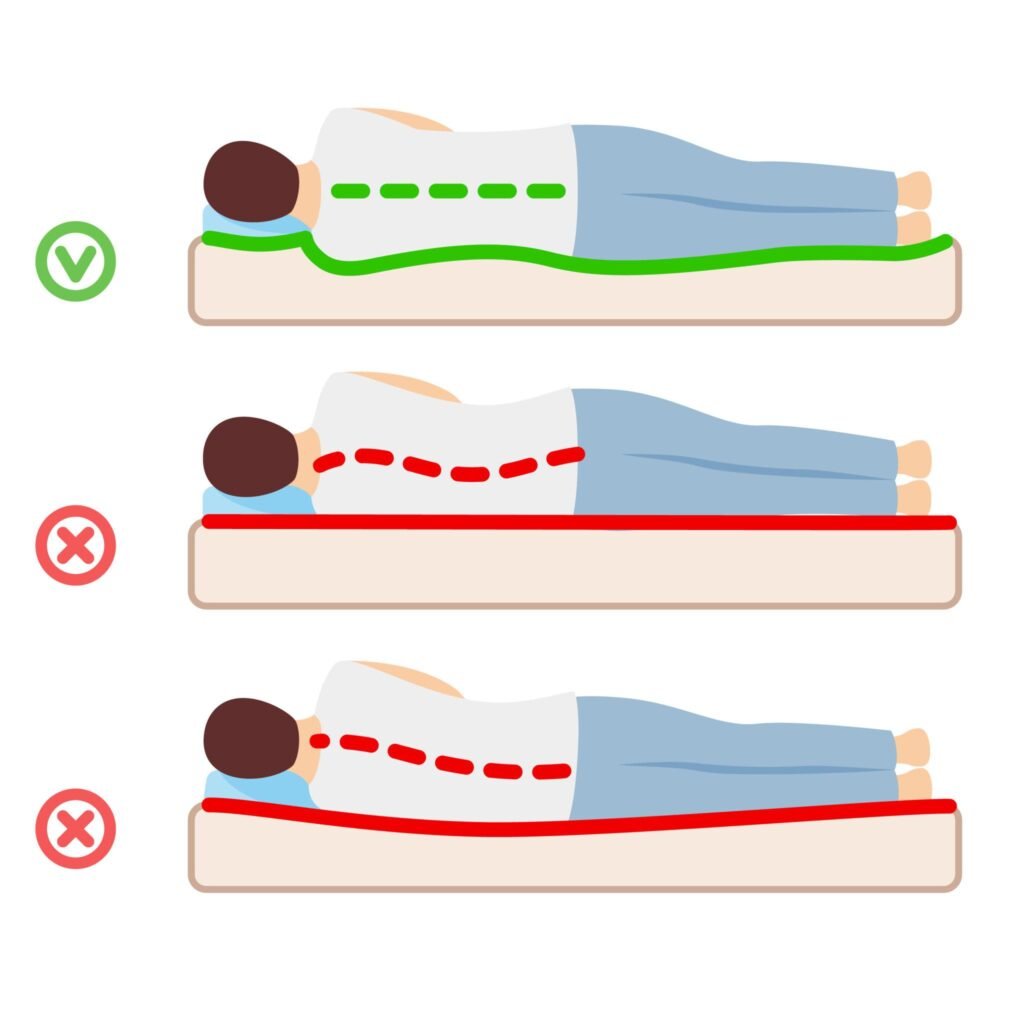
Best positions
- back sleeping with pillow under knees
- side sleeping with pillow between knees
Worst position
- stomach sleeping (forces spinal arch)
5-Minute Morning Stretch Routine

Do these after waking:
- Knee-to-chest – 30 seconds each side
- Cat-Cow – 1 minute
- Child’s pose – 45 seconds
- Pelvic tilts – 10 repetitions
This restores circulation and lubricates spinal joints.
When to See a Doctor
Seek medical attention if you notice:
- leg numbness
- tingling or weakness
- pain after injury
- loss of bladder control
- pain lasting longer than 4–6 weeks
These symptoms may indicate nerve compression or disc injury.
Conclusion
Morning lower back pain is usually not dangerous — it’s a signal your body needs better overnight support and gentle movement.
Improving your sleep posture, hydration, and morning mobility routine can dramatically reduce stiffness and help you start the day comfortably.
Small daily habits consistently practiced often work better than medication.
This article is for informational and educational purposes only and does not constitute medical advice, diagnosis, or treatment. Always consult a qualified healthcare professional before beginning any exercise routine or making changes to your health care.