This article may contain affiliate links. We may earn a commission at no extra cost to you.
Lower back pain can make everyday life harder than it should be. Sitting too long, lifting the wrong way, sleeping in a bad position, or dealing with constant muscle tension can all leave your back feeling stiff and sore.
That is why heating pads are such a popular at-home option for relief. The right heating pad can help relax tight muscles, improve comfort, and make it easier to move through your day. But not every heating pad is the same, and choosing the wrong one can lead to disappointment or even unsafe use.
In this guide, you will learn what to look for before buying a heating pad for lower back pain, which features matter most, and how to choose one that fits your daily routine.
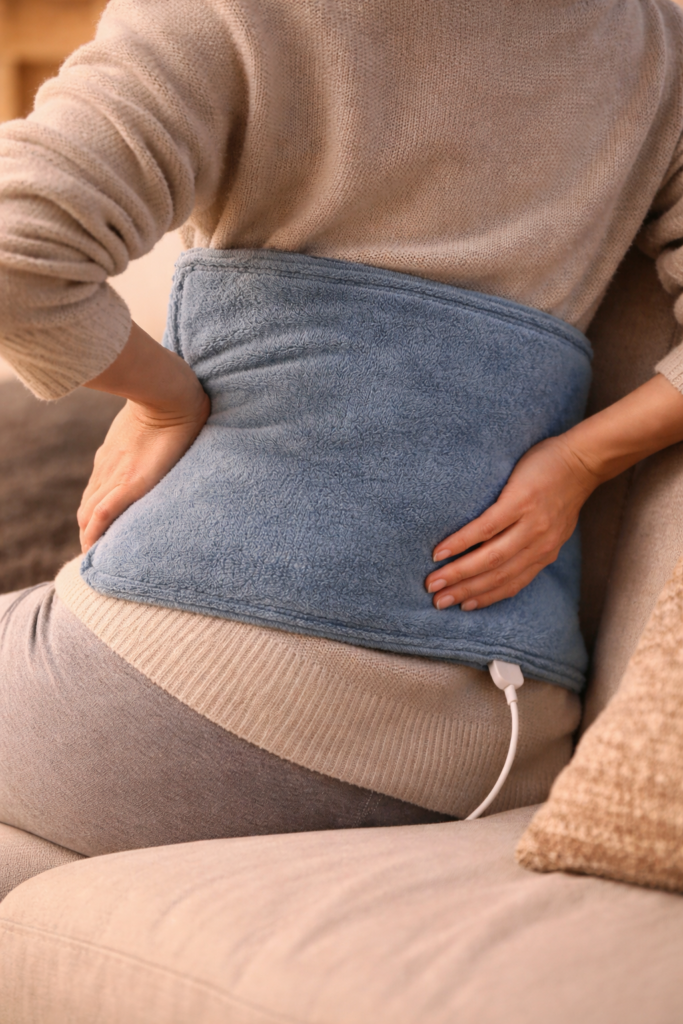
close-up of a heating pad wrapped around the lower back
Why Heating Pads Help Lower Back Pain
Heating pads work by bringing warmth to sore muscles and tight areas of the lower back. That warmth can help the muscles feel looser and more relaxed, especially after sitting for long periods or dealing with daily tension.
For many people, lower back pain gets worse after long hours at a desk or on the couch. If that sounds familiar, read this related guide: Why Lower Back Pain Happens After Sitting
Heat can also feel soothing at the end of the day when your back feels tired, stiff, or overworked. While it is not a cure for every kind of pain, it can be a simple and practical comfort tool for many people.
What to Look for Before You Buy
Not all heating pads are built the same. Some are too small, some do not stay warm long enough, and some lack important safety features. Before buying one, these are the most important things to check.
1. Size and Coverage
A heating pad that is too small may not cover the full lower back area. Many people do better with a larger pad that can spread heat across a broader section of the back instead of only one small spot.
If your pain tends to spread across the lower back after sitting, a larger pad usually feels more useful than a compact one.
2. Adjustable Heat Settings
Different people prefer different levels of warmth. A pad with multiple heat settings gives you more control and helps you find a level that feels comfortable without becoming too intense.
This is especially important if you plan to use the pad often as part of your daily comfort routine.
3. Auto Shut-Off for Safety
This is one of the most important features to look for. A heating pad with an automatic shut-off can help reduce the risk of leaving heat on too long.
If you are unsure how long to use one safely, read this guide: How Long Should You Leave a Heating Pad on Your Back?
A built-in shut-off feature is especially helpful for people who like to relax in bed or on the couch while using heat.
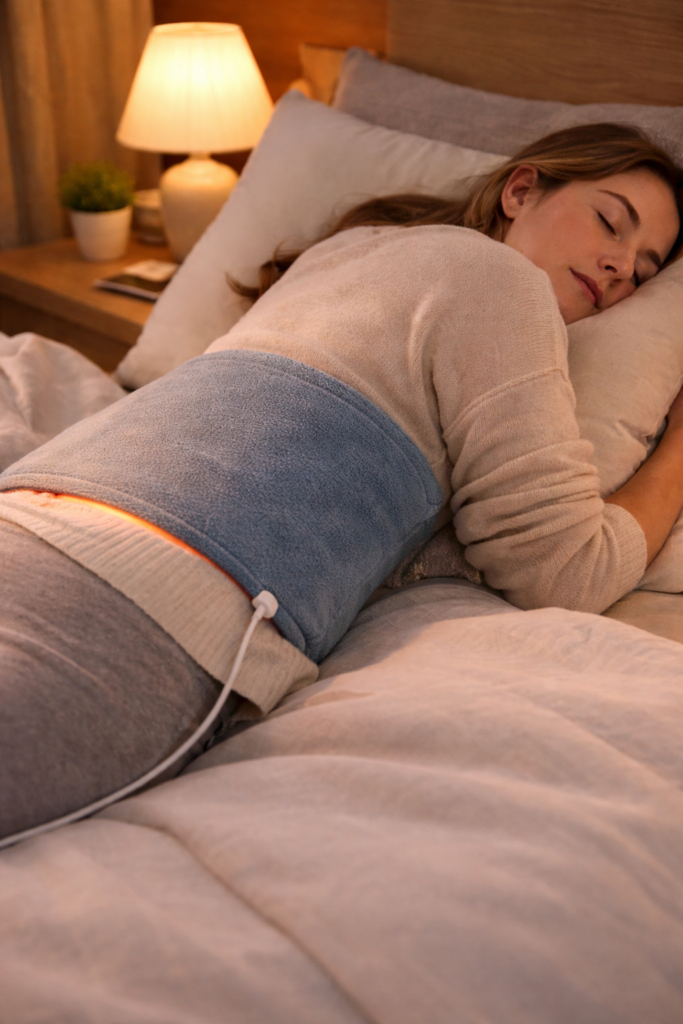
person relaxing in bed with a heating pad on the lower back
4. Soft and Comfortable Material
Since the heating pad will rest directly against your body or clothing, the outer material matters. Many people prefer soft fabric that feels gentle and flexible rather than stiff or scratchy material.
A heating pad that feels comfortable is one you are more likely to actually use.
5. Moist Heat Option
Some heating pads offer moist heat, which some people find feels deeper and more soothing than dry heat. This comes down to personal preference, but it can be a nice extra feature if you want more than basic warmth.
6. Cord Length and Ease of Use
A short cord can be annoying if you want to sit on a couch or lie in bed while using the pad. Ease of use matters too. Look for controls that are simple to understand and adjust without frustration.
Best Types of Heating Pads for Lower Back Pain
When shopping, you will usually come across a few main styles.
Large Rectangular Heating Pads
These are great for broad lower back coverage and tend to work well for people who want to sit back and relax while the heat spreads across the full sore area.
Wraparound Heating Pads
These are designed to stay in place better and can be useful if you want to move around a little while still keeping heat on the lower back.
Electric Heating Pads With Auto Shut-Off
These are popular because they are easy to use, provide steady heat, and often come with adjustable settings. Safety features make them a practical choice for regular use.
Microwavable Heating Pads
These can be convenient for short sessions, but they usually do not stay warm as long as electric models.
When a Heating Pad May Be a Good Choice
A heating pad may be a good option when your lower back feels tight, stiff, tired, or sore after a long day. Many people like using one after work, before bed, or after sitting too long.
Some people also wonder whether it is okay to use heat while resting or sleeping. Before doing that, read this safety article:Is It Safe to Sleep With a Heating Pad on Your Back?
Using a heating pad the right way matters just as much as choosing the right one.
When Heat May Not Be the Best Option
Heat is not always the best choice for every kind of back pain. If the area is swollen, inflamed, or freshly injured, some people prefer to start with ice instead.
If you are trying to figure out which one makes more sense for your situation, read this comparison guide: Heat or Ice for Lower Back Pain: Which Works Faster?
Knowing when to use heat and when to use ice can help you make smarter comfort decisions.
Simple Tips for Using a Heating Pad Safely
Using a heating pad correctly is important. Even a high-quality pad should be used with care.
A few simple habits can make a big difference:
- choose a model with auto shut-off
- avoid using very high heat for long periods
- place the pad over clothing or a light layer if needed
- follow the product instructions
- stop using it if the heat feels too intense or uncomfortable
Comfort is the goal. More heat is not always better.
Final Thoughts
The best heating pad for lower back pain is one that feels comfortable, covers the right area, offers adjustable heat, and includes strong safety features. A good heating pad can become part of a simple routine that helps your back feel more supported after long days, too much sitting, or everyday strain.
Before buying, focus on size, heat settings, material, and safety. Those details can make the difference between a heating pad that helps and one that ends up sitting unused in a drawer.
If your lower back pain tends to flare up from sitting, poor posture, or end-of-day muscle tightness, the right heating pad may be one of the easiest ways to add more comfort to your routine.