If your lower back hurts every time you sit too long, the problem may not just be how long you sit — but how you sit.
Many people unknowingly put extra pressure on their lower back while working, driving, or relaxing on the couch. Over time, poor sitting habits can lead to stiffness, soreness, and discomfort that keeps coming back.
The good news?
Small changes to your sitting position can make a major difference.
In this guide, you’ll learn simple ways to sit more comfortably and reduce pressure on your lower back.
Why Sitting Causes Lower Back Pain
When you sit for long periods, your lower back experiences more pressure than when standing or walking.
This happens because:
- Hip flexors tighten
- Core muscles become inactive
- Blood flow decreases
- Slouching places strain on spinal muscles
Even sitting with “good posture” for too long can still cause discomfort if you never move.
1. Keep Your Feet Flat on the Floor
One of the easiest fixes is adjusting your foot position.
Try this:
- Keep both feet flat on the floor
- Avoid crossing your legs for long periods
- Keep knees at a comfortable angle
When your feet are unsupported, your posture shifts and places more stress on your lower back.
2. Sit With Your Hips Slightly Higher Than Your Knees
Many chairs sit too low.
Ideally:
- Your hips should be slightly higher than your knees
- Your thighs should rest comfortably
- Avoid deep sinking chairs
This position helps maintain a healthier spinal alignment.
3. Support Your Lower Back
Your lower back naturally curves inward.
Without support, you may start slouching without realizing it.
Try:
- A lumbar support pillow
- A small rolled towel behind your lower back
- Sitting fully back in your chair
Extra support can reduce strain and improve comfort during long sitting sessions.
4. Avoid Leaning Forward for Long Periods
Many people lean toward a screen without realizing it.
This puts extra stress on your back muscles.
Instead:
- Keep shoulders relaxed
- Sit upright
- Bring your screen closer rather than leaning forward
Even small posture adjustments can reduce daily tension.
5. Get Up Every 30–45 Minutes
The biggest mistake people make?
Sitting too long without movement.
Try standing up every 30–45 minutes to:
- Walk briefly
- Stretch your hips
- Reset your posture
Even 2–5 minutes of movement can help reduce stiffness.
6. Stretch Tight Hip Flexors
Tight hips often contribute to lower back pain.
Simple stretching may help reduce tension.
Gentle stretching can improve mobility and reduce pulling on the lower back muscles.
You may also like:
How to Relieve Lower Back Pain at Home (Step-by-Step Daily Routine)
7. Try Heat for Tight Muscles
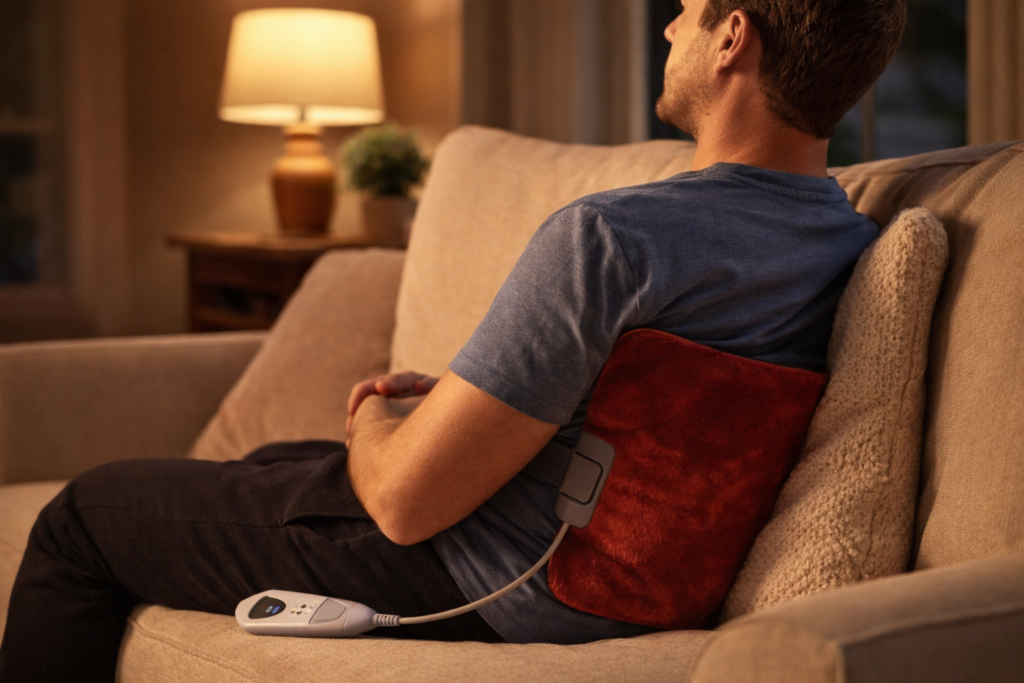
If sitting leaves your back stiff or tight, heat may help relax muscles.
Heat can help:
- Improve blood flow
- Relax tight muscles
- Reduce stiffness
A heating pad for 15–20 minutes may feel soothing after a long day of sitting.
You may also like:
Can You Sleep With a Heating Pad on Your Back All Night?
8. Strengthen Your Core Over Time
Your core helps support your spine.
Weak muscles can place more strain on your lower back during sitting.
Helpful beginner exercises may include:
- Gentle pelvic tilts
- Walking
- Modified planks
- Beginner core strengthening
Consistency matters more than intensity.
9. Avoid Sitting in One Position Too Long
Even “perfect posture” becomes uncomfortable if you never move.
Shift positions occasionally and avoid staying rigid for hours.
Your body is designed to move.
Final Thoughts
Lower back pain from sitting is extremely common — but small changes can make a big difference.
Improving posture, moving more often, supporting your lower back, and avoiding long sitting periods may help reduce daily discomfort over time.
Start with one or two small changes first. Sometimes simple adjustments create the biggest relief.
Medical Disclaimer: PathwayToRelief.com provides educational wellness information only and does not offer medical advice. Always consult a qualified healthcare professional before making changes to your health routine.