Back pain is one of the most common reasons people look for quick pain relief at home. Two of the most popular treatments are heat therapy and cold therapy, but many people aren’t sure which one is best.
The truth is that both heat and ice can be effective—they simply work in different ways. Choosing the right treatment often depends on what is causing your pain and how long you’ve been experiencing it.
This guide explains when to use heat, when to use ice, and how to safely use both therapies to support recovery.
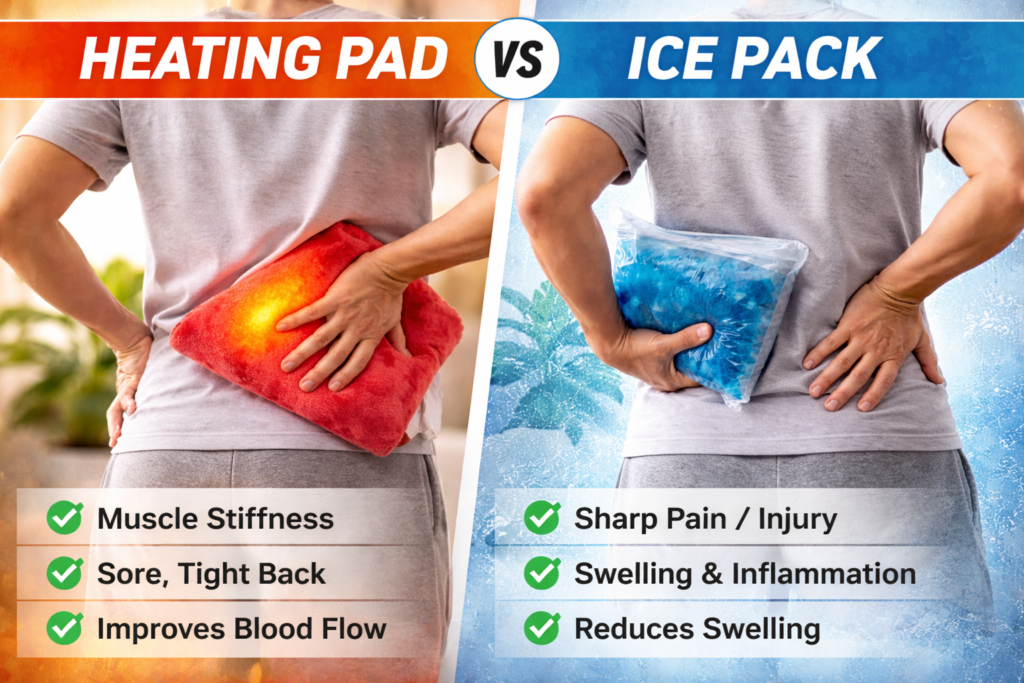
How Heat and Ice Work Differently
Although both treatments may reduce discomfort, they affect your body differently.
Ice Therapy
Cold therapy helps by:
- Reducing inflammation
- Decreasing swelling
- Slowing blood flow to injured tissue
- Numbing sore areas to reduce pain
Ice is generally most helpful soon after an injury or when inflammation is present.
Heat Therapy
Heat therapy helps by:
- Increasing blood circulation
- Relaxing tight muscles
- Improving flexibility
- Reducing muscle spasms
Heat is usually more effective for muscle tightness, stiffness, and ongoing discomfort rather than new injuries.
When Should You Use Ice?
Ice is often recommended during the first 24 to 48 hours after an injury.
Common situations include:
- Pulled muscles
- Sports injuries
- Sudden lower back strains
- Swelling
- Acute inflammation
How to Apply Ice Safely
- Wrap the ice pack in a towel.
- Apply for 15–20 minutes.
- Wait at least 1 hour before applying again.
- Never place ice directly on your skin.
When Should You Use Heat?
Heat is generally better after the initial inflammation has settled.
Heat may help if you have:
- Chronic lower back pain
- Muscle stiffness
- Tight muscles after sitting
- Morning back stiffness
- General muscle tension
Heat increases circulation, which may help muscles relax and improve mobility.
If you’re considering using a heating pad regularly, read our complete guide:
Is It Bad to Use a Heating Pad Every Day for Back Pain?
Can You Use Both Heat and Ice?
Yes.
Many healthcare professionals recommend using both therapies at different stages of recovery.
A common approach is:
First 24–48 hours
✔ Ice to reduce swelling.
After swelling improves
✔ Heat to relax muscles and improve movement.
Always follow the guidance of your healthcare provider if you have a specific injury or medical condition.
Heat vs Ice Comparison
| Situation | Best Choice |
|---|---|
| New injury | Ice |
| Swelling | Ice |
| Muscle stiffness | Heat |
| Chronic pain | Heat |
| Muscle spasms | Heat |
| Inflammation | Ice |
| Tight muscles | Heat |
| Recovery after inflammation | Heat |
Common Mistakes
Many people accidentally make their pain worse by:
- Applying heat immediately after a fresh injury.
- Leaving heating pads on for too long.
- Applying ice directly to bare skin.
- Using either treatment for much longer than recommended.
- Ignoring severe or worsening pain.
Other Ways to Support Recovery
Heat and ice work best when combined with healthy daily habits such as:
- Gentle stretching
- Regular walking
- Maintaining good posture
- Sleeping in a supportive position
- Staying physically active
You may also enjoy:
Best Daily Habits to Reduce Back Pain Naturally
If your pain is triggered by long hours at a desk, this guide may also help:
How to Sit Without Lower Back Pain
Frequently Asked Questions
Is heat or ice better for lower back pain?
It depends on the cause. Ice is generally used for recent injuries and swelling, while heat is often more helpful for muscle stiffness and ongoing discomfort.
How long should I use heat?
Many heating pad manufacturers recommend sessions of approximately 15 to 20 minutes unless instructed otherwise by a healthcare professional.
Can I alternate heat and ice?
Some people benefit from alternating heat and ice after the initial injury phase. However, the right approach depends on the cause of your pain.
When should I see a doctor?
Seek medical attention if your back pain:
- Lasts more than several weeks.
- Is severe or getting worse.
- Follows a serious fall or accident.
- Causes numbness or weakness.
- Affects bladder or bowel control.
- Spreads down one or both legs.
Final Thoughts
Both heat and ice can play an important role in relieving back pain when used appropriately. Ice is generally best for reducing inflammation after a new injury, while heat may provide greater relief for muscle tightness and chronic stiffness.
Understanding the difference can help you choose the right treatment at the right time and support a more comfortable recovery.
Related Articles
Best Daily Habits to Reduce Back Pain Naturally
How to Sit Without Lower Back Pain
Is It Bad to Use a Heating Pad Every Day for Back Pain?
Medical Disclaimer
PathwayToRelief.com provides educational information only and is not a substitute for professional medical advice, diagnosis, or treatment. Always consult a qualified healthcare professional regarding any medical concerns or before beginning a new treatment or exercise program.