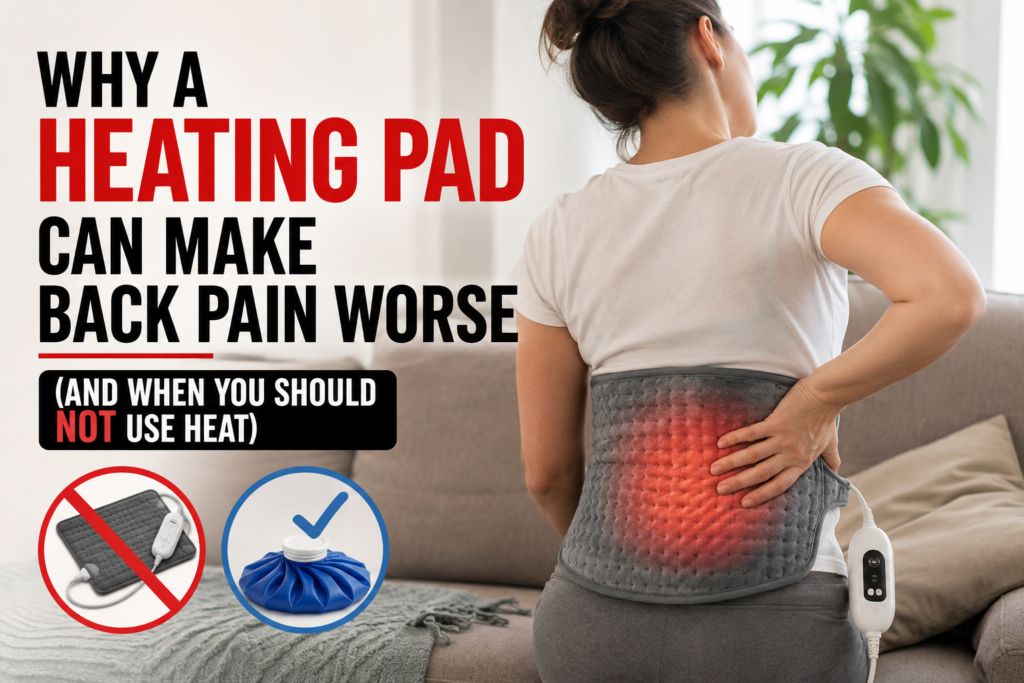
Can a heating pad make back pain worse? Learn when heat may aggravate discomfort, when to avoid a heating pad, and how to use heat more safely.
A heating pad can feel incredibly soothing when your back is stiff, tight, or achy. But have you ever used one, felt better for a little while, and then wondered why your back seemed more uncomfortable afterward?
Heat isn’t automatically the right choice for every type of back pain.
For some people and some situations, heat can relax tight muscles and provide temporary relief. In others—particularly when there is swelling, reduced sensation, damaged skin, or certain medical conditions—using a heating pad may be uncomfortable or unsafe.
The key is understanding what may be causing your back pain and how your body responds to heat.
In this guide, we’ll cover:
- Why a heating pad can sometimes make back pain feel worse
- Situations where you should be cautious with heat
- When cold therapy may feel better
- How to use a heating pad more safely
- Other simple strategies that may help relieve back discomfort
Key Takeaways
- Heating pads can temporarily relax tight muscles and reduce stiffness.
- Heat isn’t appropriate for every type of back pain.
- If heat makes your pain noticeably worse, stop using it.
- Never place a heating pad directly on damaged, irritated, or numb skin.
- People with reduced sensation or circulation problems should talk with a healthcare professional before using heat therapy.
- Heat and cold are comfort tools—not substitutes for finding the cause of persistent or severe back pain.
- Seek medical care for back pain accompanied by significant weakness, numbness, bowel or bladder changes, fever, major trauma, or other concerning symptoms.
How Does a Heating Pad Help Back Pain?
Heat therapy is commonly used for muscle soreness and stiffness because warmth can increase local blood flow and help muscles relax.
Think about how your body feels after sitting at a desk for several hours.
Your lower back may feel stiff when you first stand up. Gentle warmth can sometimes make those tight muscles feel looser and more comfortable.
Heat may be particularly soothing for discomfort associated with:
- Muscle tightness
- Stiffness after prolonged sitting
- Mild muscle spasms
- Chronic muscle soreness
- General aches after normal daily activity
If sitting for long periods is one of your triggers, read our guide on why your lower back hurts after sitting.
The important word here is temporary.
A heating pad may make your back feel better, but it doesn’t necessarily address why your back hurts in the first place.
Why Can a Heating Pad Make Back Pain Worse?
There isn’t one single reason. Your response can depend on the source of the pain, the temperature of the heating pad, how long you use it, and whether there is an underlying medical problem.
Here are several possibilities.
1. The Area Is Already Swollen or Irritated
Warmth increases local circulation.
When an area already feels swollen, hot, or particularly tender, additional heat may feel uncomfortable for some people.
This doesn’t mean heat universally “causes inflammation” or prevents healing. The relationship between heat, cold, inflammation, and recovery is more complicated than that.
A better rule is simple:
Pay attention to how the area responds.
If warmth makes throbbing, swelling, or pain noticeably worse, stop using the heating pad and consider another comfort strategy.
2. The Heating Pad Is Too Hot
More heat does not necessarily mean more relief.
Using a heating pad at a very high temperature increases the risk of skin irritation and burns without necessarily providing additional benefit.
You should feel comfortably warm—not painfully hot.
If your skin becomes:
- Very red
- Blotchy
- Painful
- Burning or stinging
- Unusually sensitive
remove the heating pad immediately.
A lower temperature is generally a safer choice, especially if you plan to use the pad for more than a few minutes.
3. You’re Using the Heating Pad for Too Long
It’s easy to lose track of time when a heating pad feels good.
But prolonged exposure increases the chance of skin irritation and burns.
Repeated heat exposure over long periods can also cause a mottled or net-like skin discoloration known as erythema ab igne, sometimes called “toasted skin syndrome.”
This is another reason a heating pad shouldn’t stay against your back for hours at a time.
A timer can be surprisingly useful.
For more information about safe sessions, read How Long Should You Leave a Heating Pad on Your Back?.
4. You’re Falling Asleep With It
One of the riskiest heating-pad habits is falling asleep while the pad is still operating.
When you’re asleep, you may not notice that your skin is becoming too hot or irritated.
Your body also remains in the same position for an extended period, which can expose one area of skin to heat much longer than intended.
Unless a product is specifically designed and instructed by its manufacturer for a particular type of use, don’t assume that an automatic shutoff makes sleeping with it completely safe.
Set a timer and remove the heating pad before going to sleep.
5. Your Skin Has Reduced Sensation
Normally, discomfort tells you when something is too hot.
If sensation is reduced, however, that warning system may not work properly.
This can occur with certain neurological conditions, nerve injuries, neuropathy, or other medical problems.
Someone who cannot accurately feel temperature changes may develop a burn before realizing the heating pad is too hot.
If you have reduced sensation in your back or another area where you want to use heat, ask a healthcare professional whether heating-pad use is appropriate for you.
6. Heat Isn’t Addressing the Actual Cause of the Pain
Back pain has many possible causes.
Sometimes muscles are simply stiff after sitting, lifting, exercising, or sleeping awkwardly. Other times pain may involve a joint, nerve, disc, injury, or another health problem.
A heating pad can temporarily change how your back feels without correcting the underlying issue.
If you’re repeatedly reaching for heat every day because the pain keeps returning, it may be worth looking beyond the heating pad.
When Should You Avoid or Be Cautious With a Heating Pad?
There are situations where extra caution is appropriate.
Damaged or Irritated Skin
Avoid placing a heating pad over:
- Open wounds
- Burns
- Rashes
- Significant skin irritation
- Areas where the skin is already unusually hot or inflamed
Give the skin time to recover and seek medical advice if you’re concerned about an injury.
Areas With Numbness or Reduced Sensation
Don’t rely on your ability to judge temperature if you can’t properly feel the area.
Reduced sensation significantly increases the risk of accidental burns.
Circulation Problems
Certain conditions that affect circulation can change how tissues respond to temperature.
If you’ve been told that you have poor circulation, ask your healthcare provider before regularly applying heat.
Unexplained Severe Pain
Heat shouldn’t be used to mask severe or unexplained symptoms indefinitely.
If your pain is intense, worsening, or associated with other concerning symptoms, figuring out the cause is more important than repeatedly treating it with a heating pad.
What About a New Back Injury?
You’ve probably heard advice such as:
“Always use ice for the first 48 hours and heat afterward.”
That rule is commonly repeated, but back pain isn’t always that simple.
Cold may feel soothing after a recent strain or when an area feels swollen. Heat may feel better when muscle guarding or stiffness is the main problem.
Rather than assuming everyone needs exactly the same treatment for exactly 48 or 72 hours, consider your symptoms and follow medical advice when you’ve experienced a significant injury.
If one method clearly makes the pain worse, stop using it.
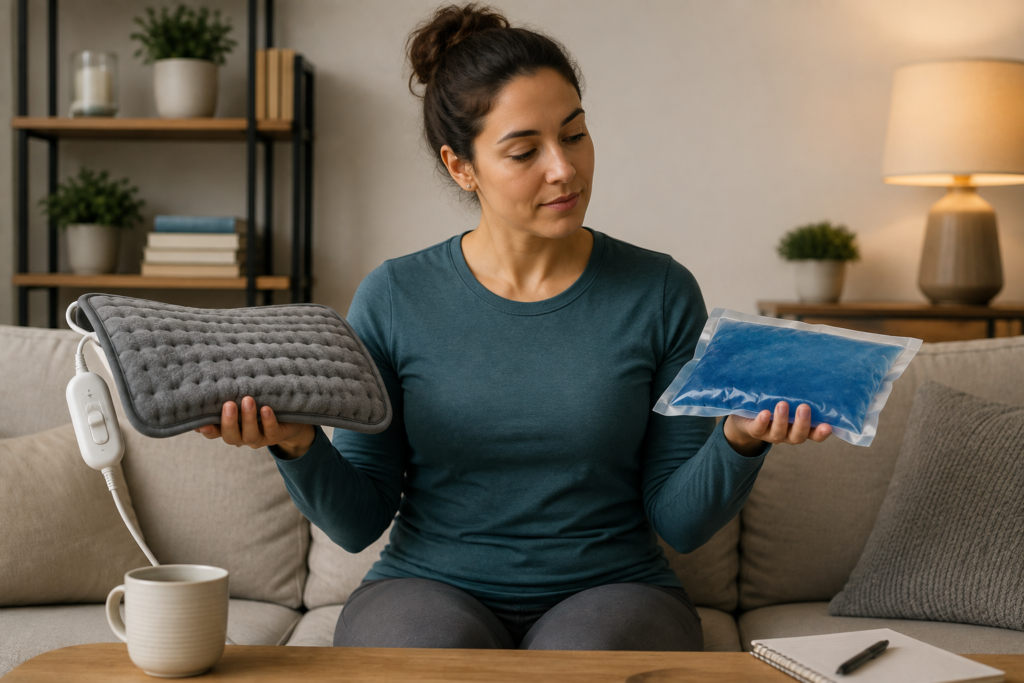
Heat vs. Ice for Back Pain
Neither heat nor ice is automatically “better.”
They simply provide different types of temporary comfort.
| Situation | What May Feel Better |
|---|---|
| Tight or stiff muscles | Heat |
| Muscle spasms | Heat may help |
| Soreness after prolonged sitting | Heat may help |
| Recent injury with swelling | Cold may feel better |
| Area feels hot and irritated | Cold may feel better |
| Heat makes symptoms worse | Stop heat and consider cold |
| Cold makes symptoms worse | Stop cold and consider gentle warmth |
Your comfort matters, but persistent pain still deserves evaluation.
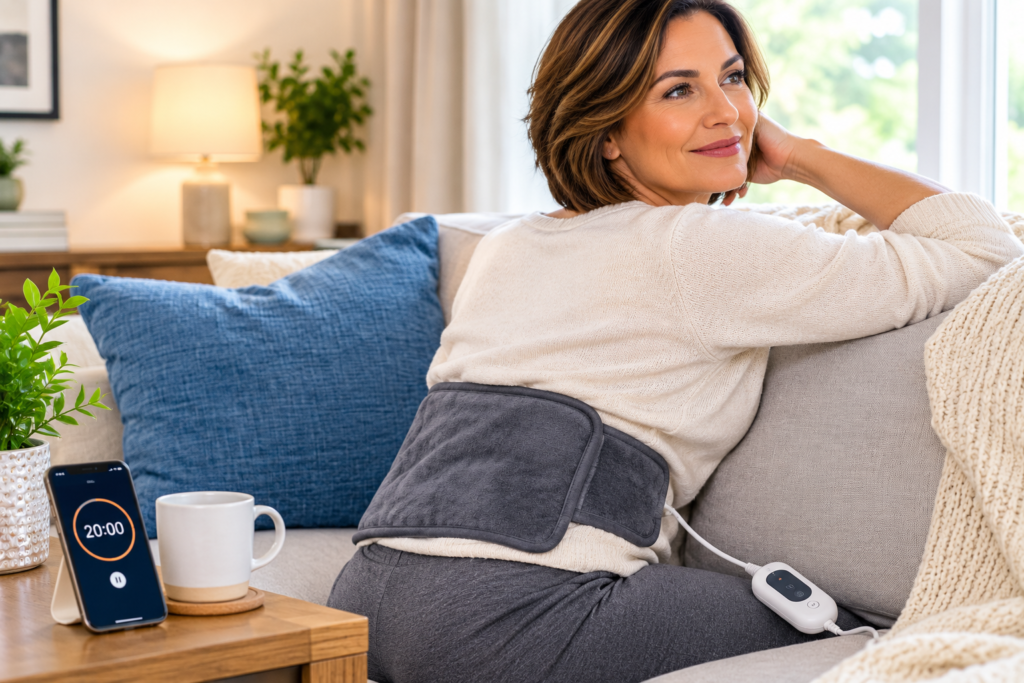
How to Use a Heating Pad More Safely
If heat feels good and you don’t have a reason to avoid it, a few simple precautions can reduce your risk of skin irritation or burns.
Start With a Low Setting
Begin with the lowest comfortable temperature.
You don’t need intense heat to warm tight muscles.
Use a Protective Layer
Follow the manufacturer’s directions for your particular heating pad.
Depending on the product, keeping light clothing or an appropriate fabric barrier between your skin and the heat source may help prevent excessive skin exposure.
Keep Sessions Reasonable
Avoid leaving a heating pad against the same area indefinitely.
Short, controlled sessions give you an opportunity to check your skin and see how your back responds.
Check Your Skin
After using heat, look at the area.
Temporary mild warmth may occur, but persistent redness, pain, blistering, or unusual discoloration is a sign to stop.
Don’t Lie Directly on the Heating Pad Unless the Manufacturer Says You Can
Your body weight can trap heat and may damage some heating pads.
Always follow the instructions provided with your specific device.
Can You Use a Heating Pad Every Day?
Some people use heat frequently for recurring stiffness.
Whether daily use is appropriate depends on why you’re using it, how your skin responds, your health history, and how the heating pad is being used.
Daily heat shouldn’t become a substitute for investigating persistent pain.
If you find yourself needing a heating pad every day just to get through normal activities, consider asking:
Why does my back keep getting tight or painful?
Possible contributors can include prolonged sitting, poor workstation ergonomics, lack of movement, repetitive activities, muscle weakness, sleep position, or an underlying medical issue.
You can also read Is It Bad to Use a Heating Pad Every Day for Lower Back Pain? for a deeper look at frequent heating-pad use.
Other Ways to Help a Sore or Stiff Back
A heating pad is only one tool.
For many people, combining several simple habits is more useful than depending exclusively on heat.
Gentle Movement
Staying completely still for long periods can make stiffness worse.
When appropriate for your situation, gentle walking and regular changes in position can help keep your body moving.
Even a few minutes of movement after prolonged sitting may feel better than spending hours in one position.
Break Up Long Periods of Sitting
If you work at a computer, try changing positions throughout the day.
You might:
- Stand periodically
- Take short walking breaks
- Adjust your chair
- Change your sitting position
- Avoid remaining hunched over a laptop for hours
Small adjustments throughout the day can add up.
Review Your Sleep Position
Your sleeping position and mattress setup can influence how your back feels in the morning.
For example, some people find that a pillow between the knees while side sleeping or underneath the knees while lying on the back makes them more comfortable.
See Best Sleeping Positions for Lower Back Pain for additional ideas.
Consider Gentle Stretching
Gentle mobility exercises may help some types of stiffness.
Avoid forcing painful stretches. If a movement produces sharp, radiating, or worsening pain, stop.
Helpful Products for Safer At-Home Comfort
If you regularly use heat or cold for back discomfort, a few simple products can make your routine easier.
Heating Pad With Adjustable Temperature and Automatic Shutoff
Look for a heating pad with several temperature settings and an automatic shutoff timer. Adjustable heat gives you more control than a basic high/low model.
Reusable Hot/Cold Pack
A reusable pack can be useful when you aren’t sure whether your back will respond better to warmth or cold.
Lumbar Support Cushion
If your discomfort tends to develop while sitting, a supportive cushion may be more useful long-term than repeatedly reaching for a heating pad.
Amazon affiliate note: PathwayToRelief may earn a commission from qualifying purchases made through affiliate links, at no additional cost to you.
When Back Pain Needs Medical Attention
Most everyday back soreness isn’t an emergency, but certain symptoms shouldn’t simply be covered up with heat or ice.
Seek prompt medical attention if back pain occurs with symptoms such as:
- New or significant leg weakness
- Loss of bladder or bowel control
- Numbness around the groin or saddle area
- Fever or feeling seriously unwell
- Severe pain following a significant fall, collision, or other trauma
- Severe or rapidly worsening pain
You should also consider speaking with a healthcare professional if your back pain persists, repeatedly returns, interferes with normal activities, or you’re unsure why it is happening.
Frequently Asked Questions
Why does my back hurt more after using a heating pad?
There are several possibilities. The temperature may have been too high, the session may have lasted too long, your skin may have become irritated, or heat simply may not be comfortable for the particular problem causing your pain. Stop using heat if it consistently worsens your symptoms.
Can too much heat damage your back?
The most immediate concern from excessive heating-pad use is skin injury. High temperatures or prolonged exposure can cause burns and repeated exposure can cause skin discoloration. Follow the manufacturer’s instructions and avoid prolonged sessions.
Should I use heat or ice for a new back injury?
There isn’t one universal answer for every back injury. Cold may feel soothing when an area is swollen or irritated, while warmth may help muscle tightness and spasms. Significant injuries should be evaluated by a healthcare professional.
Is it safe to sleep with a heating pad?
It’s generally safer to use a heating pad while you’re awake and able to monitor the temperature and your skin. Follow the manufacturer’s instructions and remove the pad before falling asleep.
What should I do if a heating pad makes my pain worse?
Turn it off and remove it. Give your skin and back time to return to their normal temperature. If pain remains significantly worse, becomes severe, or is accompanied by concerning symptoms, seek medical advice.
The Bottom Line
A heating pad can be a useful comfort tool for a stiff or achy back, but heat isn’t appropriate for every situation.
The goal isn’t to decide that heat is good or heat is bad.
It’s to use it appropriately.
Use a comfortable temperature, limit prolonged exposure, monitor your skin, and stop if heat makes your symptoms worse.
Most importantly, don’t let temporary relief from a heating pad distract you from persistent or worsening back pain.
Long-term improvement often involves understanding what’s contributing to the discomfort—whether that’s prolonged sitting, movement habits, ergonomics, sleep position, an injury, or another medical issue.
The information provided on PathwayToRelief.com is for general educational and informational purposes only and is not intended as medical advice, diagnosis, or treatment. Always consult a qualified healthcare professional regarding persistent or severe pain, injuries, medical conditions, or questions about whether heat or cold therapy is appropriate for you.
PathwayToRelief.com may contain affiliate links. If you purchase through one of these links, we may earn a small commission at no additional cost to you. This helps support the website and allows us to continue creating educational content.