This post may contain affiliate links. If you purchase through these links, we may earn a small commission at no extra cost to you.
When back pain hits, one of the biggest questions is:
👉 Should you use heat or ice?
The truth is—both can work extremely well.
But using the wrong one at the wrong time can actually slow your recovery.
Let’s break it down so you know exactly what to use and when.
❄️ When to Use Ice for Back Pain
Ice is best for inflammation and sudden injuries.
It works by:
- Reducing swelling
- Slowing blood flow to the area
- Numbing pain
Use ice if you have:
- A recent injury (within 24–48 hours)
- Swelling or inflammation
- Sharp or intense pain
- A flare-up after physical activity
How to use ice safely:
- Apply for 15–20 minutes at a time
- Use a cloth or barrier (never directly on skin)
- Wait at least 30–60 minutes between sessions
Ice is especially helpful right after something like:
- Lifting incorrectly
- Sudden twisting
- Overexertion
🔥 When to Use Heat for Back Pain
Heat is best for muscle stiffness and long-term discomfort.
It works by:
- Increasing blood flow
- Relaxing tight muscles
- Improving flexibility
Use heat if you have:
- Ongoing or chronic back pain
- Tight or sore muscles
- Stiffness after sitting or sleeping
- Tension-related discomfort
Heat is often the better choice for everyday back pain, especially if your pain is related to posture or inactivity.
👉 If you deal with stiffness in the morning, this guide on why lower back pain is worse in the morning and how to fix it can help you understand the cause and prevent it:
⚖️ Heat vs Ice: What’s the Difference?
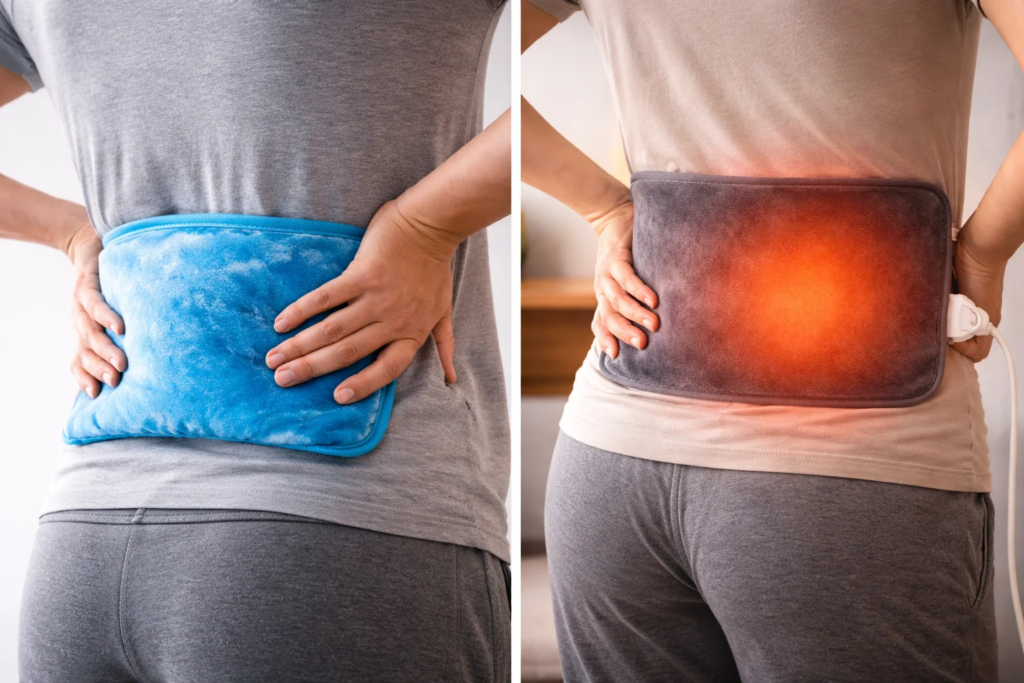
Here’s a simple way to think about it:
- Ice = inflammation + new injury
- Heat = stiffness + ongoing pain
If your back feels:
- Swollen, hot, or inflamed → use ice
- Tight, stiff, or sore → use heat
⚠️ Common Mistakes That Make Back Pain Worse
A lot of people use heat and ice incorrectly without realizing it.
Avoid these:
- Using heat immediately after an injury
- Applying ice for too long
- Falling asleep with a heating pad
- Not giving your body time between treatments
- Ignoring the root cause of the pain
👉 If you’re considering leaving heat on longer, it’s important to understand whether you can sleep with a heating pad on your back before doing so:
You should also know how long you should leave a heating pad on your back to avoid irritation or overuse:
🧠 Best Strategy (What Actually Works)
For most people, the best approach is simple:
Step 1: Start With Ice (First 24–48 Hours)
- Reduce inflammation
- Calm the initial pain
Step 2: Switch to Heat
- Relax muscles
- Improve mobility
- Speed up recovery
Step 3: Alternate If Needed
Some people benefit from switching between heat and ice:
- Ice → reduce irritation
- Heat → relax muscles
This combination can provide faster relief when used correctly.
🔄 When Heat or Ice Alone Isn’t Enough
If your pain keeps coming back, it’s usually not just about heat or ice.
It’s often caused by:
- Poor posture
- Sitting too long
- Weak core muscles
- Lack of movement
👉 If your pain gets worse after sitting, learning how to fix lower back pain after sitting too long can help stop the cycle:
❓ FAQ: Heat vs Ice for Back Pain
Is heat or ice better for lower back pain?
It depends. Ice is better for inflammation and new injuries, while heat is better for stiffness and chronic pain.
Can I use both heat and ice in one day?
Yes. Many people alternate between the two for better relief, especially during recovery.
How long should I use heat or ice?
Both should be used for 15–20 minutes at a time with breaks in between.
When should I see a doctor?
You should seek medical attention if:
- Pain lasts longer than a few weeks
- You feel numbness or tingling
- The pain is severe or worsening
💡 Final Thoughts
Both heat and ice are powerful tools—but only when used correctly.
👉 The key is understanding your pain:
- Inflammation → Ice
- Stiffness → Heat
Once you match the treatment to the cause, relief becomes much faster and more effective.
PathwayToRelief.com provides educational wellness information only and does not offer medical advice. Always consult a qualified healthcare professional before making changes to your health routine.