Ever feel fine in the morning, but by afternoon your chair suddenly feels like it’s hurting you?
You’re not imagining it. Lower back pain after sitting is one of the most common problems for people who work at desks, drive often, or spend long hours on the computer.
The good news: this type of back pain is usually not an injury. It’s your body reacting to pressure, muscle tightness, and lack of movement. Small daily adjustments can relieve pain surprisingly fast.
In this guide you’ll learn why sitting causes back pain — and exactly what you can do at home today to fix it.
Why Sitting Causes Lower Back Pain
1. Your Spinal Discs Get Compressed
When you sit, your body weight shifts directly onto your lower spine. The discs between your vertebrae act like cushions. Sitting too long squashes them.
Over hours, the discs lose fluid and flexibility. That’s why you feel stiff when standing up.
2. Your Hip Flexors Tighten
Your hips stay bent while sitting. After enough time:
• Hip flexors tighten
• Glutes “turn off”
• Lower back muscles overwork
Your back is basically doing a job your hips should be doing.
3. Blood Flow Slows Down
Muscles need circulation. Sitting reduces it.
Less oxygen = stiffness
Stiffness = pain
This is why standing up suddenly hurts but walking for 2–3 minutes helps.
Fast Home Fixes That Work Immediately
The Immediate Relief Position
Lie on your back on the floor or bed.
Place a pillow under your knees.
This unloads pressure from your spine within minutes and relaxes the lower back muscles.
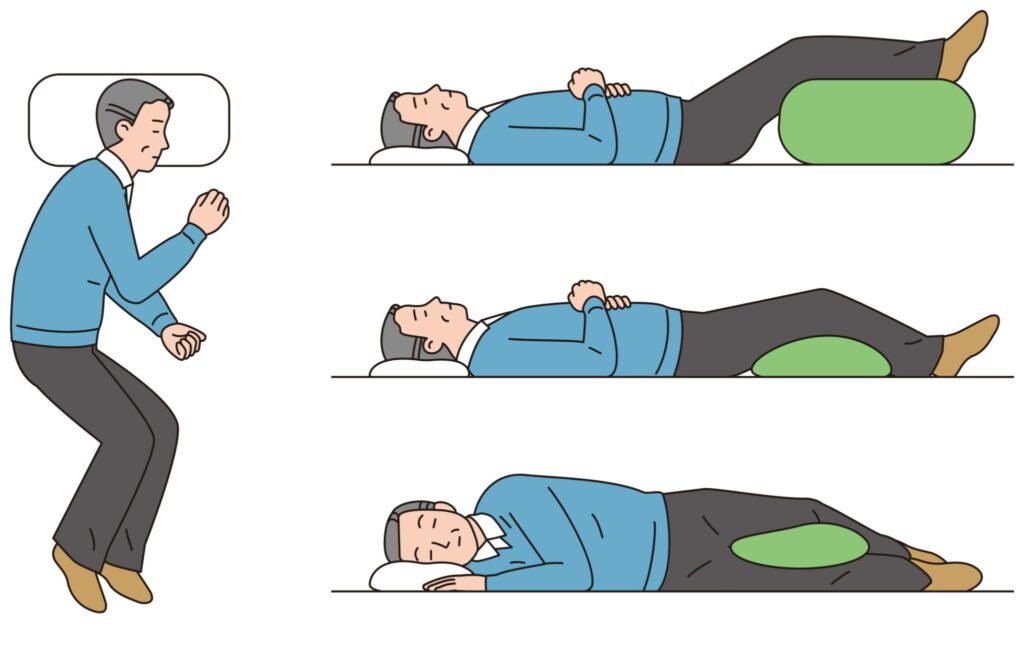
Stay here 5–10 minutes.
3 Stretches That Loosen Your Lower Back Fast
Knee-to-Chest Stretch
Pull one knee to your chest while lying down.
Hold 20–30 seconds each side.
Seated Figure-Four Stretch
Sit in a chair. Cross ankle over knee. Lean forward slightly.
Cat-Cow Movement
On hands and knees:
• arch back upward
• then lower stomach and lift head
Repeat 8–10 times.



Heat vs Cold Therapy
Use cold if pain feels sharp or inflamed.
Use heat if muscles feel tight or stiff.
Heat is especially effective after long sitting.
If you want to know when heat works best, read:
Do Heating Pads Actually Help Back Pain?
The 30-Minute Rule (Most Important Habit)
Every 30 minutes:
Stand up → stretch → walk for 1–2 minutes.
This single habit alone prevents most sitting-related back pain.
Preventing Back Pain Daily
Proper Sitting Posture
• Feet flat on floor
• Knees level with hips
• Back supported
• Shoulders relaxed
For a full setup guide, read:
How to Sit Properly at a Desk
Adjust Your Workspace
Your monitor should be eye level and about arm’s length away.
Your lower back must touch the chair support.


Hydration Matters
Your spinal discs are mostly water.
When dehydrated, they lose shock absorption ability — which increases back pain.
Drink water regularly during work hours.
Strengthen Your Core
Helpful exercises:
• bridges
• planks
• pelvic tilts
Strong core muscles remove pressure from your lower spine.
Sleeping Positions That Help
Best options:
• Back sleeping with pillow under knees
• Side sleeping with pillow between knees
You can also read:
Best Sleeping Positions for Lower Back Pain
Waking up with a stiff back is actually very related to sitting pain. Muscles that tighten during the day often stay tight overnight. If you want to understand why this happens and how to relieve it quickly, read morning lower back pain causes and fix.
Conclusion
Lower back pain after sitting is extremely common and usually not dangerous. It happens because of pressure, tight muscles, and lack of movement — not permanent damage.
By using stretches, posture adjustments, and movement breaks, most people feel improvement within days.
Consistency matters more than intensity. Small habits done daily fix this problem.
Medical Disclaimer:
The information on PathwayToRelief.com is for educational purposes only and is not medical advice. This website does not diagnose, treat, or cure medical conditions. Always consult a licensed healthcare professional before starting any treatment, exercise, or pain relief routine.