Waking up should feel refreshing, but for many people it can feel like the opposite. Instead of feeling rested, the lower back feels stiff, tight, or painful during the first few minutes of the day.
If this sounds familiar, you’re not alone. Morning lower back pain is extremely common and often has nothing to do with serious injuries. In many cases, the cause is related to sleep posture, hydration, mattress support, or everyday habits.
Understanding why lower back pain is worse in the morning can help you fix the underlying problem and wake up feeling much better. Below are seven hidden causes doctors often mention, along with simple changes that can help reduce stiffness and discomfort.
Key Takeaways
- Morning back pain is often linked to sleep posture and spinal alignment
- Dehydration can affect spinal discs and increase stiffness
- Mattress support plays a major role in spinal health overnight
- Natural body inflammation peaks in the morning
- Tight muscles from daily stress can worsen overnight stiffness
- Gentle morning movement can quickly reduce discomfort
- Small lifestyle adjustments can significantly improve back health
Understanding Why Lower Back Pain Is Worse in the Morning
Morning back pain often occurs because the body remains still for several hours during sleep. During this time, muscles can tighten, joints can stiffen, and spinal discs naturally rehydrate and slightly expand.
While this rehydration process is normal and healthy, it can temporarily increase pressure on the spine. As a result, the lower back may feel stiff or sore until movement begins.
Other lifestyle factors can also make morning pain worse, including:
- Poor sleeping position
- Low hydration levels
- An unsupportive mattress
- Muscle tightness
- Stress-related tension
The good news is that once you understand the causes, small adjustments can make a big difference.
If you regularly wake up with stiffness, you may want to understand the common reasons behind morning back pain and how to fix them.
The Role of Sleep Position and Spinal Alignment
Your sleep position plays a huge role in spinal alignment. When the spine stays in an unnatural position for several hours, it can place stress on muscles, joints, and discs.
How Side Sleeping Affects Your Hips and Spine
Side sleeping is one of the most common sleep positions. When done correctly, it can be very healthy for the spine.
However, if the hips rotate or collapse inward, it can pull the spine out of alignment.
Simple adjustments can help:
- Place a pillow between your knees
- Use a medium-firm mattress
- Keep your neck supported with a proper pillow

person sleeping on side with pillow between knees for spinal alignment
The Impact of Stomach Sleeping on Lumbar Curvature
Stomach sleeping is one of the most difficult positions for the spine. It forces the lower back into an exaggerated curve while also twisting the neck.
This can lead to increased stress on the lumbar region.
If stomach sleeping is your preferred position, try these adjustments:
- Use a very thin pillow or no pillow under the head
- Place a pillow under the hips to reduce spinal arching
These changes can help reduce strain on the lower back overnight.
Dehydration and Its Effect on Spinal Discs
Many people don’t realize that hydration plays an important role in spinal health.
The discs between your vertebrae act like small shock absorbers. These discs are made mostly of water. When the body is dehydrated, they lose some of their cushioning ability.
This can increase stiffness and discomfort, especially first thing in the morning.
Why Hydration Matters for Disc Cushioning
When your body is properly hydrated, spinal discs stay flexible and absorb pressure more effectively. This helps protect the spine and reduce back pain.
Dehydration, on the other hand, can cause discs to shrink slightly and lose their shock-absorbing ability.
To support spinal health:
- Drink water consistently throughout the day
- Reduce excessive caffeine or alcohol before bed
- Eat hydrating foods like fruits and vegetables
Maintaining hydration can significantly reduce morning stiffness.
Staying hydrated and maintaining mobility works best when combined with simple daily exercises that relieve lower back pain naturally.
The Hidden Impact of Mattress Quality and Support
Your mattress is one of the most overlooked causes of morning back pain.
An old or unsupportive mattress can allow the spine to sink or bend unnaturally throughout the night. Over time, this creates pressure on the lower back muscles and joints.
Signs Your Mattress May Be Causing Back Pain
Common warning signs include:
- Waking up stiff or sore
- Visible sagging in the mattress
- Feeling better after sleeping somewhere else
- Difficulty finding a comfortable position
If your mattress is over 7–10 years old, it may no longer provide proper support.
Choosing the Right Mattress Firmness
Most sleep experts recommend a medium-firm mattress for optimal spinal alignment.
General guidelines include:
Back sleepers — Medium-firm for natural spinal support
Side sleepers — Medium to medium-soft for pressure relief
Stomach sleepers — Slightly firmer to prevent hip sinking
Choosing the right mattress can dramatically reduce morning discomfort.
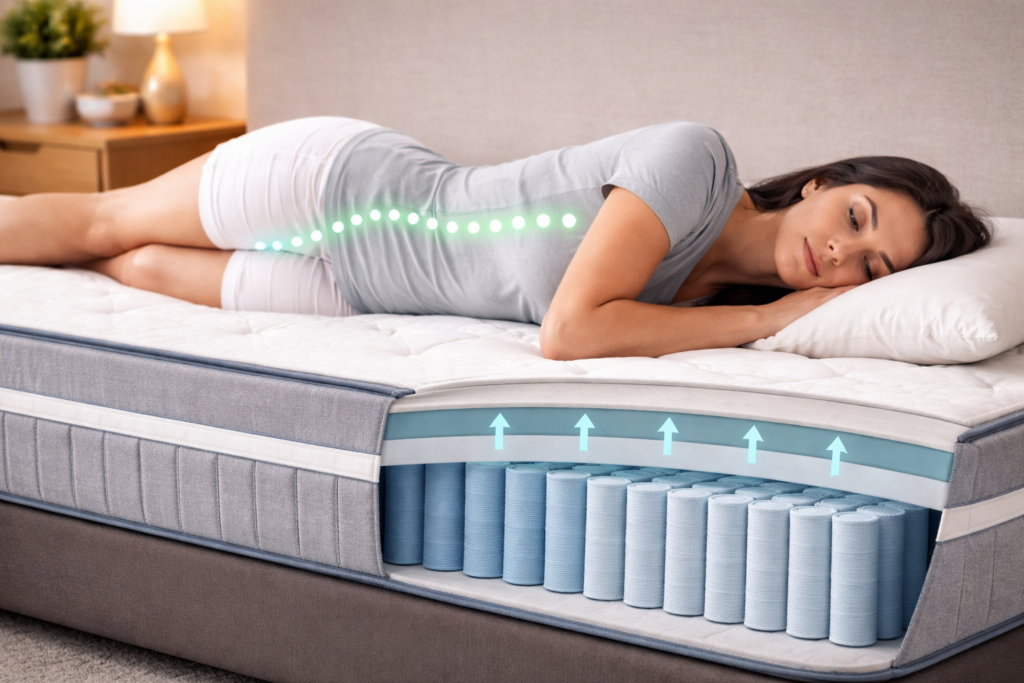
modern mattress supporting spine alignment during sleep
Inflammation and the Body’s Circadian Rhythm
The body follows a natural internal clock called the circadian rhythm. This rhythm influences hormones, inflammation levels, and pain sensitivity.
Interestingly, inflammatory markers often peak in the early morning hours. This means pain and stiffness may naturally feel worse when you first wake up.
Gentle Movement Can Reduce Morning Stiffness
Light movement helps increase blood circulation and loosen stiff muscles.
Simple morning movements include:
- Knee-to-chest stretch
- Cat-cow stretch
- Pelvic tilts
- Gentle walking
These movements help wake up the spine and reduce discomfort.
Many people also find relief by improving their sleeping posture and learning how to sleep with lower back pain safely.
Muscle Tightness and Lack of Pre-Sleep Stretching
Muscle tension that builds up during the day can carry over into the night.
If the lower back muscles remain tight while sleeping, they can pull on the spine and cause stiffness when waking up.
Easy Stretches Before Bed
A short stretching routine before sleep can make a huge difference.
Helpful stretches include:
Knee to Chest Stretch
Lie on your back and gently pull one knee toward your chest for 30 seconds.
Cat-Cow Stretch
Move slowly between arching and rounding your back while on hands and knees.
Pelvic Tilts
While lying on your back, gently tilt your pelvis upward and release.
Doing these stretches for just a few minutes before bed can help relax the lower back muscles and reduce morning pain.
The Connection Between Stress and Physical Tension
Stress does not only affect the mind — it also affects the body.
When stress levels increase, the body enters a “fight or flight” response. This causes muscles to tighten, especially around the neck, shoulders, and lower back.
Over time, this tension can lead to chronic stiffness and pain.
Relaxation Techniques That Improve Sleep
Reducing stress before bedtime can help both sleep quality and back health.
Helpful relaxation methods include:
- Deep breathing exercises
- Meditation
- Gentle yoga
- Progressive muscle relaxation
- Warm baths before bed
Relaxing the body before sleep helps muscles recover overnight and can significantly reduce morning back pain.
Conclusion
Morning lower back pain is often caused by everyday habits rather than serious medical conditions.
Sleep posture, hydration, mattress quality, inflammation, muscle tension, and stress can all contribute to stiffness when waking up.
The encouraging part is that most of these causes are easy to fix. By improving sleep position, staying hydrated, stretching regularly, and supporting your spine properly during sleep, you can dramatically reduce morning discomfort.
Small daily changes can lead to healthier mornings and a stronger, pain-free back over time.
Disclaimer
This article is for informational and educational purposes only and is not intended as medical advice. PathwayToRelief.com provides wellness information but does not replace professional medical consultation. Always consult a qualified healthcare professional before starting new health routines, exercises, or treatments for back pain.