Ever stood near your fridge with an ice pack in one hand and a heating pad in the other, wondering which one will actually help your back pain?
This simple choice can make a big difference in how quickly your body recovers. Using the wrong therapy at the wrong time may slow healing or increase discomfort.
Lower back pain is extremely common, especially for people who sit for long hours, work physically demanding jobs, or experience daily stress. Understanding when to use heat therapy or ice therapy helps your body recover faster and reduces unnecessary pain.
If your back pain started after long hours of sitting, you may also want to read our guide explaining why lower back pain gets worse after sitting and how to fix it.
Knowing how your body responds to heat and cold will help you use both tools correctly and get the relief you deserve.
Key Takeaways
- Ice helps reduce inflammation during the first 24–48 hours of an injury
- Heat works best for chronic stiffness and muscle tension
- Ice numbs sharp pain and limits swelling
- Heat improves blood flow and muscle flexibility
- Always place a cloth between your skin and heat or ice
- Stop therapy if irritation or increased pain occurs
Understanding How Heat and Ice Work on Lower Back Pain
Both heat and ice therapy are commonly used to relieve back pain, but they work in very different ways.
Choosing the correct therapy depends on whether your pain comes from inflammation, injury, or muscle stiffness.
How Ice Therapy Reduces Pain and Inflammation
Ice therapy (cryotherapy) is most effective during early injury stages when swelling and inflammation are present.
Cold temperatures slow blood flow to the injured area, which helps control swelling and pain.
Constricting Blood Vessels to Reduce Swelling
Cold therapy constricts blood vessels, limiting fluid buildup in injured tissue. This process helps reduce inflammation and pressure in the affected area.
Less swelling often means less pain.
Numbing Nerve Endings for Quick Relief
Ice also temporarily numbs nerve endings. This numbing effect provides quick relief during intense pain episodes.
Image Placement

When to Use Ice for Lower Back Pain Relief
Ice therapy works best when pain comes from inflammation or a recent injury.
Fresh Injuries and Acute Pain Episodes
If your back pain started suddenly after lifting, exercise, or sudden movement, ice is usually the better option.
Cold therapy helps calm irritated tissue during the early recovery phase.
Signs Ice Is the Better Choice
You should use ice when you notice:
- Visible swelling in the lower back
- Sharp or sudden pain after activity
- Muscle strain or minor injury
- Pain that feels hot or inflamed
The 20-Minute Ice Rule
Apply ice for 15 to 20 minutes at a time.
Wait at least one hour before applying ice again. This prevents skin irritation or tissue damage.
Most people can safely use ice therapy three to four times per day during the first 48 hours of pain.
When Heat Therapy Works Best for Lower Back Pain
Heat therapy is best used for chronic pain, stiffness, and muscle tightness.
Instead of reducing inflammation, heat improves blood circulation and relaxes tight muscles.
Image Placement
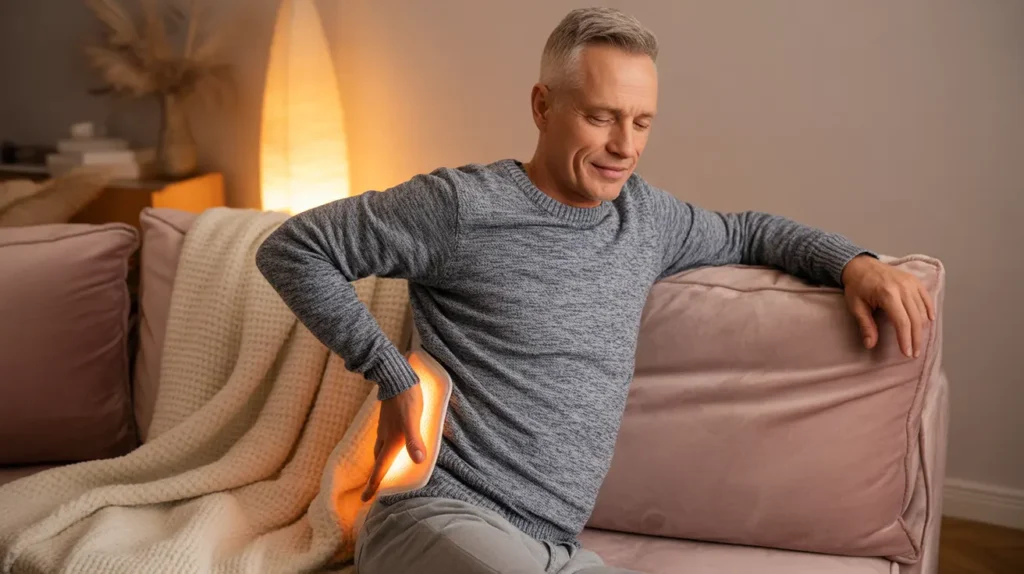
Chronic Lower Back Pain and Muscle Stiffness
Heat therapy helps loosen tight muscles and increase flexibility. This makes movement easier and reduces stiffness.
Many people find heat especially helpful after long workdays or extended sitting.
If your discomfort is worse when you wake up, you may benefit from learning why lower back pain is worse in the morning and how to reduce it.
Morning Stiffness and Mobility Problems
Morning stiffness is a common symptom of muscle tightness.
Using heat in the morning helps loosen muscles so movement becomes easier throughout the day.
Warm showers, heating pads, or heated wraps are all effective options.
Using Heat Before Daily Activity
Applying heat before physical activity prepares muscles for movement.
Many people find that a short heat session before work or exercise improves flexibility and reduces pain.
Evening Heat Therapy for Relaxation
Heat therapy can also help your body relax before sleep.
Warm muscles are less likely to tighten overnight, which may help reduce morning stiffness.
Pairing heat therapy with gentle stretching can improve results.
Safe Tips for Using Heat and Ice
Using heat and ice properly helps you avoid irritation and maximize relief.
Safe Ice Therapy Tips
- Always place a towel between the ice pack and skin
- Limit sessions to 20 minutes
- Allow skin to return to normal temperature before reapplying
Safe Heat Therapy Tips
- Keep heating pads between 100°F and 104°F
- Avoid sleeping directly on heating pads
- Limit sessions to 15–30 minutes
Alternating Heat and Ice (Contrast Therapy)
Some people benefit from contrast therapy, which alternates between heat and cold.
This method helps stimulate circulation while also reducing inflammation.
Simple Contrast Therapy Method
- Apply heat for 3 minutes
- Apply ice for 1 minute
- Repeat for 3–4 cycles
This approach may help with chronic tension combined with mild inflammation.
Conclusion
So, is heat or ice better for lower back pain?
The answer depends on the cause of your discomfort.
Ice therapy works best for recent injuries and inflammation, while heat therapy helps relieve chronic stiffness and muscle tension.
Understanding when to use each method allows you to manage pain more effectively and recover faster.
With the right approach, simple home treatments like heat and ice can make a powerful difference in daily comfort and mobility.
If you are also trying to improve sleep and recovery, you may want to explore the best sleeping positions that reduce lower back pain at night.
Disclaimer
This article is for informational and educational purposes only and does not replace professional medical advice. Always consult a qualified healthcare provider regarding any medical concerns or before starting new treatment methods.