This post may contain affiliate links. If you purchase through these links, we may earn a small commission at no extra cost to you.
Using a heating pad can feel amazing when your back is tight, sore, or stiff.
But one of the most common mistakes people make is using heat for too long — which can actually make pain worse instead of better.
So how long should you safely use a heating pad on your back?
🔥 Recommended Heating Pad Time
For most people, the safe and effective time is:
👉 15 to 30 minutes at a time
This allows your muscles to relax without overheating your skin or causing irritation.
⏱️ How Often Can You Use It?
You can safely use a heating pad:
- 2 to 3 times per day
- With breaks in between sessions
- On a low to medium heat setting
Avoid using it continuously for hours.
⚠️ Can You Leave a Heating Pad on Too Long?
Yes — and this is where problems happen.
Using heat too long can lead to:
- Skin irritation or burns
- Increased inflammation
- Worsening pain over time
👉 If you’re thinking about using heat overnight, read this first to stay safe:
🧠 When Heat Works Best
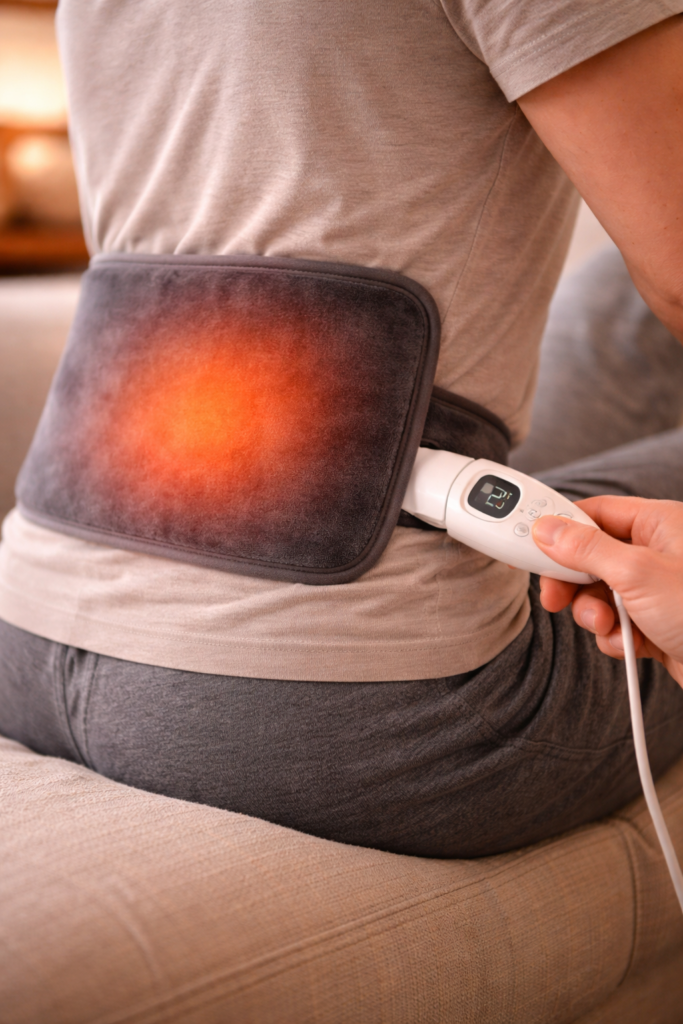
Heat is most effective for:
- Muscle stiffness
- Chronic back pain
- Tightness from sitting too long
If your pain is sharp or caused by swelling, ice may be a better option.
❄️ Should You Combine Heat and Ice?
In many cases, yes.
A simple strategy:
- Ice for inflammation (first 24–48 hours)
- Heat for muscle relaxation afterward
💡 Pro Tips for Safe Use
- Always place a layer between your skin and the pad
- Never fall asleep with it on
- Use automatic shut-off pads when possible
- Keep heat at a comfortable level (not too hot)
👉 You should also understand how long heat therapy should be used to avoid overuse
💬 Final Thoughts
Heating pads are one of the easiest and most effective ways to relieve back pain — but only when used correctly.
Stick to short sessions, listen to your body, and you’ll get the best results safely.
⚠️ Disclaimer
This content is for informational purposes only and does not replace medical advice. Always consult a healthcare professional for persistent pain.