Is it safe to sleep with a heating pad on your back? Learn the risks, safer ways to use heat, and how to relieve lower back pain before bed.
Using a heating pad before bed can feel incredibly relaxing—especially when your lower back feels stiff, sore, or tight after a long day.
For many people, heat therapy helps muscles relax and temporarily eases discomfort. After sitting at a desk all day or dealing with ongoing lower back tension, warmth can feel comforting before trying to fall asleep.
But what happens if you accidentally leave the heating pad on overnight?
Is it actually safe to sleep with a heating pad on your back?
The short answer is: most experts recommend avoiding it.
While heating pads can help provide temporary relief, sleeping with one on all night may increase the risk of burns, skin irritation, overheating, and prolonged inflammation from too much heat exposure.
The good news is that you can still safely use heat before bed without taking the risks that come with sleeping on a heating pad overnight.
Why People Use Heating Pads Before Bed
Lower back discomfort often feels worse at night.
After a long day of sitting, standing, driving, or physical activity, the muscles in the lower back may feel tense and fatigued. Many people naturally turn to heat because warmth may help the body relax before sleep.
Heat therapy may temporarily help:
- Relax tight muscles
- Improve circulation
- Ease stiffness
- Reduce tension after sitting all day
- Create a calming feeling before bed
Some people also find that warmth helps them unwind mentally, especially after stressful or physically demanding days.
If you are unsure whether heat or cold therapy may work better for your discomfort, you may also want to read our guide on Is Heat or Ice Better for Lower Back Pain?Is It Safe to Sleep With a Heating Pad on Your Back?
In most cases, sleeping with a heating pad overnight is not recommended.
Heating pads are generally designed for short periods of use—not for several continuous hours while sleeping.
The biggest concern is that once you fall asleep, you may not notice if the heating pad becomes too hot or stays on one area of skin for too long.
Even lower heat settings may become problematic when used overnight.
Some modern heating pads include automatic shut-off features, which may reduce risk, but experts still generally recommend turning the heating pad off before sleeping.
This is especially important if:
- You have sensitive skin
- You tend to sleep deeply
- You have circulation issues
- You use high heat settings
- You use the heating pad every night
What Happens If You Leave a Heating Pad On Too Long?
Too much heat exposure may sometimes create new problems instead of helping.
Skin Irritation and Burns
One of the biggest concerns with overnight heat use is skin irritation.
Prolonged exposure to heat may cause:
- Redness
- Sensitivity
- Mild burns
- Dry or irritated skin
Because you are asleep, you may not realize discomfort is happening until the next morning.
Increased Sensitivity
Sometimes muscles and nerves may become more sensitive after prolonged heat exposure.
Instead of helping, excessive heat may leave the area feeling irritated or overly tender.
If you are unsure how long a heating pad should stay on safely, read our guide on How Long Should You Leave a Heating Pad on Your Back?Heat Does Not Fix the Root Cause
Heat therapy may temporarily relieve symptoms, but it does not necessarily solve the reason your back hurts in the first place.
For many people, lower back discomfort is connected to:
- Poor posture
- Sitting too long
- Weak core muscles
- Poor sleeping position
- Lack of movement during the day
This is why some people feel dependent on heating pads every night.
If heat seems to stop helping over time, you may be overusing it. Learn more in Can Using a Heating Pad Too Much Make Back Pain Worse?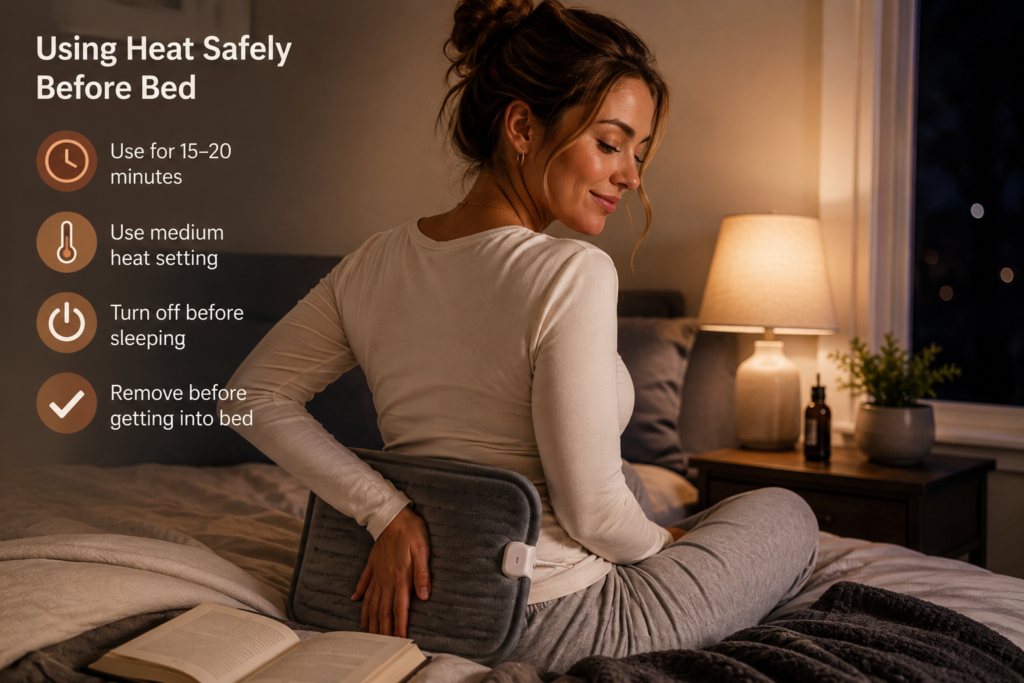
person safely using heating pad before bedtime for back pain relief
A Safer Way to Use Heat Before Bed
The good news is that you do not need to completely stop using heat.
Instead of sleeping with the heating pad on overnight, try using it briefly before bed.
Step 1: Use Heat for 15–20 Minutes
Apply the heating pad to your lower back for about 15 to 20 minutes before bedtime.
This may help muscles relax without exposing the skin to excessive heat for hours.
Step 2: Turn the Heating Pad Off Before Sleeping
Before you actually fall asleep, remove the heating pad or turn it off completely.
Avoid placing it underneath blankets or directly against the skin for extended periods.
Step 3: Allow Your Muscles to Relax Naturally
After using heat, let your body settle into a comfortable sleeping position.
Many people find that short heat sessions before bed provide enough comfort without needing overnight heat exposure.
Your Sleeping Position Matters More Than You Think
Sometimes nighttime back discomfort is not only about muscle tightness.
Your sleeping posture may also play a major role.
Poor sleeping positions may place extra pressure on the lower back and contribute to stiffness by morning.
Sleeping on Your Back
Many people find back sleeping more comfortable when a pillow is placed underneath the knees.
This may help reduce pressure on the lower back.
Side Sleeping
Side sleeping with a pillow between the knees may help keep the spine in a more neutral position.
Avoid Sleeping on Your Stomach
For some people, stomach sleeping may increase strain on the lower back and neck.
If back pain feels worse while sleeping, improving your sleep posture may help. Check out our guide on Best Sleeping Positions for Lower Back Pain for more support tips.Why Sitting All Day May Make Nighttime Back Pain Worse
Many people focus only on nighttime discomfort while ignoring what happens during the day.
Long hours of sitting may contribute to:
- Tight hip muscles
- Weak core support
- Poor posture
- Increased lower back tension
This is one reason why lower back pain often feels worse in the evening or the next morning.
If you work at a desk or sit for long periods, improving posture may help reduce strain throughout the day. Read How to Sit Without Lower Back Pain for practical posture tips.Signs You May Be Overusing a Heating Pad
Heat therapy can be helpful—but more heat is not always better.
You may want to reduce heating pad use if you notice:
- Skin redness
- Increased tenderness
- Heat feeling less effective over time
- Dependence on heat every night
- Temporary relief that quickly disappears
If your lower back tends to feel especially stiff in the morning, your sleeping position or daily posture habits may also be contributing factors.
Safe Alternatives to Sleeping With a Heating Pad
If you want nighttime relief without the risks of overnight heat exposure, there are several safer alternatives worth trying.
Take a Warm Shower Before Bed
Warm water may naturally help muscles relax before sleep.
Gentle Stretching
Light stretching before bed may help reduce tension caused by sitting or inactivity.
Improve Your Mattress or Pillow Support
Sometimes poor sleep support contributes to ongoing discomfort.
A more supportive sleep setup may help reduce pressure on the lower back.
Use Heat Briefly Instead of Overnight
Short heating pad sessions before bed are generally safer than sleeping with heat all night.
Frequently Asked Questions
Can sleeping with a heating pad cause burns?
Yes. Prolonged heat exposure may irritate the skin or cause burns, especially if the heating pad stays on one area for too long.
Is an automatic shut-off heating pad safer?
Automatic shut-off features may reduce risk, but sleeping overnight with a heating pad is still generally not recommended.
How long should I use a heating pad before bed?
Many people use a heating pad for about 15 to 20 minutes before bedtime.
Why does my back still hurt after using heat?
Heat may temporarily relax muscles, but it may not address the underlying cause of discomfort such as posture, sitting habits, or poor sleep positioning.
Final Thoughts
Sleeping with a heating pad on your back may feel comforting, but overnight heat exposure may come with unnecessary risks.
Instead of leaving heat on while sleeping, try using it briefly before bed to relax muscles safely.
When combined with better posture, healthier sitting habits, supportive sleeping positions, and smarter heat use, you may find longer-lasting relief without depending on overnight heat therapy.
PathwayToRelief.com provides educational wellness information only and does not offer medical advice. Always consult a qualified healthcare professional before making changes to your health routine.