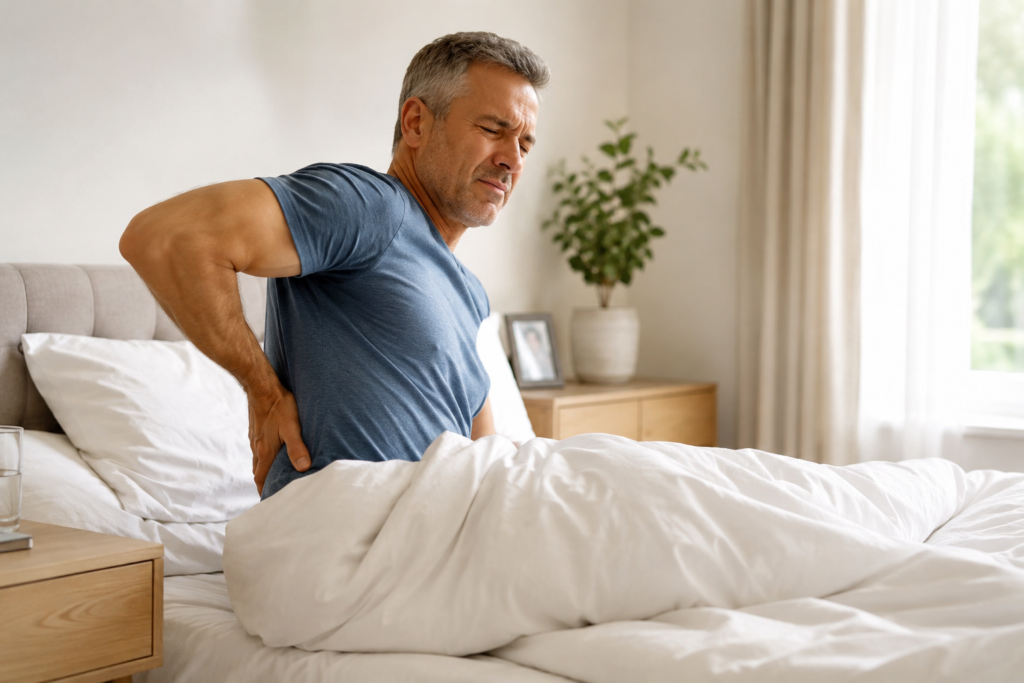
Discover why lower back pain can feel worse after resting, what may be causing stiffness, and simple ways to feel better safely.
Have you ever woken up feeling like your lower back hurts more after resting instead of better?
It may seem confusing. After all, rest is supposed to help pain — right?
But for many people, lower back pain actually feels worse after sleeping, sitting too long, or spending hours resting. You may notice stiffness when getting out of bed, soreness after sitting on the couch, or discomfort after a long car ride.
The good news is that in many cases, this doesn’t automatically mean something is seriously wrong.
Often, the issue is related to stiffness, tight muscles, posture, or lack of movement, not damage.
Why Lower Back Pain Gets Worse After Rest
When your body stays still for long periods, muscles and joints can become stiff.
During rest:
- Blood circulation may slow down
- Muscles can tighten
- Joints may become less mobile
- Supporting muscles may feel weaker temporarily
This is one reason many people feel more discomfort first thing in the morning or after sitting for too long.
Pain after rest can sometimes feel alarming, but stiffness is often part of the problem.
Think about how your body feels after sitting in one position for several hours. Your muscles may feel tight, and movement may feel awkward at first. The lower back can react in a similar way.
The Real Cause Is Often Stiffness — Not Damage
In many situations, increased back pain after rest is linked to temporary stiffness rather than injury.
Common reasons include:
Tight Muscles
Muscles around the lower back, hips, and hamstrings can tighten after staying still for too long.
Tight muscles may create:
- Pulling sensations
- Stiffness when standing up
- Mild soreness or tension
- Reduced flexibility
Poor Sleep Position
Sometimes sleeping posture quietly contributes to morning back pain.
Sleeping in awkward positions or using unsupportive pillows may place strain on the spine overnight.
Some people feel relief by adjusting:
- Pillow placement
- Mattress support
- Side-sleeping alignment
- Knee support while sleeping
👉 You may also like: Sleep and Recovery: A Natural Approach to Deeper Sleep and Faster Healing
Lack of Movement
Movement helps keep joints and muscles flexible.
When the body stays inactive too long, stiffness can build up — especially in the lower back.
This is why many people notice pain improves after walking around for a few minutes.
Why Back Pain Often Feels Worse in the Morning

Morning stiffness is extremely common.
While sleeping, the body stays mostly still for several hours. During that time:
- Muscles may tighten
- Joints can become stiff
- Sleep posture may affect alignment
- Existing inflammation may feel more noticeable
You may feel sore when first getting out of bed but gradually improve once you begin moving around.
For many people, gentle movement helps the body “warm up” again.
What Helps Lower Back Stiffness Quickly

If your back feels worse after rest, sudden aggressive movement usually isn’t the answer.
Instead, try gentle approaches.
1. Take a Short Walk
Walking for 5–10 minutes may help loosen stiff muscles and improve circulation.
You don’t need intense exercise.
Even light movement around the house may help.
2. Gentle Stretching
Simple stretching may help improve flexibility and reduce tension.
Focus on:
- Hamstrings
- Hip flexors
- Lower back mobility
- Gentle spinal movement
Avoid forcing painful stretches.
3. Use Gentle Heat
Heat may help relax tight muscles and improve comfort.
Many people find relief from:
- Warm heating pads
- Warm showers
- Heat wraps
Heat tends to work best when stiffness or muscle tightness is involved.
👉 You may also like: Heat or Ice for Lower Back Pain: What Works Faster?
4. Improve Your Sitting Posture
Poor posture during the day may contribute to stiffness later.
Try to:
- Sit with feet flat on the floor
- Avoid slouching
- Keep shoulders relaxed
- Take movement breaks regularly
Even small posture improvements can reduce strain over time.
What NOT to Do When Your Back Hurts After Rest
Certain habits may make stiffness worse.
Avoid:
Staying in Bed Too Long
Too much rest may actually increase stiffness.
Gentle movement often helps more than staying still all day.
Sudden Heavy Lifting
If your back already feels tight, jumping into heavy activity too quickly may worsen discomfort.
Ignoring Daily Habits
Poor posture, long sitting periods, and inactivity can gradually contribute to recurring stiffness.
Small daily improvements often matter more than quick fixes.
Daily Habits That May Help Prevent Stiffness

Consistency matters.
Many people feel better when they focus on simple habits like:
- Walking regularly
- Stretching daily
- Improving sleep posture
- Taking breaks from sitting
- Staying gently active
Small changes repeated consistently often support better comfort over time.
👉 You may also like: Common Home Pain Triggers: Everyday Habits That May Be Making Pain Worse
👉 Natural Pain Relief Solution for Daily Comfort
When to Talk to a Healthcare Professional
Sometimes back pain deserves medical attention.
Consider speaking with a healthcare professional if you experience:
- Pain that becomes severe or worsening
- Numbness or tingling
- Weakness in the legs
- Pain after an injury
- Symptoms that don’t improve over time
Persistent or worsening back pain should always be evaluated by a medical professional.
Final Thoughts
If your lower back pain feels worse after resting, you’re not alone.
In many cases, the issue may be related to stiffness, tight muscles, poor posture, or lack of movement rather than serious damage.
The encouraging news is that gentle movement, stretching, posture improvements, and better sleep habits may help support relief.
Sometimes, your body isn’t asking for more rest — it may simply be asking for better movement.
PathwayToRelief.com provides educational and informational wellness content only and does not offer medical advice, diagnosis, or treatment. Always consult a qualified healthcare professional before making changes to your health routine or treating persistent pain symptoms.