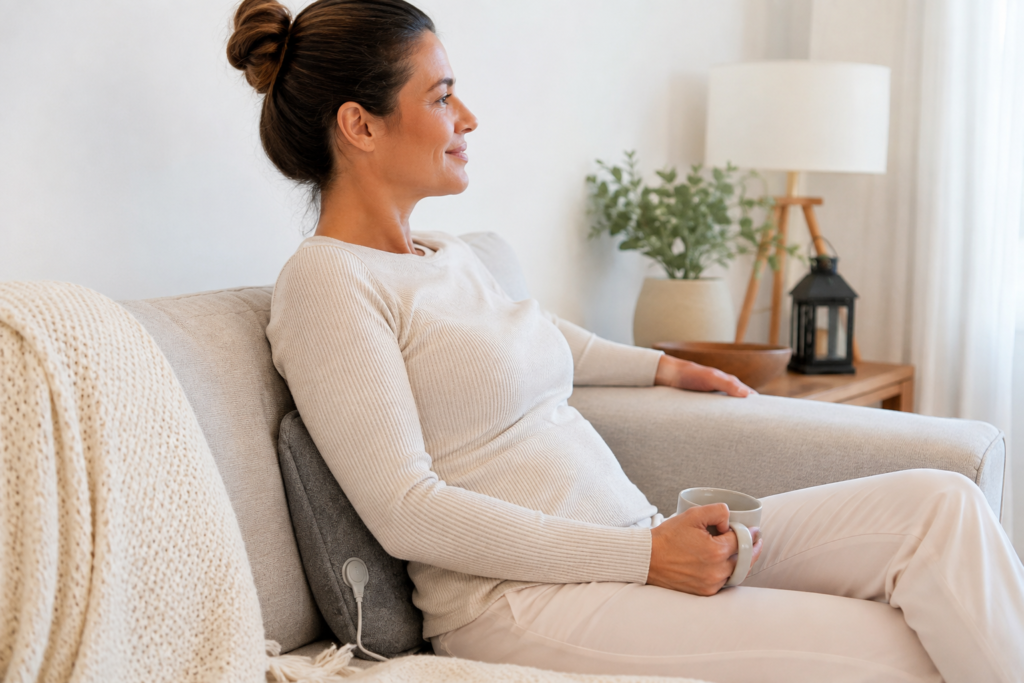
Using a heating pad after a long day can feel incredibly comforting when your lower back is stiff, tight, or sore. If heat consistently helps you feel better, you may find yourself reaching for your heating pad every day.
But that raises an important question:
Is it bad to use a heating pad every day for lower back pain?
For many people, using a heating pad regularly can be reasonable when it is used carefully and for short periods. Heat may temporarily relax tight muscles, increase blood flow to the area, and reduce feelings of stiffness.
However, more heat isn’t necessarily better.
Using a heating pad for too long, at temperatures that are too high, or while sleeping can increase the risk of burns and skin irritation. And if you find yourself needing heat every day just to get through normal activities, persistent pain may deserve a closer look from a healthcare professional.
Here’s what you should know about using heat regularly for lower back discomfort.
Key Takeaways
- A heating pad may be used regularly for temporary relief when used appropriately.
- Keep the temperature comfortably warm rather than extremely hot.
- Avoid prolonged, uninterrupted heating-pad sessions.
- Never fall asleep with a standard heating pad turned on unless its manufacturer specifically states that it is designed for that purpose.
- Check your skin regularly for redness, irritation, or unusual discoloration.
- Heat may be more appropriate for muscle tightness and stiffness than for a newly injured, swollen area.
- Daily heat can help manage symptoms, but it doesn’t necessarily address the underlying reason your back keeps hurting.
- Persistent, worsening, or unexplained lower back pain should be discussed with a qualified healthcare professional.
Why Does Heat Feel So Good on Lower Back Pain?
There’s a reason people have used warmth for sore muscles for generations.
Heat can temporarily increase circulation in the area being warmed. It may also help muscles relax, which can make a stiff lower back feel more comfortable.
This can be especially appealing after:
- Sitting at a desk for several hours
- Standing for long periods
- Driving for an extended time
- Doing household chores
- Exercising
- Gardening or yard work
- A physically demanding workday
Some people also find that warming their lower back makes it easier to move or stretch gently afterward.
The important thing to remember is that heat is primarily a comfort measure. Feeling better after using a heating pad doesn’t necessarily mean that the underlying cause of your discomfort has been resolved.
Is It Safe to Use a Heating Pad Every Day?
For many adults, occasional or regular heating-pad use can be part of a comfort routine, provided the device is used according to its instructions and the skin is protected from excessive heat.
The bigger issue isn’t necessarily how many days per week you use the heating pad.
It’s how you use it each time.
Someone who uses gentle heat for a short period while awake may have a very different risk profile from someone who uses high heat for hours or falls asleep on a heating pad every night.
Your routine matters.
If you’re using heat frequently, pay particular attention to:
- Temperature
- Length of each session
- Skin condition
- Whether you’re awake while using it
- Whether your pain is improving, staying the same, or getting worse
If you continually need heat because your back pain returns every day, consider discussing the pattern with a healthcare professional rather than simply increasing the amount of time you spend on the heating pad.
How Long Should You Use a Heating Pad?
Avoid assuming that leaving the heating pad on longer will provide better results.
A practical approach is to use heat for a short session, then remove the pad and allow your skin to return to its normal temperature before considering additional heat.
Always follow the instructions supplied with your particular heating pad because temperatures, timer settings, and recommended usage can vary between devices.
If you’d like a more detailed explanation of timing, read:
How Long Should You Leave a Heating Pad on Your Back?
That guide goes deeper into heating-pad session length and safer habits.
What Can Happen If You Use a Heating Pad Too Much?
Heat can feel gentle, but a heating pad is still an electrical device capable of producing enough heat to injure skin.
Repeated or excessive exposure may cause several problems.
Skin Irritation
Your skin may become red, dry, itchy, or uncomfortable after repeated heat exposure.
If you notice persistent redness or irritation, stop applying heat to that area and allow your skin to recover.
Burns
Heating pads can cause burns, particularly when:
- The temperature is too high
- The pad is used for an extended period
- Someone falls asleep while using it
- The person has reduced temperature sensation
- The heating pad is pressed tightly between the body and another surface
You should be able to feel warmth without feeling like you need to tolerate uncomfortable heat.
Changes in Skin Appearance
Repeated exposure to heat over time can sometimes cause persistent mottled or net-like skin discoloration, sometimes called erythema ab igne.
If you notice unusual or persistent changes in the appearance of your skin where you regularly apply heat, stop using the heating pad on that area and talk with a healthcare professional.
Masking an Ongoing Problem
Another potential problem has nothing to do with the heating pad itself.
Heat may temporarily make your back feel better, which can make it tempting to repeatedly treat the symptom without investigating why the pain keeps returning.
Recurring lower back discomfort can have many possible causes, including muscle strain, prolonged sitting, physical workload, poor movement habits, or other conditions.
Heat doesn’t diagnose or correct those causes.
Should You Use High Heat for Better Relief?
Usually, you don’t need the highest setting to feel the benefits of warmth.
A heating pad should feel comfortably warm—not painfully hot.
Turning the temperature higher may increase the risk of skin injury without necessarily providing better relief.
Start with a lower setting and follow the manufacturer’s instructions for your specific device.
If the pad feels uncomfortably hot, remove it immediately.
Should You Put a Heating Pad Directly on Your Skin?
Be cautious about prolonged direct contact between a heating pad and bare skin.
Depending on the manufacturer’s instructions, using a thin layer of clothing or an appropriate cover can help reduce intense direct heat exposure.
Never wrap a heating pad tightly against your body or place heavy objects on top of it unless the manufacturer specifically says that the product is designed to be used that way.
The goal is gentle warmth—not maximum heat.
Can You Sleep With a Heating Pad on Your Back?
This is one of the most important heating-pad safety questions.
In general, don’t fall asleep while using a standard heating pad.
When you’re asleep, you may not notice that your skin is becoming too hot. You also can’t easily reposition the pad if one area becomes overheated.
Some heating pads have automatic shutoff features, but you should still follow the manufacturer’s instructions rather than assuming an automatic timer makes sleeping with the device safe.
For a complete explanation, read:
Can You Sleep With a Heating Pad on Your Back?
A better nighttime routine may be to use gentle heat while you’re awake before bed, turn the heating pad off, and then go to sleep.
When Heat Might Not Be the Best Choice
Heat isn’t appropriate for every type of discomfort.
For example, if you’ve recently injured your back and the area is noticeably swollen, heat may not be the first comfort measure you want to reach for.
Heat also shouldn’t be used over areas with:
- Open wounds
- Active skin irritation
- Significant swelling
- Reduced ability to feel temperature
Certain medical conditions can affect circulation or sensation and may make heat therapy riskier.
If you have reduced sensation, circulation problems, diabetes-related nerve changes, or another condition that affects your ability to detect heat, talk with a healthcare professional before regularly using a heating pad.
Heat vs. Ice: Which Is Better?
People often assume that either heat or ice is always better for back pain, but the answer depends on what’s causing the discomfort and how recently it started.
Heat is often associated with:
- Muscle tightness
- Stiffness
- Achiness
- Chronic tension
Cold therapy may sometimes be preferred shortly after an injury or when swelling is present.
Neither approach is appropriate for every situation.
The most important thing is to pay attention to how your body responds and seek professional advice when you’re uncertain.
Don’t Let the Heating Pad Become Your Entire Back-Care Routine
If your lower back bothers you regularly, consider looking beyond temporary heat relief.
Depending on the cause of your discomfort and the advice of your healthcare professional, your daily routine may benefit from things such as:
Gentle Movement
Remaining in one position for hours can contribute to stiffness.
Short walks and regular movement breaks may help keep your back from becoming as stiff during the day.
Changing Positions
If you work at a desk, try not to remain in exactly the same position for an entire workday.
Stand, walk, and change positions periodically when you’re able.
Gentle Stretching
Some people find gentle stretching helpful for muscular tightness.
Avoid forcing painful movements. If a stretch causes sharp or worsening pain, stop.
Paying Attention to Your Workspace
Your chair, desk height, monitor position, and sitting habits can affect how comfortable you feel throughout the day.
Small ergonomic adjustments may help reduce unnecessary strain.
Rest and Recovery
Back discomfort can sometimes follow an unusually active day.
Giving your body time to recover while continuing appropriate gentle movement can be more helpful than repeatedly applying intense heat.
A Simple Heating-Pad Routine
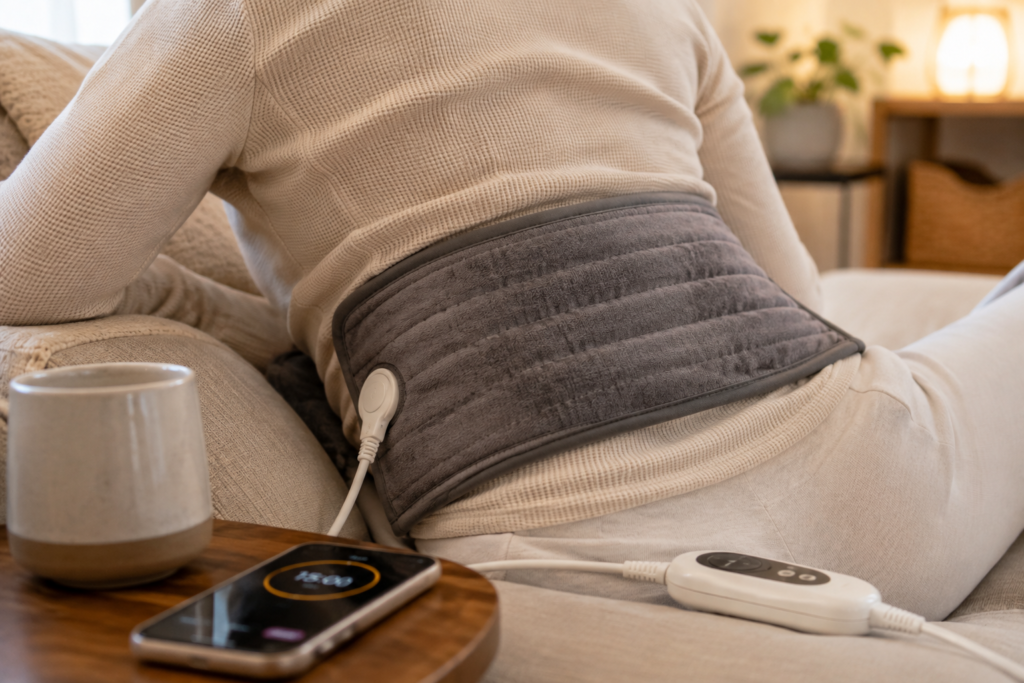
If heat has been helpful for your lower back and your healthcare professional hasn’t advised you to avoid it, a simple routine may look like this:
- Inspect the heating pad and cord before using it.
- Position yourself comfortably.
- Use an appropriate barrier if recommended by the manufacturer.
- Start with a low or moderate temperature.
- Keep the heat comfortably warm rather than hot.
- Remain awake during the session.
- Check your skin periodically.
- Turn the heating pad off and remove it after your session.
- Give your skin time to cool completely.
- Combine temporary heat relief with appropriate movement and other healthy back-care habits.
Never use a heating pad with a damaged cord, exposed wiring, or other signs of damage.
What Type of Heating Pad Is Best for Regular Use?
If you use heat frequently, convenience and safety features can be more important than simply choosing the hottest heating pad.
Features worth considering include:
- Multiple temperature settings
- Automatic shutoff
- A soft, washable cover
- Easy-to-use controls
- A size that comfortably covers your lower back
- Clear manufacturer safety instructions
Heating Pad for Lower Back Comfort
A large electric heating pad can provide broad coverage across the lower back and may be more comfortable than trying to position a very small pad.
👉 Check Large Heating Pads for Back Comfort on Amazon
Affiliate disclosure: PathwayToRelief may earn a commission from qualifying purchases made through affiliate links, at no additional cost to you.
Signs You’re Relying Too Much on Your Heating Pad
Using heat frequently doesn’t automatically mean you’re doing something wrong.
However, pay attention if:
- You need increasingly higher temperatures to feel comfortable.
- You keep the pad on longer and longer.
- You routinely fall asleep while using it.
- Your skin remains red or discolored afterward.
- Your back pain is becoming more frequent.
- Heat only provides relief for a very short time.
- Your discomfort is interfering with work, sleep, or everyday activities.
Those are good reasons to reconsider your routine and potentially discuss the recurring symptoms with a healthcare professional.
When Should You See a Healthcare Professional?
Occasional lower back soreness is common, but some symptoms warrant professional evaluation.
Seek medical advice if your back pain:
- Is severe or rapidly worsening
- Persists despite self-care
- Regularly interferes with normal activities or sleep
- Began after a significant fall or injury
- Is accompanied by unexplained fever or illness
- Is associated with weakness, numbness, or tingling
- Travels significantly into one or both legs
Seek urgent medical attention for symptoms such as new loss of bladder or bowel control, significant weakness, numbness around the groin/saddle area, or other severe neurological symptoms.
Frequently Asked Questions
Is it okay to use a heating pad every day?
Some people use heat regularly for temporary muscle stiffness or discomfort. The important factors are temperature, session duration, skin protection, your health circumstances, and following the manufacturer’s instructions. If you’re relying on heat every day because pain continually returns, consider discussing the underlying problem with a healthcare professional.
Can daily heating-pad use damage your skin?
Repeated or excessive heat exposure can irritate or burn the skin. Long-term repeated heat exposure may also cause persistent skin discoloration. Stop using heat if you notice unusual skin changes.
Does a heating pad actually heal lower back pain?
A heating pad primarily provides temporary symptom relief. Warmth may help relax muscles and reduce stiffness, but it doesn’t necessarily treat the underlying cause of recurring back pain.
Can I use a heating pad twice a day?
Rather than focusing only on the number of sessions, consider the temperature, duration, condition of your skin, manufacturer’s instructions, and how much recovery time you’re allowing between sessions. If you need frequent heat every day to control significant pain, speak with a healthcare professional.
Is it safe to use a heating pad before bed?
Using a heating pad while you’re awake before bed may help you relax. Turn it off and remove it before going to sleep unless your specific device is explicitly designed and instructed for another type of use.
Why does my back hurt again after the heat wears off?
Heat can temporarily reduce stiffness and muscular discomfort without correcting the underlying reason your back hurts. If symptoms repeatedly return, the cause may need to be addressed rather than simply increasing heat exposure.
Final Thoughts
So, is it bad to use a heating pad every day for lower back pain?
Not necessarily.
For many people, gentle and appropriately timed heat can be a useful way to temporarily manage muscle tightness and stiffness. Problems are more likely to occur when a heating pad is too hot, used for prolonged periods, used while sleeping, or repeatedly applied despite skin irritation.
Most importantly, a heating pad shouldn’t become a substitute for understanding persistent lower back pain.
Use heat as one tool in a broader comfort and self-care routine, pay attention to your skin and symptoms, and seek professional guidance when pain is persistent, worsening, or accompanied by concerning symptoms.
Medical Disclaimer
The information on PathwayToRelief.com is provided for general educational and informational purposes only and is not intended to diagnose, treat, cure, or prevent any medical condition. It is not a substitute for professional medical advice, diagnosis, or treatment. Always seek the advice of a physician or other qualified healthcare professional with questions about a medical condition or before beginning or changing a treatment or self-care routine.
PathwayToRelief.com may participate in affiliate programs, including the Amazon Services LLC Associates Program. If you purchase through qualifying affiliate links on this site, we may earn a commission at no additional cost to you.