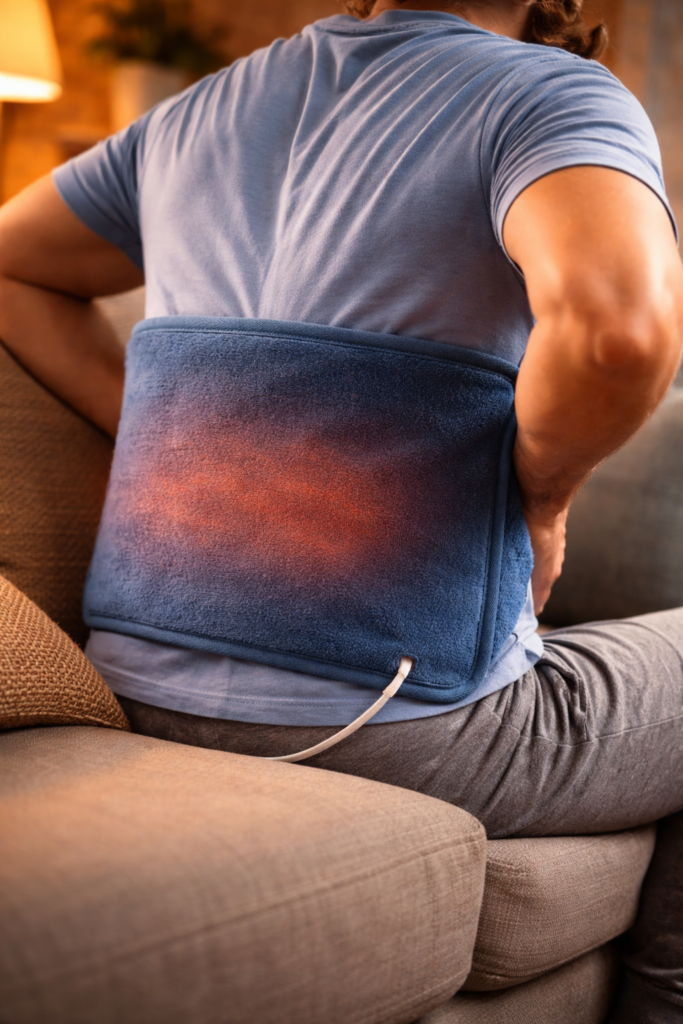
A heating pad can feel incredibly soothing when your lower back is tight, stiff, or aching. That immediate warmth is one reason heat therapy is such a popular at-home option for back discomfort.
But there is an important question many people eventually ask:
Can you use a heating pad too much?
Yes. Although heat can provide temporary relief for certain types of back discomfort, more heat does not necessarily mean more relief. Using a heating pad for prolonged periods, at temperatures that are too high, or in situations where heat is not appropriate can increase the risk of skin irritation and burns and may make some symptoms feel worse.
The goal isn’t to keep your back hot for as long as possible. It’s to use heat carefully as one part of a broader comfort and movement routine.
Can You Use a Heating Pad Too Much?
You can overuse a heating pad, particularly by using excessive temperatures, keeping it against your body for prolonged periods, or repeatedly applying heat without allowing your skin to return to its normal temperature.
One of the biggest concerns is skin injury.
A heating pad doesn’t have to feel painfully hot to cause problems. Repeated or prolonged exposure to heat can irritate the skin, and excessive temperatures can cause burns.
Overuse can be particularly concerning if you fall asleep while using the pad because you may not notice that your skin is becoming overheated.
Heat also isn’t appropriate for every type of pain.
Back discomfort caused primarily by muscle stiffness may respond differently than pain associated with a new injury, swelling, or another medical problem.
That’s why it’s important to pay attention not only to how long you’re using heat but also to how your body responds to it.
How Long Should You Use a Heating Pad?
There isn’t one universal heating-pad time limit that is appropriate for every person, product, temperature, and health situation.
Your heating pad’s manufacturer instructions should be your starting point.
For many people, relatively short sessions are enough to warm stiff muscles and provide temporary comfort. Avoid assuming that leaving the pad on longer will produce better results.
Temperature matters too.
A moderate, comfortable setting is generally preferable to turning the pad to its maximum temperature simply because your back hurts.
If you’d like a more detailed discussion specifically about session length, see our guide:
How Long Should You Leave a Heating Pad on Your Back?
That article focuses specifically on heating-pad timing, while this guide focuses on recognizing and preventing overuse.
What Can Happen If You Use a Heating Pad Too Much?
Overusing heat can create several problems.
Skin Irritation
Your skin may become increasingly red, uncomfortable, itchy, or sensitive after repeated exposure to heat.
Mild temporary warmth or redness can occur after using heat, but persistent or worsening skin changes are a reason to stop.
Burns
Electric heating pads can cause burns, particularly when used at high temperatures, applied directly against bare skin, or used for prolonged periods.
The risk becomes more concerning when someone cannot accurately sense temperature or move away from the heat.
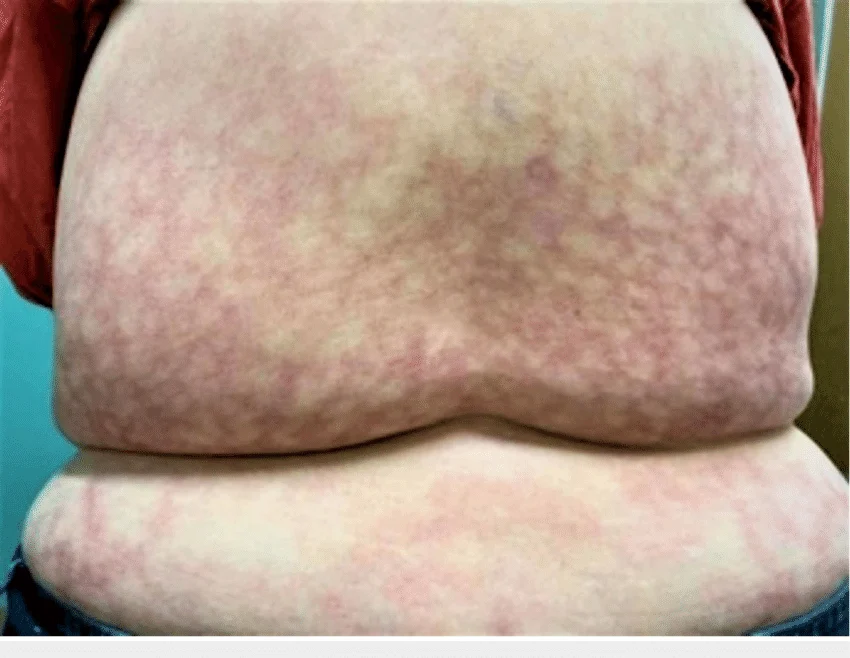
Heat-Related Skin Changes
Repeated exposure to heat over time can sometimes cause persistent skin discoloration or a mottled appearance.
If you notice lasting changes in the skin where you regularly use your heating pad, stop applying heat to the area and consider discussing the change with a healthcare professional.
Increased Discomfort
Heat doesn’t help every painful condition.
If your back becomes more painful, throbs more intensely, or otherwise feels worse after using a heating pad, continuing to apply more heat isn’t a good strategy.
Stop and reassess what you’re feeling.
Signs You May Be Overusing Your Heating Pad
Your body can provide clues that you’re using too much heat.
Pay attention to symptoms such as:
- Redness that doesn’t quickly fade
- Burning or stinging
- Skin tenderness
- Blistering
- Unusual discoloration
- Numbness
- Increasing pain
- Feeling that you need progressively hotter temperatures for comfort
Don’t try to “push through” uncomfortable skin sensations simply because the heat initially feels good on your muscles.
If you experience a significant burn, blistering, persistent numbness, unusual skin changes, or worsening pain, stop using the heating pad and seek appropriate medical advice.
Is It Okay to Use a Heating Pad Every Day?
Some people with recurring muscle stiffness use heat regularly.
However, daily use doesn’t automatically mean that leaving a heating pad on for long periods is safe.
If you use heat frequently, make each session intentional.
Use the lowest comfortable temperature that provides relief, follow your heating pad’s instructions, inspect your skin, and give your skin time away from the heat.
Frequent use also raises another important question:
Why does your back need heat every day?
If you’re using a heating pad occasionally because sitting at your desk leaves your muscles stiff, that’s different from relying on heat every day because significant pain continually returns.
Persistent or worsening back pain deserves attention rather than simply increasing how often you use your heating pad.
Should You Use the Highest Heat Setting?
Usually, hotter isn’t automatically better.
The purpose of a heating pad is to provide comfortable warmth—not to see how much heat you can tolerate.
A lower or moderate setting may provide enough warmth without exposing your skin to unnecessarily high temperatures.
Your heating pad should feel comfortably warm.
If it feels painfully hot, causes burning, or makes you feel as though you need to constantly reposition it because of the temperature, turn it down or stop using it.
Should You Put a Heating Pad Directly on Your Skin?
Follow the instructions provided with your particular heating pad.
Depending on the product, using an appropriate barrier such as clothing or the manufacturer’s intended cover may help prevent excessive direct heat exposure.
Avoid improvising in ways that interfere with the product’s safety instructions.
Most importantly, check your skin periodically rather than leaving the pad in place and forgetting about it.
Never Sleep With a Heating Pad Turned On
One of the easiest ways to unintentionally overuse a heating pad is to fall asleep while using it.
When you’re asleep, you can’t reliably monitor your skin or respond quickly if the temperature becomes uncomfortable.
An automatic shutoff feature is useful, but it shouldn’t be treated as permission to intentionally sleep on or with an electric heating pad unless the manufacturer specifically states that the product is designed for that purpose.
If you enjoy heat before bedtime, use it while you’re awake and remove the heating pad before going to sleep.
For more information, read:
Is It Safe to Sleep With a Heating Pad on Your Back?
When Heat May Not Be the Right Choice
Heat is commonly used when muscles feel tight, stiff, or achy, but not every episode of back pain should automatically be treated with a heating pad.
For example, a new injury accompanied by swelling may require a different approach.
There are also situations in which reduced sensation, circulation problems, certain medical conditions, medications, or other factors can make heat therapy less appropriate.
If you have reduced sensation in the area, difficulty detecting temperature, circulation concerns, or a medical condition that affects your ability to safely use heat, ask a healthcare professional whether a heating pad is appropriate for you.
And if you’re trying to decide between heat and cold therapy, see:
Heat or Ice for Lower Back Pain?
A Safer Way to Use Heat for Back Comfort
Instead of thinking of a heating pad as something you need to keep on your back continuously, think of it as a temporary comfort tool.
A simple routine might look like this:
- Choose a comfortable temperature.
You don’t need the highest setting to benefit from warmth. - Use the heating pad while you’re awake.
This allows you to monitor both the temperature and your skin. - Follow your product’s recommended session instructions.
Different heating pads have different settings and safety features. - Check your skin.
Stop if you notice burning, significant redness, pain, numbness, or unusual skin changes. - Remove the heat and move gently.
If appropriate for you, follow your heat session with gentle walking, stretching, or normal movement rather than remaining inactive for long periods. - Pay attention to your symptoms.
If heat consistently makes your back feel worse, stop using it.
Don’t Let Heat Replace Movement
A heating pad can provide comfort, but it doesn’t correct every reason your back may hurt.
If prolonged sitting, poor positioning, inactivity, or muscle stiffness contributes to your discomfort, using heat without changing those habits may only provide temporary relief.
Consider combining appropriate heat use with simple habits such as:
- Changing positions regularly
- Taking short walking breaks
- Gentle stretching when appropriate
- Improving your sitting position
- Adjusting your workspace
- Staying physically active within your abilities
For more ideas, see:
Simple Daily Habits That May Help Reduce Everyday Aches and Stiffness
Recommended Heating Pad Features
If you regularly use heat for back comfort, the features of your heating pad matter.
Consider looking for a model with:
- Multiple temperature settings
- Automatic shutoff
- Easy-to-use controls
- A flexible design that sits comfortably against the back
- A removable or washable cover when available
- Clear manufacturer safety instructions
An automatic shutoff feature can provide an additional layer of protection if you become distracted, but you should still monitor the heating pad while using it.
Heating Pad for At-Home Back Comfort
A flexible heating pad with adjustable temperature settings and an automatic shutoff feature can make controlled heat easier to manage.
Check Heating Pad Price on Amazon
As an Amazon Associate, PathwayToRelief may earn from qualifying purchases at no additional cost to you.
When Should You Stop Using a Heating Pad?
Stop using heat if you notice:
- Burning
- Blistering
- Persistent redness
- Significant skin discoloration
- New numbness
- Increased swelling
- Pain that becomes noticeably worse
- Any reaction that concerns you
Don’t repeatedly apply heat to irritated or injured skin.
If you’ve actually burned your skin, discontinue the heating pad and seek medical guidance appropriate to the severity of the burn.
When Back Pain Needs Medical Attention
A heating pad is intended for temporary comfort. It shouldn’t delay evaluation of potentially serious symptoms.
Seek prompt medical attention for back pain associated with symptoms such as:
- New loss of bladder or bowel control
- Significant weakness or numbness
- Numbness around the groin or saddle area
- Severe pain following a significant fall, accident, or injury
- Fever accompanied by significant back pain
- Severe or rapidly worsening symptoms
You should also consider talking with a healthcare professional when back pain persists, frequently returns, interferes substantially with normal activities, or doesn’t improve with reasonable self-care.
Frequently Asked Questions
Can you use a heating pad too much?
Yes. Excessive temperature, prolonged exposure, or repeated use without monitoring your skin can increase the risk of irritation and burns. Follow your heating pad’s instructions and stop if you develop uncomfortable or persistent skin changes.
How many times a day can you use a heating pad?
There isn’t one frequency that is appropriate for every person and every heating pad. Follow the manufacturer’s directions and allow your skin to return to its normal temperature between uses. If you need heat repeatedly throughout every day because of persistent pain, consider discussing the underlying problem with a healthcare professional.
Can a heating pad make back pain worse?
It can. Heat doesn’t help every type of back pain, and excessive heat can cause skin injury. If your symptoms consistently become worse after using heat, discontinue it rather than increasing the temperature or duration.
Is it bad to use a heating pad every day?
Not necessarily, but frequent use should still follow the product’s safety instructions. Daily dependence on heat for significant or persistent pain is also a reason to consider whether the underlying cause of the pain needs evaluation.
Can you leave a heating pad on for hours?
Avoid prolonged, unattended use. Follow your particular heating pad’s instructions regarding session duration and automatic shutoff rather than assuming that several hours of continuous heat is safe.
Can you sleep with a heating pad?
Sleeping with an electric heating pad can increase the risk of prolonged heat exposure because you aren’t awake to monitor your skin or temperature. Unless a product is specifically designed and instructed for overnight use, remove it before sleeping.
What temperature should a heating pad be?
Use a setting that provides comfortable warmth without burning, stinging, or making your skin painfully hot. Follow your heating pad manufacturer’s temperature and operating instructions.
Final Thoughts
A heating pad can be a useful tool for temporarily easing muscle stiffness and certain types of back discomfort, but more heat isn’t necessarily better.
Use a comfortable temperature, follow your heating pad’s instructions, monitor your skin, stay awake while using it, and stop if heat makes your symptoms worse.
Most importantly, don’t let temporary relief from a heating pad prevent you from addressing the bigger picture.
Movement, posture, daily habits, appropriate exercise, and professional evaluation when needed can all play a role in managing recurring back discomfort.
Heat should be one tool in your routine—not the entire routine.
PathwayToRelief participates in affiliate programs, including the Amazon Services LLC Associates Program. If you purchase through qualifying affiliate links on this page, PathwayToRelief may earn a commission at no additional cost to you.
The information on PathwayToRelief.com is provided for general educational purposes only and is not intended to diagnose, treat, cure, or prevent any medical condition. It is not a substitute for individualized medical advice, diagnosis, or treatment from a qualified healthcare professional. If you have persistent, severe, worsening, or concerning symptoms, seek appropriate medical care.