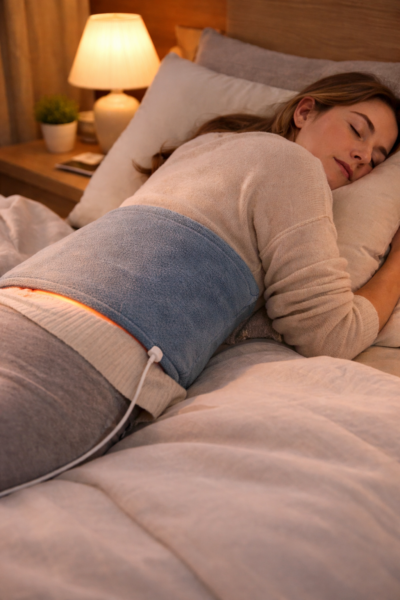
A warm heating pad can feel incredibly comforting when your back is stiff, tight, or aching at the end of the day. It may relax tense muscles and make settling into bed easier.
That naturally leads to an important question:
Is it safe to sleep with a heating pad on your back?
In general, you should not fall asleep with a standard electric heating pad on your back unless the manufacturer specifically states that the product is designed for that type of use.
When you’re awake, you can notice excessive heat, burning, discomfort, or changes in your skin and remove the heating pad. Once you’re asleep, you may not recognize those warning signs.
That can increase the risk of prolonged heat exposure, skin irritation, and burns.
The good news is that you don’t have to give up heat completely. A short, controlled heating session before bed can provide warmth and comfort without intentionally leaving an electric heating pad against your body throughout the night.
Here’s what you should know.
Why Sleeping With a Heating Pad Can Be Risky
The biggest problem with sleeping with a heating pad isn’t simply that heat is “bad.”
It’s that you can’t properly monitor the heat while you’re asleep.
When you’re awake and a heating pad becomes uncomfortable, you can turn down the temperature, reposition the pad, or remove it entirely.
While you’re sleeping, you may remain in contact with the heat for much longer than intended.
Potential problems include:
- Skin irritation
- Burns
- Persistent redness
- Skin discoloration from repeated heat exposure
- Overheating
- Worsening discomfort if heat isn’t appropriate for the cause of your pain
This becomes even more concerning when someone has reduced skin sensation and may not accurately recognize excessive heat.
Can a Heating Pad Burn You While You Sleep?
Yes. Electric heating pads can cause burns when they become too hot or remain against the skin for too long.
And a heating pad doesn’t necessarily have to feel extremely hot to create problems.
Prolonged exposure to moderate heat can gradually injure the skin.
That’s particularly important at bedtime because you could fall asleep while the temperature initially feels comfortable.
You should stop using the heating pad if you notice:
- Burning or stinging
- Blistering
- Significant redness
- Unusual skin discoloration
- Increasing tenderness
- Numbness
- Pain that becomes worse with heat
If you experience a significant burn or persistent skin changes, stop using the heating pad and seek appropriate medical advice.
What Are Low-Temperature Burns?
When people think about burns, they often imagine touching something extremely hot and immediately pulling away.
Heat-related skin injury can also develop more gradually.
Repeated or prolonged exposure to a moderate heat source may damage the skin even when the temperature doesn’t initially feel painfully hot.
That’s one reason falling asleep on a heating pad is different from intentionally using one for a controlled period while you’re awake.
During an awake heating session, you can regularly check your skin and remove the heat.
While sleeping, that protection disappears.
Does an Automatic Shutoff Make Sleeping With a Heating Pad Safe?
Automatic shutoff is a useful safety feature, but it doesn’t automatically make every heating pad safe for sleeping.
Different heating pads have different operating instructions, temperature ranges, timers, and intended uses.
Always follow the directions for your particular heating pad.
If the manufacturer tells you not to sleep with the product, an automatic timer shouldn’t be treated as permission to ignore that warning.
Automatic shutoff is best viewed as an additional safety feature, not a substitute for proper use.
Can You Sleep on Top of a Heating Pad?
Avoid lying or sleeping directly on top of a standard heating pad unless the manufacturer specifically says the product is designed for that use.
Your body weight can press the heating element tightly against your skin, and some products may not be designed to have weight placed on them.
It can also become harder to reposition or remove the heating pad once you’re asleep.
Check the manufacturer’s instructions regarding placement and whether the product can safely bear body weight.
What About Sleeping With a Heating Pad on Low?
A low setting may feel gentle, but temperature is only part of the issue.
Duration matters too.
Heat that feels comfortable for a short period isn’t necessarily something you should leave against your body throughout an entire night’s sleep.
Instead of asking whether the lowest setting is safe overnight, a better approach is to use a comfortable temperature while you’re awake and remove the heating pad before falling asleep.
A Safer Way to Use a Heating Pad Before Bed
If heat helps relax your back at night, you can still incorporate it into your bedtime routine.
Step 1: Get Comfortable
Settle into a comfortable position where you can remain awake and easily control the heating pad.
Step 2: Choose Comfortable Warmth
Use a temperature that feels pleasantly warm rather than excessively hot.
Higher temperatures don’t automatically provide better relief.
Step 3: Follow the Manufacturer’s Timing Instructions
Heating pads differ, so follow the directions provided with your particular product.
Don’t assume that leaving the pad on longer will provide more relief.
For a more detailed discussion of heating-pad session length, read:
How Long Should You Leave a Heating Pad on Your Back?
Step 4: Check Your Skin
Periodically check the area exposed to heat.
Stop if you experience burning, persistent redness, numbness, unusual discoloration, or increasing discomfort.
Step 5: Remove the Heating Pad Before Sleeping
Turn it off and move it away from your body before you actually fall asleep.
Then allow your body to settle into a comfortable sleeping position without continuous electric heat.
Can You Use a Heating Pad Every Night Before Bed?
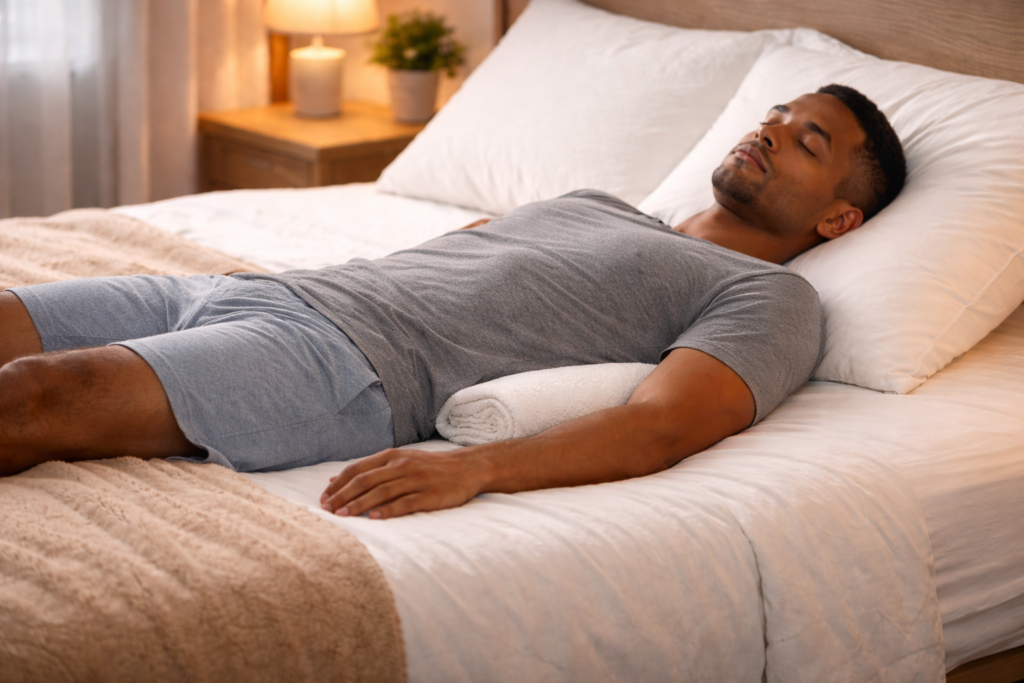
Some people regularly use heat to help temporarily relieve muscle stiffness.
The important distinction is between using heat before bed and sleeping with continuous heat throughout the night.
If you’re using a heating pad frequently, follow the product instructions, monitor your skin, and pay attention to whether heat continues to help.
Frequent nighttime use can also be a reason to ask why your back is repeatedly uncomfortable at the end of every day.
For example, prolonged sitting, limited movement, an uncomfortable workstation, or certain sleeping positions may contribute to recurring stiffness.
If you find yourself needing progressively more heat or longer sessions, read:
Can You Use a Heating Pad Too Much? Safe Limits for Back Pain Relief
Who Should Be Especially Careful With Heating Pads?
Some people need additional caution with heat therapy.
Conditions or circumstances that reduce your ability to feel temperature accurately can make it harder to recognize that a heating pad is becoming too hot.
Circulation problems and certain health conditions can also affect whether heat therapy is appropriate.
If you have reduced sensation, circulation concerns, a condition affecting your skin or nerves, or another medical issue that could interfere with your ability to safely detect heat, talk with a qualified healthcare professional before using a heating pad.
Never place a heating pad over an area where you can’t properly feel temperature.
When Heat May Not Be the Right Choice
Heat is commonly used for stiffness and tight muscles, but not every episode of back pain should automatically be treated with heat.
For example, pain following a recent injury or pain accompanied by significant swelling may require a different approach.
More importantly, if heat consistently makes your symptoms worse, don’t keep applying it simply because you’ve heard that heating pads are good for back pain.
Your response to the treatment matters.
If you’re deciding between heat and cold therapy, read:
Should You Use Heat or Ice for Lower Back Pain?
Your Sleeping Position Can Affect Back Comfort
If your back bothers you primarily at night or when you first wake up, the heating pad may not be the only thing worth examining.
Your sleeping position can influence how comfortable your back feels.
If You Sleep on Your Back
Some people find that placing a pillow beneath their knees feels more comfortable because it changes the position of the lower back.
If You Sleep on Your Side
A pillow between the knees can make side sleeping feel more supported and may help keep the hips and pelvis in a more comfortable position.
If You Sleep on Your Stomach
Stomach sleeping can be uncomfortable for some people with lower-back pain because of the position it places the spine in.
There isn’t one perfect sleeping position for everyone. The goal is to find a position that allows you to rest comfortably without increasing your symptoms.
Why Does Your Back Hurt More at Night?
Recurring nighttime back discomfort can have many possible contributors.
Sometimes the issue isn’t what happens during the night at all.
Think about what happens during your day.
Do you:
- Sit for several hours without moving?
- Work at a desk most of the day?
- Spend long periods driving?
- Exercise intensely without enough recovery?
- Move very little during the day?
- Frequently sit in an uncomfortable position?
Your evening discomfort may partly reflect what your back has experienced during the previous several hours.
If sitting is a major trigger, see:
How to Sit Without Lower Back Pain: Simple Changes That Actually Help
Alternatives to Sleeping With a Heating Pad
If you love warmth at bedtime but don’t want to sleep with an electric heating pad, there are other ways to create a relaxing nighttime routine.
Take a Warm Shower
A comfortably warm shower before bed can provide temporary warmth without leaving an electric heating device against your body overnight.
Try Gentle Movement
If appropriate for your condition, a short walk or gentle mobility routine may help after a day of prolonged sitting.
Avoid aggressive stretching that causes pain.
Adjust Your Pillow Setup
Experiment with pillows beneath or between your knees depending on your sleeping position.
Change Positions During the Day
If you spend most of the day sitting, small movement breaks may help prevent some of the stiffness that appears later.
Use Heat Before Bed — Not During Sleep
For people who respond well to heat, this may be the simplest compromise.
Enjoy the warmth while you’re awake, then remove the heating pad before falling asleep.
Heating Pad Features Worth Considering
If you regularly use a heating pad at home, certain features can make controlled use easier.
Consider looking for:
- Multiple temperature settings
- Automatic shutoff
- Simple controls
- A flexible design
- Clear manufacturer instructions
- A removable or washable cover when available
An automatic shutoff can be especially useful if you become distracted, although you should still use the heating pad according to its directions.
Heating Pad for At-Home Back Comfort
If you’re replacing an older heating pad, consider one with adjustable temperature controls and an automatic shutoff feature so it’s easier to manage your heat sessions.
Check Heating Pad Price on Amazon
As an Amazon Associate, PathwayToRelief may earn from qualifying purchases at no additional cost to you.
Heat Should Be Part of a Bigger Routine
Heat can be wonderfully comforting, but it doesn’t address every reason your back might hurt.
If your discomfort is related to stiffness from sitting, inactivity, positioning, or other everyday factors, consider combining temporary heat relief with appropriate movement and healthier daily habits.
That might include:
- Changing positions regularly
- Taking short walking breaks
- Gentle stretching when appropriate
- Improving your workstation
- Finding a comfortable sleeping position
- Gradually building regular physical activity
The goal isn’t necessarily to stop using your heating pad.
It’s to avoid making the heating pad the only thing you’re doing for recurring discomfort.
When Back Pain Needs Medical Attention
Most everyday back discomfort isn’t an emergency, but some symptoms require prompt medical evaluation.
Seek urgent medical care for back pain associated with symptoms such as:
- New loss of bladder or bowel control
- Numbness around the groin or saddle area
- Significant or worsening leg weakness
- Severe pain after a major fall, accident, or injury
- Fever accompanied by significant back pain
- Severe or rapidly worsening symptoms
You should also consider talking with a healthcare professional when back pain repeatedly disrupts your sleep, continues to worsen, lasts despite reasonable self-care, or substantially interferes with normal activities.
Don’t use a heating pad to continually mask symptoms that need medical evaluation.
Frequently Asked Questions
Is it safe to sleep with a heating pad on your back?
For a standard electric heating pad, you generally should not intentionally fall asleep with it against your body unless the manufacturer specifically states that the product is designed for that use. Sleeping prevents you from reliably monitoring your skin and temperature.
Can I leave a heating pad on all night if it has automatic shutoff?
Automatic shutoff is a helpful safety feature, but it doesn’t override the manufacturer’s instructions. If the heating pad isn’t designed for sleeping or overnight use, don’t intentionally sleep with it simply because it has a timer.
Is it okay to fall asleep with a heating pad on low?
A lower temperature doesn’t eliminate the concern about prolonged exposure. Use comfortable heat while you’re awake and remove the heating pad before going to sleep unless the manufacturer’s instructions explicitly permit otherwise.
Can sleeping on a heating pad cause burns?
Yes. Prolonged heat exposure can cause burns or skin irritation. The risk can be more concerning during sleep because you may not wake up when the area becomes excessively hot or uncomfortable.
Is it better to use a heating pad before bed?
For people who find heat helpful, using a heating pad while awake before bedtime allows you to monitor the temperature and your skin and then remove the heat before sleeping.
How long should I use a heating pad before bed?
Follow the instructions supplied with your specific heating pad. Avoid assuming that longer sessions are better. Your heating pad should provide comfortable warmth without burning, stinging, or causing persistent redness.
Why do I feel like I need a heating pad every night?
Recurring stiffness can have many possible causes, including daily activity patterns, prolonged sitting, physical strain, sleeping position, and medical conditions. If you regularly depend on heat because of persistent or worsening pain, consider discussing the symptoms with a healthcare professional.
Final Thoughts
A heating pad can be an excellent source of temporary comfort when your back feels stiff or achy at the end of the day.
But there’s an important difference between using heat before bedtime and sleeping with an electric heating pad against your body all night.
The safer approach is to use comfortable heat while you’re awake, follow your heating pad’s instructions, monitor your skin, and remove the pad before you fall asleep unless the product is specifically designed and approved for that use.
And if you find yourself reaching for your heating pad every single night, look beyond the heating pad itself.
Your daytime movement, sitting habits, sleep position, and underlying cause of your discomfort may deserve attention too.
A heating pad should provide temporary comfort—not become something you feel you can’t sleep without.
PathwayToRelief participates in affiliate programs, including the Amazon Services LLC Associates Program. If you purchase through qualifying affiliate links on this page, PathwayToRelief may earn a commission at no additional cost to you.
The information provided on PathwayToRelief.com is for general educational purposes only and is not intended to diagnose, treat, cure, or prevent any medical condition. It is not a substitute for individualized medical advice, diagnosis, or treatment from a qualified healthcare professional. If you have persistent, severe, worsening, or concerning symptoms, seek appropriate medical care.