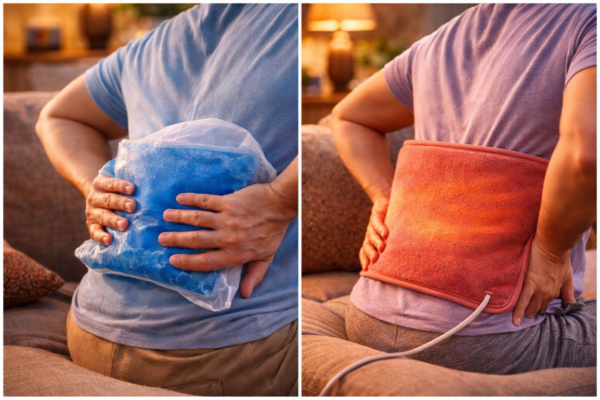
Wondering if you should alternate heat and ice for lower back pain? Learn when alternating therapies may help, how to do it safely, and common mistakes to avoid.
If you’re dealing with lower back pain, you may have heard that alternating heat and ice can speed up recovery. But is that actually true?
The answer is: it depends on what’s causing your pain.
Alternating heat and cold therapy may be helpful for some people during recovery, but it’s important to understand when to use each treatment and when alternating may not be appropriate.
This guide explains how alternating heat and ice works, who may benefit from it, and how to do it safely at home.
What Does Alternating Heat and Ice Mean?
Alternating heat and ice simply means switching between cold therapy and heat therapy instead of using only one treatment.
The goal is to combine the benefits of both therapies:
Ice may help:
- Reduce inflammation
- Minimize swelling
- Temporarily numb painful areas
Heat may help:
- Relax tight muscles
- Improve blood circulation
- Reduce muscle stiffness
- Increase flexibility
When used appropriately, these therapies may complement one another during different stages of recovery.
When Might Alternating Heat and Ice Be Helpful?
Alternating therapies may be considered when:
- You’re recovering from a muscle strain after the initial injury phase.
- Swelling has started to improve, but muscle tightness remains.
- Your healthcare provider has recommended alternating treatments.
- You’re experiencing both inflammation and muscle stiffness during recovery.
Not everyone benefits from alternating heat and ice, so the best approach depends on the cause of your back pain.
When You Should Start With Ice
Ice is generally the better first choice if your pain is caused by:
- A recent injury
- Heavy lifting
- Sports activities
- Sudden sharp pain
- Swelling
During the first 24 to 48 hours after an injury, cold therapy is often used to help reduce inflammation.
Learn more here:
Heat vs Ice for Back Pain: What Actually Works Best?
When You Should Switch to Heat
Once swelling has improved, some people transition to heat therapy to help relax muscles and improve mobility.
Heat may be more appropriate if you’re experiencing:
- Muscle tightness
- Ongoing stiffness
- Chronic lower back pain
- Muscle spasms
- Pain after prolonged sitting
Heat increases circulation and may help muscles loosen before stretching or light activity.
Example of an Alternating Routine
Every person is different, but a common approach after the initial injury phase may look like this:
Step 1
Apply an ice pack for about 15–20 minutes.
Allow your skin to return to its normal temperature before applying another treatment.
Step 2
Several hours later, apply gentle heat for 15–20 minutes.
Avoid placing heating pads directly against bare skin unless the manufacturer’s instructions specifically allow it.
Step 3
Continue moving gently throughout the day rather than remaining inactive.
Always follow the advice of your healthcare professional if you have an injury or underlying medical condition.
Benefits of Alternating Heat and Ice
Some people report that alternating therapies may help:
- Reduce discomfort
- Improve flexibility
- Ease muscle tightness
- Encourage gentle movement
- Support recovery after the initial injury phase
It’s important to remember that responses vary from person to person.
When Alternating Heat and Ice May NOT Be Helpful
Alternating therapies may not be appropriate if:
- You still have significant swelling.
- Your injury is very recent.
- Your skin has reduced sensation.
- You have certain circulation problems.
- Your healthcare provider has advised against it.
If you’re unsure, seek medical advice before beginning a new treatment routine.
Common Mistakes to Avoid
Many people accidentally reduce the effectiveness of heat and cold therapy by:
- Switching too quickly between treatments.
- Applying heat immediately after a fresh injury.
- Leaving heating pads or ice packs on too long.
- Applying either treatment directly to bare skin when product instructions advise against it.
- Ignoring persistent or worsening symptoms.
Proper timing and moderation are usually more important than the number of treatments.
Combine Therapy With Healthy Habits
Heat and ice work best when they’re part of a larger recovery plan.
Other healthy habits include:
- Daily stretching
- Regular walking
- Strengthening your core
- Improving posture
- Taking movement breaks throughout the day
Learn more here:
Best Daily Habits to Reduce Back Pain Naturally
If your pain is caused by sitting for long periods, this guide may also help:
Lower Back Pain from Sitting Too Long? Here’s How to Fix It Fast
Frequently Asked Questions
Is alternating heat and ice better than using only one treatment?
It depends on the type and stage of your back pain. Some people benefit from using different therapies at different stages of recovery rather than alternating automatically.
How long should I leave heat or ice on?
Many manufacturers recommend sessions of approximately 15–20 minutes, although recommendations vary. Always follow the instructions provided with your heating pad or ice pack.
Should I alternate treatments on the first day of an injury?
For many recent injuries with swelling, cold therapy is often used during the first 24–48 hours. The appropriate timing depends on the nature of the injury and your healthcare provider’s advice.
Can alternating heat and ice cure back pain?
No. Heat and cold therapy may help manage symptoms, but they don’t treat the underlying cause of recurring back pain.
When Should You See a Healthcare Professional?
Seek medical care if your lower back pain:
- Lasts longer than several weeks.
- Continues to worsen.
- Follows a serious fall or accident.
- Causes numbness or weakness.
- Spreads into one or both legs.
- Affects bladder or bowel control.
Final Thoughts
Alternating heat and ice may be a helpful strategy for some people recovering from lower back pain, but it isn’t a one-size-fits-all solution.
Ice is generally used during the early stages of an injury when swelling is present, while heat is often more appropriate later for muscle tightness and stiffness.
Understanding when to use each therapy—and combining them with healthy daily habits—may help you recover more comfortably and reduce future episodes of back pain.
Related Articles
Heat vs Ice for Back Pain: What Actually Works Best?
Heat or Ice for Lower Back Pain: What Works Faster?
Can a Heating Pad Make Back Pain Worse?
Is It Bad to Use a Heating Pad Every Day for Back Pain?
Best Daily Habits to Reduce Back Pain Naturally
Medical Disclaimer
PathwayToRelief.com provides educational information for general wellness purposes only and is not intended to replace professional medical advice, diagnosis, or treatment. Always consult a qualified healthcare provider regarding any medical condition or before starting a new treatment, exercise program, or pain management routine.
Seek immediate medical attention if you experience severe back pain after a traumatic injury, sudden numbness or weakness, loss of bladder or bowel control, fever with back pain, or any other symptoms that could indicate a serious medical condition.