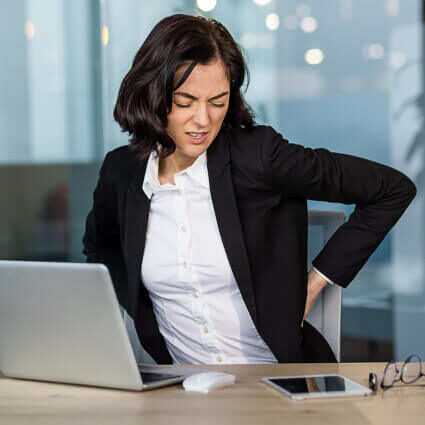
If your lower back starts aching after hours at a desk, in the car, or on the couch, you’re not alone. Sitting for long periods can place continuous pressure on your lower back, tighten important muscles, and reduce circulation, leading to pain and stiffness.
The good news is that many cases of sitting-related lower back pain improve with simple movement, stretching, and healthy daily habits. This guide explains why sitting causes back pain, what you can do for quick relief, and how to prevent it from coming back.
Why Does Sitting Cause Lower Back Pain?
Your lower back is designed for movement, not remaining in one position for hours.
When you sit too long:
- Your hip flexor muscles become tight.
- Your glute muscles become less active.
- Your core muscles provide less support.
- Blood circulation slows.
- Pressure on the lumbar spine increases.
Over time, these changes may contribute to muscle fatigue, stiffness, and discomfort.
How to Relieve Lower Back Pain Quickly
1. Stand Up and Walk
One of the fastest ways to reduce stiffness is simply to get moving.
Walk around for 2 to 5 minutes every hour. Even a short walk helps improve circulation and reduces pressure on your spine.
2. Stretch Tight Muscles
Gentle stretching may help reduce muscle tension.
Try:
- Knee-to-chest stretch
- Cat-cow stretch
- Child’s pose
- Standing hamstring stretch
- Hip flexor stretch
Move slowly and stop if you experience sharp pain.
3. Apply Heat for Muscle Tightness
If your pain feels like muscle stiffness rather than a new injury, gentle heat may help relax tight muscles.
Learn more in our guide:
Heat vs Ice for Back Pain: What Actually Works Best?
If you’re using a heating pad regularly, read:
Is It Bad to Use a Heating Pad Every Day for Back Pain?
4. Reset Your Sitting Position
Poor posture can increase strain on your lower back.
Try to:
- Keep both feet flat on the floor.
- Sit with your hips slightly higher than your knees.
- Support the natural curve of your lower back.
- Keep your shoulders relaxed.
- Position your monitor at eye level.
For a complete posture guide, read:
How to Sit Without Lower Back Pain
5. Strengthen Your Core
Weak abdominal and back muscles provide less support for your spine.
Simple exercises such as bridges, bird-dogs, and modified planks may help improve stability over time.
How to Prevent Sitting-Related Back Pain
Preventing pain is often easier than treating it.
Helpful habits include:
- Standing every 30–60 minutes.
- Taking short walking breaks.
- Stretching daily.
- Using an ergonomic chair.
- Keeping your computer at eye level.
- Exercising regularly.
You may also enjoy:
Best Daily Habits to Reduce Back Pain Naturally
Common Mistakes
Many people accidentally make their pain worse by:
- Sitting for several hours without moving.
- Crossing their legs all day.
- Slouching toward the computer.
- Ignoring early stiffness.
- Sleeping in poor positions after a day of sitting.
Small adjustments throughout the day often make a noticeable difference.
Frequently Asked Questions
How often should I stand up if I have a desk job?
Many experts recommend standing and moving at least every 30 to 60 minutes to reduce prolonged pressure on your spine.
Is walking good for lower back pain?
For many people, gentle walking helps improve circulation, reduce stiffness, and keep the back muscles active. However, if walking causes severe pain, seek medical advice.
Should I use heat or ice?
If your pain is caused by muscle tightness after prolonged sitting, heat is often more appropriate. If your pain follows a recent injury or is accompanied by swelling, cold therapy may be more helpful.
When should I see a healthcare professional?
Seek medical attention if your back pain:
- Lasts longer than several weeks.
- Is severe or getting worse.
- Causes numbness or weakness.
- Spreads down one or both legs.
- Follows a serious injury.
- Affects bladder or bowel control.
Final Thoughts
Lower back pain from sitting is common, but it doesn’t have to become part of your daily routine. Taking regular movement breaks, improving your posture, stretching, and strengthening your core can all help reduce discomfort and support long-term spinal health.
The most effective approach is consistency. Small healthy habits repeated every day often have a bigger impact than occasional treatments.
Related Articles
How to Sit Without Lower Back Pain
Heat vs Ice for Back Pain: What Actually Works Best?
Best Daily Habits to Reduce Back Pain Naturally
Is It Bad to Use a Heating Pad Every Day for Back Pain?
Medical Disclaimer
PathwayToRelief.com provides educational information only and is not intended to replace professional medical advice, diagnosis, or treatment. Always consult a qualified healthcare professional regarding persistent, severe, or worsening back pain.